PHOTO
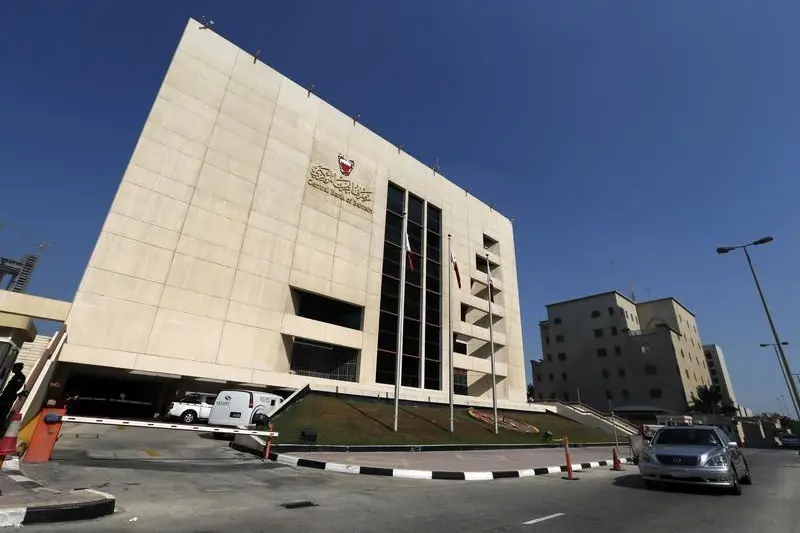
Bahrain’s financial sector has demonstrated robust resilience and growth, with the banking system’s total balance sheet climbing to $254 billion, according to the latest data released by the Central Bank of Bahrain (CBB).
The figures were reviewed during the CBB board of directors’ second meeting of the year, chaired by Hassan Al Jalahma.
During the meeting, CBB Governor Khalid Humaidan briefed the board on the kingdom’s key financial priorities, highlighting the performance of the central bank’s liquidity support and loan deferral programmes.
Key operational milestones were also spotlighted, including the newly-signed Currency Swap Agreement with the Central Bank of the UAE and the presentation of the CBB’s comprehensive artificial intelligence (AI) strategy.
The board evaluated monetary and banking indicators up to April 2026, which revealed steady upward momentum across key metrics.
Money supply increased by BD1.4bn, reaching BD18.1bn at the end of April 2026 compared to the same period last year.
Total private deposits at retail banks surged by 8.8pc year-on-year, touching BD14.7bn.
Total outstanding loans and credit facilities extended to resident economic sectors rose 8.5pc to BD13.4bn. The personal sector accounted for the largest share at 46.6pc, followed closely by the business sector at 40.8pc.
The combined balance sheet of retail and wholesale banks hit $254bn, marking a 3.8pc increase compared to April 2025.
The kingdom’s banking sector maintained high financial stability, with the overall capital adequacy ratio rising to 20.8pc in the first quarter of 2026, up from 20.6pc during the same quarter last year.
A breakdown of individual segments reveals healthy buffers across the entire industry. Islamic retail banks led the sector with a capital adequacy ratio of 25.7pc, followed closely by conventional retail banks at 25.2pc. Meanwhile, conventional wholesale banks recorded a ratio of 17.4pc, and Islamic wholesale banks stood at 17.3pc for the first quarter of the year.
In the investment sector, the total number of registered collective investment undertakings (CIUs) grew to 1,747 by March 2026, up from 1,737 in March 2025.
The total net asset value (NAV) of these funds stood at $10.929bn in Q1 2026. Notably, Sharia-compliant CIUs witnessed a massive 24.6pc surge, with their NAV jumping from $2.004bn in Q1 2025 to $2.498bn in Q1 2026.
Meanwhile, electronic transactions continue to dominate Bahrain’s retail landscape. Point of sale (POS) data from January to April 2026 recorded 82.3 million transactions, with a striking 75.5pc executed via contactless methods. While transaction volume grew by 1pc compared to last year, the total value of POS transactions dipped 8.1pc to BD1.5bn, of which contactless payments accounted for 52.3pc.
Copyright 2026 Al Hilal Publishing and Marketing Group Provided by SyndiGate Media Inc. (Syndigate.info).