PHOTO
Doha, Qatar: Mohamed bin Faleh Al Hajri, In Charge of Managing Qatar Civil Aviation Authority (QCAA), affirmed that the situation in Qatar’s civil aviation sector is under full operational control and is being managed according to the highest standards of safety and efficiency, despite the challenges posed by recent regional developments.
In an interview with Qatar News Agency (QNA), Al Hajri said that the response to regional developments followed a phased, risk-based approach, leading to a partial resumption of operations through precautionary air routes and limited operational capacity, in full coordination with the Armed Forces.
This reflects Qatar’s commitment to balancing the continuity of vital operations with aviation safety while drawing on previous experience in managing similar crises.
He explained that the Iranian aggression had a direct and tangible impact on the regional airspace environment, including Qatari airspace, where risk levels rose to unprecedented levels due to combined aerial threats from drones and missiles, as well as debris resulting from air defense interception operations.
These factors could pose direct or indirect risks to civil aviation, in addition to other operational risks such as aircraft misidentification or interference with restricted or hazardous zones.
Al Hajri noted that Qatari airspace was treated as a highly sensitive operational environment. The airspace was initially closed as a precaution at the onset of the crisis, then partially reopened on March 7, with strict precautionary measures ensuring that air operations are conducted only within approved air corridors, under close monitoring and in full coordination with relevant national authorities.
He added that this phase included operating a limited number of evacuation flights and air cargo operations, while allowing for a gradual increase in civil aviation traffic to ensure the continued provision of essential air services.
He further stated that the Civil Aviation Authority and Qatar Airways, in coordination with various relevant national entities, implemented an integrated set of measures to secure travel for stranded passengers and operate cargo flights to ensure the continuity of supply chains and the availability of essential goods, while maintaining the efficiency and safety of air operations.
Al Hajri reaffirmed that the civil aviation sector in Qatar remains under full operational control, with air traffic currently managed under strict regulations, limited capacity, and predefined routes, reflecting a risk management approach.
He stressed that all operational decisions are based on carefully studied professional standards that place operational safety as the top priority.
He also highlighted that, since the onset of the crisis, the Authority has faced several challenges across multiple areas.
The most prominent challenges in air navigation included responding immediately to the sudden airspace closure, managing aircraft in surrounding airspace, ensuring the continuity of vital services such as evacuation and cargo flights, handling a rapidly evolving and highly sensitive security environment, and maintaining operational, technical, and human readiness around the clock.
He noted that these challenges were addressed by leveraging accumulated expertise and previous crisis management experience, contributing to rapid response and effective measures.
In terms of aviation safety, he noted that a proactive approach was adopted to ensure the safety and continuity of aviation services.
This included reviewing operators’ emergency plans, issuing procedures to regulate air traffic during emergencies, increasing reliance on external maintenance providers, and granting approvals for external maintenance stations affiliated with Qatar Airways in several global cities to support aircraft maintenance outside the country. The number of such aircraft reached 188.
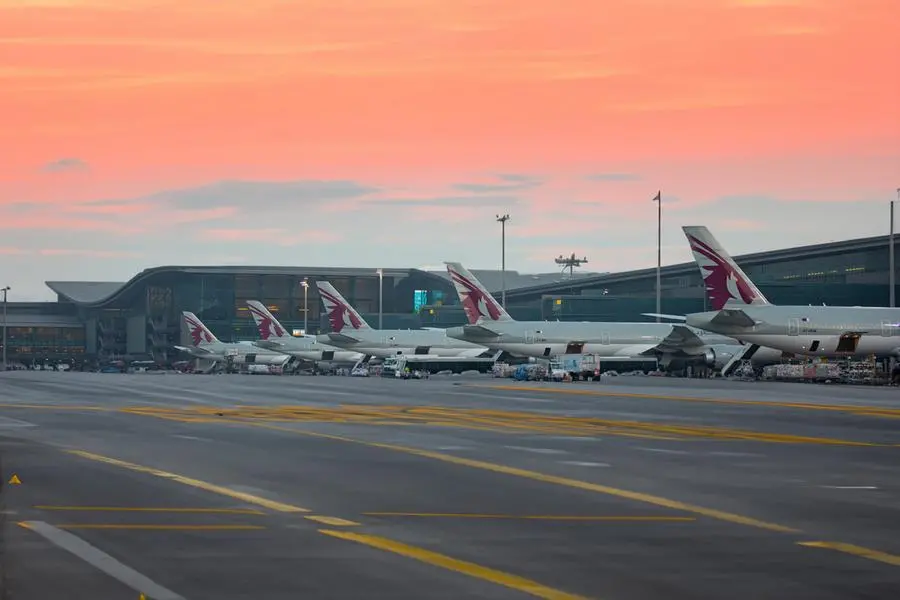
He added that field measures were implemented at the airport, including relocating aircraft to safe positions, repositioning firefighting vehicles, suspending construction on the eastern runway, and issuing emergency planning notices to direct staff and passengers to safe areas inside the passenger terminal when necessary.
Regarding civil aviation security, Al Hajri stated that the Authority has enhanced security measures by activating round-the-clock communication channels, increasing inspections and patrols, and addressing potential risks, including falling debris.
He also noted the sharing of a regional regulatory document with the International Civil Aviation Organization (ICAO) and countries in the region on airport security management during conflicts.
In addition, the Authority continues to monitor and analyze information received from civil aviation authorities in neighboring countries and international organizations to assess risks and issue the necessary guidance.
He indicated that, in the field of firefighting and rescue, the emergency plan has been activated to ensure continuous presence in the airport’s security operations room, enabling immediate response to any emergency.
He further explained that potential risks are managed through an integrated institutional risk management approach based on continuous assessment and the implementation of clear mitigation measures.
These include designating approved air corridors under close monitoring, maintaining continuous coordination between civil and military entities, applying prior-approval mechanisms for each flight, strengthening fuel planning, identifying alternate airports, providing dedicated briefings for flight crews, and implementing exceptional operational procedures.
He pointed out that securing Qatari airspace is achieved through a multi-layered system that includes advanced radar systems, continuous airspace coverage, real-time tracking of all flights, and strict aircraft separation standards.
We coordinate directly with military authorities, integrate with joint operations centers, and share flight plans in advance, creating a comprehensive system that ensures the highest levels of safety and security.
He confirmed that emergency plans have been activated across all civil aviation sectors. In aviation security, this includes activating 24/7 emergency contact points, implementing evacuation plans, reducing access points to airport facilities, and minimizing staff numbers to avoid operational disruption.
In aviation safety, we have implemented vital enhancements to continue improving relevant entities.
He added that guidance material for the airspace emergency management plan has been issued, outlining coordination and notification mechanisms between concerned entities and the crisis management cell.
Additionally, an aeronautical circular on air navigation emergency procedures has been issued to enhance readiness in managing air traffic during emergencies within the Doha Flight Information Region.
He noted that, in the field of air navigation, operational emergency plans were immediately activated, including real-time air traffic management, rerouting of flights when necessary, limited operations through precautionary air corridors, application of prior approvals for each flight, organizing traffic through designated operational windows, strengthening fuel and alternate airport plans, and activating direct communication channels between relevant entities.
He emphasised that Qatar’s air traffic control system operates at a high level of readiness and professionalism, providing comprehensive airspace coverage, precise real-time tracking of all flights, enhanced aircraft separation procedures, and highly trained personnel capable of operating under high-pressure conditions, alongside direct integration with military entities.
This has contributed to the efficient management of the situation.
He also noted that the Authority regularly conducts drills and simulations of emergency scenarios within the safety management system and national emergency plans.
These include partial or full airspace closures, communication failures, operations in security- or military-restricted environments, and coordination between civil and military authorities, with continuous efforts to extract lessons learned and improve these exercises.
He explained that, in aviation security, exercises are conducted as part of airport emergency plans, with procedures evaluated and updated in line with evolving conditions to ensure the highest levels of preparedness and efficiency.
In conclusion, Al Hajri affirmed the General Civil Aviation Authority's readiness, the continuity of operations, and the ongoing monitoring of developments around the clock.
He stressed that the safety and security of civil aviation in the State of Qatar remain a top priority, and that all operational decisions are based on precise professional risk assessments and full coordination with relevant national authorities.
He noted that the achievements during this phase reflect the State’s ability to manage exceptional circumstances efficiently and professionally, while continuously drawing on past experience to enhance future preparedness.
© Dar Al Sharq Press, Printing and Distribution. All Rights Reserved. Provided by SyndiGate Media Inc. (Syndigate.info).