Saturday, Jan 10, 2004
Great," said our 12-year-old daughter when told we might take her to Dubai for the October half-term break - "no culture!" Dubai certainly contrasted vividly with its October destination predecessors Paris, Florence and the American South. Quite what Haussmann, Michelangelo and Jefferson would make of the gold tap capital of the world is not difficult to guess.
Even we were unprepared for the potent cocktail of luxury and vulgarity offered by Dubai. Arriving, like most visiting Europeans, jetlagged off a flight from London early in the morning, we were driven to the Burj Al Arab ("the world's only seven-star hotel") in - what else? - a white Rolls-Royce.
The hotel itself is 27 floors moulded into the emirate's trademark image (found on all Dubai car licence plates) - a spinnaker- shaped skyscraper rising out of the Arabian Gulf. On arrival, we felt assaulted by its unleavened gold and marble, its fountains, its insis tently slavish service.
There was something just so ridiculously over-the-top about our two-floor suite with its two giant reception rooms and a kitchen that I did not discover until the last of the four days we spent there.
The electronics that governed such usually simple operations as drawing the vast bedrooms' curtains or letting someone into the room (someone in this case being our very own butler in tails) seemed absurdly complicated to us. And did we really need two personal computers to call our own, one of them portable and both with permanent online access?
There is no need for a front desk at "the Burj" since every floor has its very own concierge, ready to signal to the invisible room staff that they may enter and roll yet more bales of freshly pressed linen on to our sheikh-sized beds.
The decor is very definitely more sheikh than duke. Brilliant red, yellow and blue is the colour scheme. Gold is the trim of choice. The guests in this icon hotel are an unusual social mix of well-heeled and mostly male Arabs and northern Europeans in search of sun, sea and shopping. Then there are the even whiter Russians, in groups typically made up of a pudgy oligarch talking on his mobile, one glamorous wife, a clutch of children and at least one bodyguard. To my knowledge the hotel has no special modifications for the Russians, but in each luxuriously carpeted dressing room is an arrow towards Mecca and a laundry list priced for such items as a dishdash.
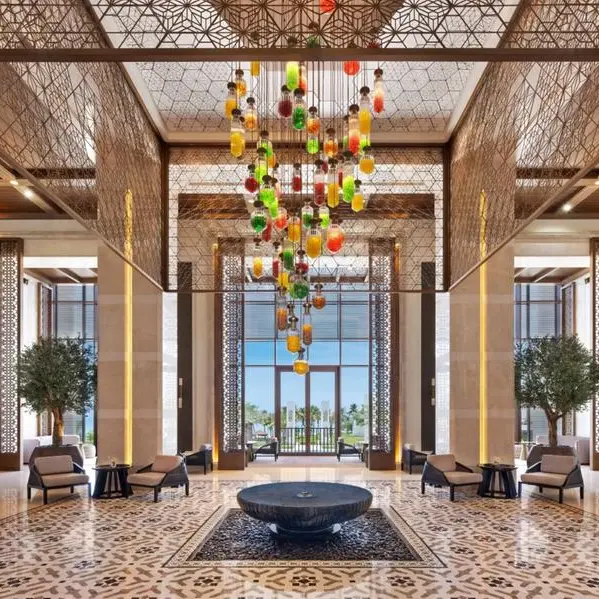
One of the challenges for the designer of any Dubai hotel of quality must be to work out how the skimpily dressed Europeans on their way back from the beach can be ferried to their rooms without offending the natives. It took some time to work out that the Burj Al Arab likes its guests to use discreet lifts to commute straight between the pool at the back of the hotel and the super-luxurious, Arabian Nights-like spa at the top of the hotel. The quite extraordinary foyer at the front of the hotel with its aquabatic fountains and jewellery displays is really designed not for the hotel's guests but for the visitors who are allowed in, at strictly controlled times, to gawp and take photographs.
All of this vulgarity is, of course, very much easier to take if you really are a guest - that is, in my case, invited to stay there to host some wine dinners - rather than being cowed by the knowledge that every little foray to the multicultural breakfast buffet (camel milk rice pudding a speciality) will eventually find its way on to your final bill.
Bruised by long years of half-term breaks spent trudging round foreign museums, art galleries and churches, our daughter had been looking forward to mingling with English-speaking contemporaries who love water-parks (Wild Wadi claims to be the world's most innovative water-park) and Shirley Temples (lemonade and grenadine cocktails) as much as she does.
She was not disappointed. Through her we discovered a British family with three young children who have been coming to the Burj two or three times a year for as long as they can remember. He works in the City of London, of course. And their girls were completely at home whizzing about in the hotel buggies between the Burj's pool, its nearby sister hotels and its quite stunning sandy private beach constructed at who knows how much ecological cost.
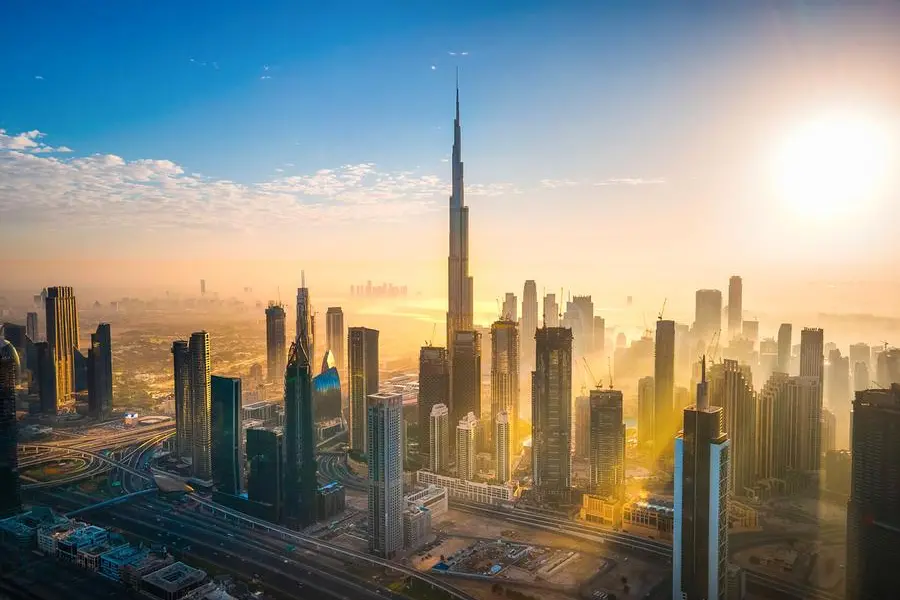
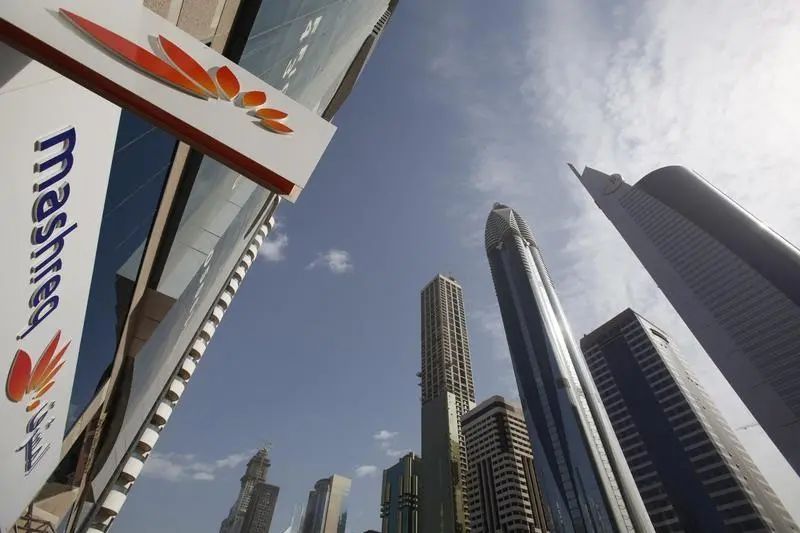
(Dubai's energetic Crown Prince has kept the country afloat by dint of the most breathtakingly ambitious schemes to boost tourism. These include the new Palm Jumeirah development being built on top of the sea to look like a palm tree from space and to provide holiday palaces for Europe's top footballers. There's also a giant new shopping mall, the Mall of Arabia, and the "Dubailand" leisure experience, which will house such unlikely attractions as a dry ski slope. His constant reconstruction of the emirate has, however, attracted criticism from environmental campaigners.)
The Jumeirah Beach Club, a quiff-shaped hotel just across the Burj's causeway on the mainland, looked much noisier and more family-orientated than the Burj, but has a nest of private villas just next to Wild Wadi for the most cosseted children.
The Jumeirah group is also busy building another vast hotel just next to the Burj's beach. Currently under construction (Dubai hosts thousands of immigrant workers, notably from the subcontinent and used to working in 40Degrees C heat), the hotel has already opened its doors and filled a large pool with ornamental dhows in which guests may float for their amusement.
The bar was doing brisk multicultural business, one white-robed businessman next to us seeming to know considerably more about various brands of vodka than his South African waitress. I had heard that Dubai is a dream for shoppers but, I felt, only shoppers in search either of bright yellow gold jewellery or the well-known international fashion brands. On our one visit in to town and the various souks (more Oxford Street than Marrakech), we were most interested in the wholesale spice merchants with their sacks of saffron, and in an old townhouse preserved as a museum with its substantial courtyard and separate quarters for men and women.
What I enjoyed most about the trip was the really excellent standard of food (you eat in hotels in Dubai) and that beautiful beach with waves at the perfect temperature and height for me. (This is surely one thing that remains outside the control of the Crown Prince; the sea is said to be uncomfortably hot most of the summer.)
Dubai's expats seem hardly able to believe their luck to be wallowing in such high comfort and low taxes. The great majority of the country's population are foreigners who do practically all of the work and come from an extraordinarily wide range of countries.
But this is not a destination for those with highly developed aesthetic or egalitarian sensibilities. I kept thinking of hundreds of friends and family who would hate Dubai with a passion. But I am ashamed to admit that I positively lapped it up for four days and had become completely acclimatised within less than 24 hours. In fact by the time our departure day dawned, we were positively affronted by the fact that breakfast in our suite was seven minutes late and it took the bellhop at least five minutes to arrive in our room.
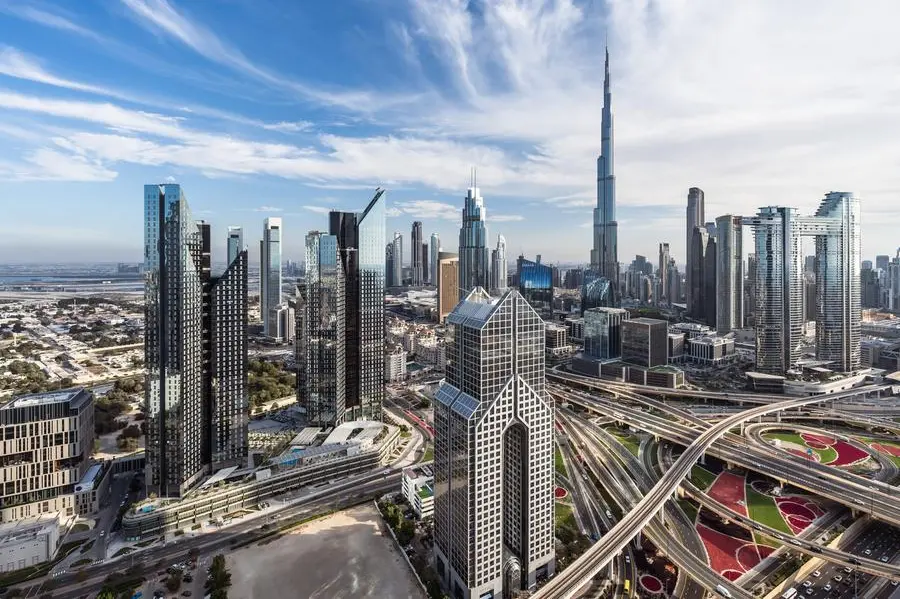
But as I looked out of the stately Rolls at Dubai city on the way to the airport, I could not help thinking what a very strange place it is. Rose cannot wait to go back, of course, but first she has to do penance in a few more museums.
Jancis Robinson is the FT's wine columnist
By JANCIS ROBINSON
Copyright The Financial Times Ltd 2004. Privacy policy.