17 December 2008
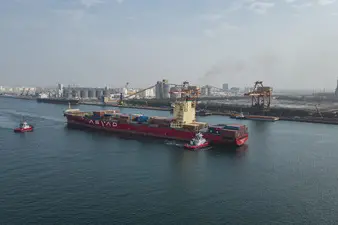
The National Shipping Company of Saudi Arabia (NSCSA) ruled out any plan to cancel orders and said it is all set to double the size of its fleet by 2011.
"We are shipowners who have embarked upon an ambitious plan, which called for doubling our fleet [way back] in 2006. We didn't know that the financial crisis would hit everybody. But we are still continuing with our strategic plan," said Saleh A Al Shamekh, NSCSA President of Oil and Gas.
He said the company will have 50 VLCCs (very large crude carriers) and chemical tankers by 2011 and will continue to hire crew to man these ships.
The company had originally planned to have a fleet of 20 VLCCs by 2010, but reduced it to 17 when the price of new builds skyrocketed in the earlier months. It also aims to have 32 chemical tankers by 2011.
NSCSA received two VLCCs last year and is expecting another four to be delivered next year. The double-hulled vessels have a capacity of 2.1 million barrels and a deadweight tonnage (dwt) of more than 300,000. Including the new builds, the fleet's total capacity will increase to 5,250 million dwt.
Al Shamekh, who is based in Dubai, said NSCSA has been affected by the financial crisis but is still optimistic the waves will turn for better in the mid term.
"Earnings for VLCCs have held up despite the downturn in shipping at large. Revenue wise, this year has been good. I can say this is a record year and it will surpass our growth last year," he said on the sidelines of the Middle East Money & Ships conference in Dubai.
Al Shamekh said tanker operators have been adversely affected by lower crude output and forecast of further slowdown in demand. "Opec production is the main driver for our businesses in the VLCCs. The changes in the IEA and EIA forecasts that oil demand will stop growing in the second half of 2009 will also affect us," he said.
"It remains to be seen how the financial market turmoil will shake up the industry. We are afraid that too many ships have been ordered. The liquidity crisis can cause some orders to be cancelled if there is not enough to transport," he added.
But looking at the brighter side, he said the drop in the bunker price - the lowest since 2005 - has also cut the cost of operations. Some have also used the tankers for storage purposes.
NSCSA acquired a 30-per cent stake in Petredec Ltd, an LPG trader and shipowner - which operates a fleet of more than 50 LPG vessels with a total cargo volume of 795,000 m3, including two VLGCs each with a capacity of 83,000 cubic metres. The deal was sealed in 2003.
It also has an 80-per cent stake in the National Chemical Carriers, which has 12 chemical carriers and another 10 are under construction an order that was expanded to 16 vessels for delivery from 2009 to 2011.
The National Shipping Company of Saudi Arabia (NSCSA) ruled out any plan to cancel orders and said it is all set to double the size of its fleet by 2011.
"We are shipowners who have embarked upon an ambitious plan, which called for doubling our fleet [way back] in 2006. We didn't know that the financial crisis would hit everybody. But we are still continuing with our strategic plan," said Saleh A Al Shamekh, NSCSA President of Oil and Gas.
He said the company will have 50 VLCCs (very large crude carriers) and chemical tankers by 2011 and will continue to hire crew to man these ships.
The company had originally planned to have a fleet of 20 VLCCs by 2010, but reduced it to 17 when the price of new builds skyrocketed in the earlier months. It also aims to have 32 chemical tankers by 2011.
NSCSA received two VLCCs last year and is expecting another four to be delivered next year. The double-hulled vessels have a capacity of 2.1 million barrels and a deadweight tonnage (dwt) of more than 300,000. Including the new builds, the fleet's total capacity will increase to 5,250 million dwt.
Al Shamekh, who is based in Dubai, said NSCSA has been affected by the financial crisis but is still optimistic the waves will turn for better in the mid term.
"Earnings for VLCCs have held up despite the downturn in shipping at large. Revenue wise, this year has been good. I can say this is a record year and it will surpass our growth last year," he said on the sidelines of the Middle East Money & Ships conference in Dubai.
Al Shamekh said tanker operators have been adversely affected by lower crude output and forecast of further slowdown in demand. "Opec production is the main driver for our businesses in the VLCCs. The changes in the IEA and EIA forecasts that oil demand will stop growing in the second half of 2009 will also affect us," he said.
"It remains to be seen how the financial market turmoil will shake up the industry. We are afraid that too many ships have been ordered. The liquidity crisis can cause some orders to be cancelled if there is not enough to transport," he added.
But looking at the brighter side, he said the drop in the bunker price - the lowest since 2005 - has also cut the cost of operations. Some have also used the tankers for storage purposes.
NSCSA acquired a 30-per cent stake in Petredec Ltd, an LPG trader and shipowner - which operates a fleet of more than 50 LPG vessels with a total cargo volume of 795,000 m3, including two VLGCs each with a capacity of 83,000 cubic metres. The deal was sealed in 2003.
It also has an 80-per cent stake in the National Chemical Carriers, which has 12 chemical carriers and another 10 are under construction an order that was expanded to 16 vessels for delivery from 2009 to 2011.
By Karen Remo-Listama
© Emirates Business 24/7 2008