12 April 2010
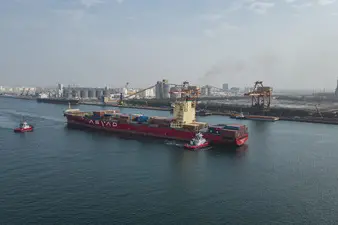
Yemen LNG company launched the second production train of the Liquefied Natural Gas project (LNG) in Balhaf, Shabwah province last Thursday.
Oil and Minerals Minister, Amir al-Aidaroos, said that the second train would raise the total production of the LNG project to 6.7 million metric tons per year, in the $4.5 billion project, the largest economic project in Yemen.
"It is a great achievement to open this train of LNG production one month before its deadline," al-Aidaroos said proudly in a press conference held in Belhaf.
"By this great project that achieves such great success, Yemen proves to the world that we can manage huge projects and large amounts of money to financial them," he added.
"According to new studies and explorations, there are large quantities of gas in a number of fields. The future of Yemen in the field of gas is promising. The future of gas in Yemen is better than future of oil," the minister said.
The minister clarified that the main obstacle we face related to gas production is the local law.
He pointed out that seven agreements signed in 2009 had included gas explorations as well as oil. "We are working now to add the gas explorations to the old agreement that contained oil explorations only," he said.
Al-Aidroos revealed that a number of oil blocks would be announced soon through negotiations with international companies.
"There are delegations with many international gas companies from Russia, Europe, and Arab Gulf countries that would like to invest in Yemen," said al-Aidroos.
According to the Minister of Oil, the Yemeni government aims to use gas to produce electricity.
Regarding the LNG project safety, the minister, as well as the LNG company manager, conformed that the project is safe for both parties.
"An American report about the security of LNG's projects around the world said Yemeni LNG project is one of the most safe projects in the world," the minister said.
"There is an army in the area and five coastguard boats. Furthermore, the citizens of this area want this project to continue because they obtain great benefits from it," the minister said.
For his part, the General Manager of Yemen LNG, Francois Rafin, said that the number of gas shipments to be exported in 2010 would be 85 and would reach between 100- 105 per year starting from next year.
"Before the second train launched, we had exported one shipment per week. Now we can exporting 2-3 every week," Rafin said.
Rafin clarified that the predication capacity was 25,000 meters, and now is 50,000 meters.
"The total number of Yemeni workers in the project will reach to 10,000, from all provinces of Yemen especially Marib and Shabwah," Rafin said, adding that Yemen LNG wants the ratio of Yemeni workers to reach 90%.
On November 2008, President Ali Abdullah Saleh launched the first phase of the Yemen LNG project with the gas arriving in Balhaf from the fields of Marib through the 320-kilometrer pipeline to the LNG Balhaf plant.
The liquefaction plant is located on the coast of Shabwah, around 400 km east of Aden province.
The Yemeni LNG project started in 2005 and has been starting export since November 17, 2009.
The Yemen LNG shareholders are Total (39.62%), Hunt (17.22%), Yemen Gas Company (16.73%), SK Corporation (9.55%), Kogas (6%), Hyundai (5.88%) and the General Authority of Social Security and Pensions (5%).
Yemen's oil and gas production started in 1986, and had an output level within the region of 320,000 barrels per day in 2008. The country is likely to continue to rely on its natural resources to provide for its population of around 23 million inhabitants.
The Yemen LNG exports its products to Korea, Mexico, Spain, China, India and USA.
Since the first shipment and the operation of the second train on April 1st, the company's shipments to these countries would reach 18.
The company's sources say that their success rates on the first hundred days were 75 percent, recording the highst LNG rates. The Minister says that this rate exceeds that of Qatar which achieved 71 percent in their first hundred producing days.
The Minister added that Yemen has far more than, Qatar, Nigeria, Indonesia and other gas producing countries.
"What is rumored over the Yemeni petroleum decrease is not true, " the minister said, adding that there is natural deprecation in some wells and fields' production, however he added that it is not serious and could be controlled through new discoveries.
"There is a natural decrease in the Masilla and Marib fields, however, there many other promising sectors in other areas," the minister said.
Yemen LNG company launched the second production train of the Liquefied Natural Gas project (LNG) in Balhaf, Shabwah province last Thursday.
Oil and Minerals Minister, Amir al-Aidaroos, said that the second train would raise the total production of the LNG project to 6.7 million metric tons per year, in the $4.5 billion project, the largest economic project in Yemen.
"It is a great achievement to open this train of LNG production one month before its deadline," al-Aidaroos said proudly in a press conference held in Belhaf.
"By this great project that achieves such great success, Yemen proves to the world that we can manage huge projects and large amounts of money to financial them," he added.
"According to new studies and explorations, there are large quantities of gas in a number of fields. The future of Yemen in the field of gas is promising. The future of gas in Yemen is better than future of oil," the minister said.
The minister clarified that the main obstacle we face related to gas production is the local law.
He pointed out that seven agreements signed in 2009 had included gas explorations as well as oil. "We are working now to add the gas explorations to the old agreement that contained oil explorations only," he said.
Al-Aidroos revealed that a number of oil blocks would be announced soon through negotiations with international companies.
"There are delegations with many international gas companies from Russia, Europe, and Arab Gulf countries that would like to invest in Yemen," said al-Aidroos.
According to the Minister of Oil, the Yemeni government aims to use gas to produce electricity.
Regarding the LNG project safety, the minister, as well as the LNG company manager, conformed that the project is safe for both parties.
"An American report about the security of LNG's projects around the world said Yemeni LNG project is one of the most safe projects in the world," the minister said.
"There is an army in the area and five coastguard boats. Furthermore, the citizens of this area want this project to continue because they obtain great benefits from it," the minister said.
For his part, the General Manager of Yemen LNG, Francois Rafin, said that the number of gas shipments to be exported in 2010 would be 85 and would reach between 100- 105 per year starting from next year.
"Before the second train launched, we had exported one shipment per week. Now we can exporting 2-3 every week," Rafin said.
Rafin clarified that the predication capacity was 25,000 meters, and now is 50,000 meters.
"The total number of Yemeni workers in the project will reach to 10,000, from all provinces of Yemen especially Marib and Shabwah," Rafin said, adding that Yemen LNG wants the ratio of Yemeni workers to reach 90%.
On November 2008, President Ali Abdullah Saleh launched the first phase of the Yemen LNG project with the gas arriving in Balhaf from the fields of Marib through the 320-kilometrer pipeline to the LNG Balhaf plant.
The liquefaction plant is located on the coast of Shabwah, around 400 km east of Aden province.
The Yemeni LNG project started in 2005 and has been starting export since November 17, 2009.
The Yemen LNG shareholders are Total (39.62%), Hunt (17.22%), Yemen Gas Company (16.73%), SK Corporation (9.55%), Kogas (6%), Hyundai (5.88%) and the General Authority of Social Security and Pensions (5%).
Yemen's oil and gas production started in 1986, and had an output level within the region of 320,000 barrels per day in 2008. The country is likely to continue to rely on its natural resources to provide for its population of around 23 million inhabitants.
The Yemen LNG exports its products to Korea, Mexico, Spain, China, India and USA.
Since the first shipment and the operation of the second train on April 1st, the company's shipments to these countries would reach 18.
The company's sources say that their success rates on the first hundred days were 75 percent, recording the highst LNG rates. The Minister says that this rate exceeds that of Qatar which achieved 71 percent in their first hundred producing days.
The Minister added that Yemen has far more than, Qatar, Nigeria, Indonesia and other gas producing countries.
"What is rumored over the Yemeni petroleum decrease is not true, " the minister said, adding that there is natural deprecation in some wells and fields' production, however he added that it is not serious and could be controlled through new discoveries.
"There is a natural decrease in the Masilla and Marib fields, however, there many other promising sectors in other areas," the minister said.
By Abdul-Aziz Oudah
© Yemen Observer 2010