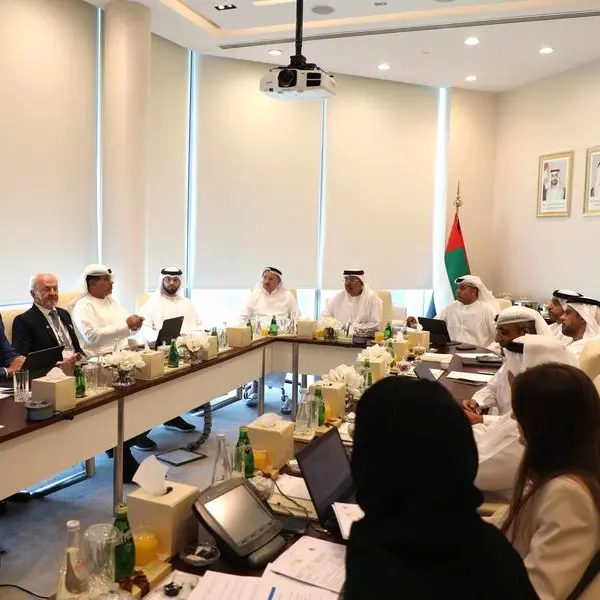
The US is keen to improve its ties with Saudi Arabia with a new focus on tourism and education. This was disclosed by the visiting Assistant Secretary for Trade Promotion and Director General of the US, Commercial Service, Mr. Israel Hernandez, in the course of a meeting with a group of Saudi businessmen at the Eastern Province Chamber of Commerce and Industry (EPCCI) recently.
He pointed out that the US government has of late taken various measures to revive and promote the visits to US by the Saudi businessmen as well as students. "Our efforts have been rewarded," he said adding that in 2006 the number of Saudi visitors to the US went up dramatically to over 25,500 including 12,000 students. This compared to 2004's total number of 12,000 Saudi visitors to US including 894 students.
Mr. Hernandez, who was leading a high-power US trade mission to the Kingdom, presented the US Commerce Department's "Certificate of Appreciation for Achievement" to EPCCI and 3 other leading companies based in the Eastern Province for their outstanding contribution in bolstering ties between the companies of the two countries. These companies are: Al Abdulkarim Holding Co, Al Rushaid Trading Co and Al Jomaih Automotive Co.
Talking about current trade relations between the two countries, Mr. Hernandez said that the US has historic trade ties with the Kingdom and these ties have stood the test of time.
He observed: " Our relations are now poised to grow further following Saudi Arabia's accession to the WTO." He disclosed that at present the US was focusing on finalizing a bilateral investment treaty with the Kingdom, which, he hoped, would be signed shortly.
In his welcome speech, Mr. Saud Abdulaziz Al Gosaibi, Vice- President, EPCCI said that the visit of this US mission was a timely event for various reasons. He elaborated as follows: "Firstly, there have been abrupt changes in world economic conditions during the last few weeks, following the worldwide decline in stock markets and reports of slow-down in U.S. growth and in China. In contrast to world trends, the Saudi project market looks singularly very promising.
"Secondly, there have been of late fluctuations in world oil prices, but the global supply and demand situation, as predicted now, will remain tight in the foreseeable future. The result is that oil prices are bound to stabilize at current levels. Being the largest exporter of oil and the only country with a respectable surplus capacity at its disposal, Saudi Arabia is expected to remain the world's most attractive project market in the years to come.
"Thirdly, one year after Saudi Arabia joined the World Trade Organization, there has been a growing appreciation at home and abroad about the positive benefits of this move, though there were initial doubts about its likely impact. Last but not least, the government of Saudi Arabia has been vigorously pursuing a process of economic reforms which have included liberalization of foreign investment laws and incentives, privatization of the utilities sector based on the concept of private-public partnership (PPP), the opening of the natural gas and oil refinery sectors for overseas investors and the proposal to set up five or six mammoth Economic Cities".
Mr. Al Gosaibi highlighted the fact that the total value of Saudi market opportunities for foreign investors is around $ 700 billion and the Eastern Province accounts for about 50% of these investment opportunities. He added that Saudi Arabian General Investment Authority (SAGIA) has issued (since April 2000) licenses to over 5,000 foreign companies to invest $100 billion in industries and services.
Drawing attention to the new opportunities emerging in Saudi Arabia in general and the Eastern Province in particular, Mr. Al Gosaibi made a potential reference to the following mega projects:
Saudi Aramco has planned $ 45 billion for project investments in oil, apart from $ 35 billion for its downstream joint venture projects.
SABIC, Jubail, has currently expansion plans valued at $ 25 billion.
In Jubail Industrial City-II, new private investment plans recently finalized for the petrochemical industry have exceeded $ 50 billion.
A Mineral Industrial City in Ras Al Zour costing $10 billion is being built, which will consist of an aluminum smelter, a phosphatic fertilizer plant and a desalination unit.
The other major areas of development in the Eastern Province are: water, power and downstream industries.
© Saudi Commerce and Economic Review 2007