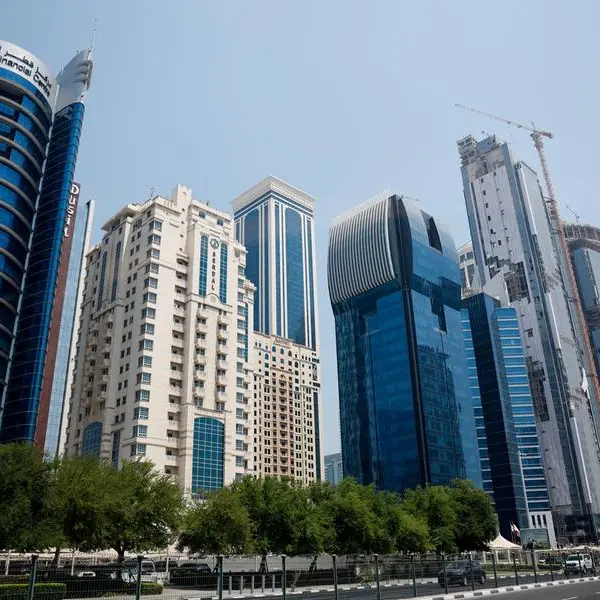
From a position of chronic under-supply, the Abu Dhabi real estate market is suddenly oversupplied, which is hurting developers, banks and the end investors.
While the country and the emirate has taken certain regulatory steps to stem the slide, it seems an uphill battle, with analysts expecting a turn around only after another two years.
It will take more than vague laws and weak regulations to push Abu Dhabi's real estate market out of the rut. The emirate, much like the rest of the country, has to look at bold plans to revive the property market which is also holding back other parts of the economy.
Abu Dhabi has an estimated pent up demand of 43,000 to 45,000 housing units, which could absorb excess supply in the emirate. This pent up demand could be unleashed if a compelling case can be made for people to change the practice of living in Dubai and working in Abu Dhabi, according to Kuwait Financial Centre, or Markaz.
That could see close to 23,000 households move down from Dubai to Abu Dhabi, estimates the Kuwaiti investment bank. Abu Dhabi rents still command a 20% premium over Dubai rents and were that gap to narrow, many might be tempted to skip the daily grind on Sheikh Zayed Road and move into the capital.
Other sources of pent-up demand that could unlocked as much as 20,000 to 22,500 housing units is through people moving out of low-cost housing that came into the market around 2007-2010 at the height of the boom.
Easier said than done, but the Abu Dhabi market needs all the help it can get after witnessing a 58% drop in real estate prices since the global financial crisis. In the Gulf, only the Dubai market, with a 67% decline, has done worse than Abu Dhabi.
It is also quite clear that a migration of Dubai residents to Abu Dhabi will further delay the regional hub's own real estate recovery.
The Abu Dhabi real estate market has a mountain to climb. From a scenario of undersupply (remember the heady days of 2005-07 when new expatriates were being put up in five-star hotels for months as there was hardly any vacant units available), the market has done a 180-degree turn and now suffers from an oversupply of 20,500 to 41,500, depending on which estimate you believe.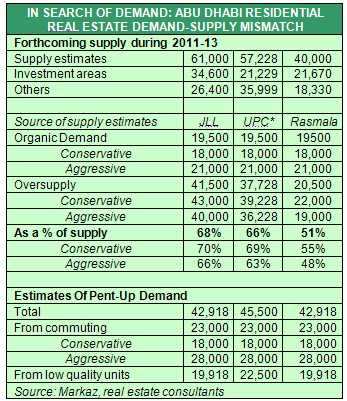
"Estimates of forthcoming supply in Abu Dhabi for the period 2011-13 are in the range of 40,000 to 60,000 units, of which slightly over half are in the investment areas and the rest in areas where non-nationals cannot own property," notes Venkat Ramadoss, assistant manager at Markaz, in a report.
"Developers are facing financial constraints and delays are being reported in government approvals and hence, the actual supply is less likely to be on the higher side of the above range."
Major Abu Dhabi developers such As Aldar and Sorouh are feeling the heat.
Sami Assad, Aldar CEO, said at a conference recently, "It will remain a challenging year in 2012. It will be a time for consolidation, reorganisation and restructuring--all of these aspects have to be focussed on."
Aldar cuts its workforce by 24%, or 105 people, as part of a strategy revision, to save around 68 milion dirhams, according to Shuaa Capital estimates.
"While it is undeniably a step in the right direction, it's rather symbolic in the context of the company's huge debt pile and underperforming investment property portfolio," said Roy Cherry, analyst at Shuaa Capital, which has a sell rating on the company.
During the first half of the year, Aldar reported more than three-fold increase in total revenue to Dh1,560 million, compared to Dh427 million during the same period last year. This increase in revenue can be attributed to sale of properties at Al Gurm, Al Bandar and Al Raha gardens, as well as growing income from operational businesses, mainly hotels and schools.
The company is also looking to deliver a number of its flagship projects, such as the first phase of the beach front Al Zeina residential community on Al Raha Beach. Trust Tower, a commercial office building, will be available for pre-lease on a phased basis starting November 2011, prior to official launch in mid-2012.
Aldar intends to deliver the remaining residential units at Al Zeina and release the remaining units at Al Muneera project. In addition, Al Ain International School and Al Bateen, a major secondary school in Abu Dhabi, will be delivered ahead of the new academic year. Aldar plans to hand over the first phase of the Al Falah residential housing community to the Abu Dhabi Urban Planning Council early next year.
"Nearly 20% of the 4,857 villas are scheduled for delivery in 1Q12 and the remainder by end-2012," says Taib Bank.
"We remain positive on the stock in the long term, given its strong portfolio of projects. However, the recent financial turmoil and the downturn in the real estate market could delay Aldar's projects. The property developer recently announced that its Yas Island Water Park is likely to start operating from the first quarter of 2013, instead of the third quarter of 2012.
Aldar Properties stock witnessed steep declines in the recent past, after Moody's Investors Service cut its ratings by two notches and downgraded it to 'B2' from 'Ba3' with outlook changed to negative.
Taib has revised its estimated target price to AED 1.55, and expects the company to record total revenues of AED 5.06 billion in 2011. In addition, with the company posting one-time gain of AED 716 million during 1H11, we expect net profit of AED 422 million in 2011.
SOROUH'S FUNDING
Sorouh Properties has its own set of troubles. The company's net income in 3Q2011 reached AED67 million only, compared to AED110 million of 2Q2011, below analyst forecast of AED136 million. EFG--Hermes bank notes that the earnings disappointment is attributable to the total provisioning, of AED51 million, to account for possible impairments to operation by year-end.
Like Aldar and other developers in Abu Dhabi, Sorouh's funding needs could escalate beyond a 12-month horizon or shortfalls may be pulled in earlier if economic conditions continue to deteriorate. Uncertainty on handovers and rolling receivables are some of the other risks facing the company, notes analyst.
Both companies, despite being backed by the government, highlight the troubles facing the Abu Dhabi real estate. The problem, clearly is not on the supply side, but demand which remains subdued.
PENT-UP DEMAND
Hence, the pursuit of new investor sources. Markaz estimates that 75% materialization of Abu Dhabi's pent-up demand potential would mitigate the oversupply during 2011-13.
At least the supply seems to be drying up. Markaz estimates notes that 48 real estate projects in Abu Dhabi are on hold. In addition, financial troubles at major developers and the banks' reluctance to expose their balance sheets to this under-regulated and overdeveloped market has delayed the arrival of new supplies.
Authorities also hope that new regulations would stimulate the market. The UAE
Federal Government has revised upwards a 6-month renewable visa for property owners to a term of three years.
The government is hoping that the incentive will revive investor confidence and interest in the UAE's real estate offering. But as the minimum requirement for a property's value to be one million dirhams, it excludes a vast number of investors from being lured by this rule.
"Undoubtedly the amendment is encouraging news for the market, but raises questions as to how many other initiatives could be implemented to stimulate the sector," says CBRE.
CONCLUSION
Identifying new demand sources is crucial to stimulate the sector. Clearly, it is demand-side issues that are holding the property sector back, and that's dependent on external factors such as the global economic outlook and the willingness of lenders to jumpstart the mortgage market.
The legal framework also needs a major upgrade. The market still awaits clarification of new laws and regulations that it is hoped will lead to greater investor interest. Analysts warn that more clarity on real estate laws and regulations is crucial, especially as a number of residential properties are expected to enter the market.
© alifarabia.com 2011