Saturday, Feb 19, 2011
with yemen’s oil reserves shrinking, access to the GCc job market is critical
Dubai Yemen is the poorest country on the Arabian peninsula in terms of average income and gross domestic product. The nation, not a member of the Gulf Cooperation Council (GCC), is heavily dependent on oil income, but its resources and capabilities to produce crude are limited. Other obstacles on the way to economic prosperity are the unstable government, limited foreign investments and rampant corruption, persistent problems that have sparked off civil unrest.
Another big challenge for the country is rising unemployment. While official figures by the government set the unemployment rate at around 15 per cent, other sources such as the CIA Global Factbook or International Monetary Fund data put it at between 35 and 40 per cent. Among the youth, unemployment is said to be around 65 per cent.
Most people are employed in agriculture and cattle rearing as these are still the dominant economic sectors, contributing more than one-fifth to the country’s GDP. Services, construction, industry, and commerce account for less than one-fourth of the labour force.
In its latest available report for 2009, the Central Bank of Yemen said that real growth in the non-oil sectors decreased from 7 per cent in 2008 to 6.7 per cent in 2009 “as a result of the adverse effects of the global financial crisis”.
Climbing deficit
According to Yemen’s Central Bank governor Mohammad Awad Bin Humam, the fiscal deficit increased from 2.7 per cent of the GDP in 2008 to 8.3 per cent in 2009, mainly as a result of the fall of international oil prices at that time.
The decrease in public revenues, primarily owing to lower government oil export revenues, was the cause behind the higher fiscal deficit in 2009. In 2009, the government’s share of oil exports was 30.9 million barrels amounting to $1.96 billion (Dh7.19 billion), compared with 44.5 million barrels and $4.39 billion in 2008.
The fiscal account is expected to remain in deficit in 2011, according to a country report by the Economist Intelligence Unit. However, the phasing out of fuel subsidies, and the implementation of the general sales tax, should be sufficient to ensure that the shortfall narrows, the report said.
It added that economic reform will likely be slowed by the unstable political climate, but implementation of the government’s ten-point reform plan is ongoing. Its resolve will be buttressed by the credit facility recently agreed with the International Monetary Fund.
Yemen’s deputy minister of finance, Jalal Yaqoub, has recently presented a ten-point plan for government reform and economic stability, which includes increased access to GCC employment opportunities.
For example, Point 2 of the plan is dedicated to lowering the barriers for Yemenis to work in the GCC, with the aim of generating employment for young Yemenis, who in turn are expected to send remittances to Yemen. The government hopes that remittances from migrant workers will reach $1.2 billion over the next 5 years.
The plan proposes to tackle a broad range of issues, from government employment to water, from oil to land, within a two-year period, which appears to many as too short a time-frame to elicit any success.
Unemployment issues
“The combination of rapid population growth and a stagnant economy has caused Yemen’s unemployment rate to rocket over the last ten years, with young people aged 15 to 29 the most likely to be unemployed,” wrote UK-based Middle East expert Leonie Northedge recently in a country analysis on Yemen.
Northedge also said that reports by Usaid and the Yemeni diaspora organisation Resonate! Yemen have found that Yemeni youth consider unemployment — and the poverty and sense of alienation that it brings — as playing into the hands of radical Islamist groups recruiting young people.
This led to a state of alarm in the US, which is set to step up indirect military assistance. Yemen’s Gulf neighbours are expected to generally focus on economic support.
Yemen’s economic basis remains oil production, even though the country is a comparatively small player in the region and is not an Opec member. It relies heavily on foreign oil companies that have production-sharing agreements with the government. Due to political and security issues, the Yemeni government has approached more smaller companies than large global players to exploit its oil fields, such as US-based Hunt Oil, Nexen (Canada), Occidental (US), DNO (Norway) and OMV (Austria). However, global players such as ExxonMobil, Sinopec and Total are also active in Yemen.
Oil reserves
According to the Oil and Gas Journal, Yemen has proven crude oil reserves of up to 3 billion barrels. Currently, oil production is concentrated in five areas.
Income from oil production constitutes 70 to 75 per cent of government revenue and about 90 per cent of exports. The reserves are not expected to last more than 9 years, and output from the country’s older fields is falling. The World Bank predicts that Yemen’s oil and gas revenues will plummet in the future and fall to zero by 2017 as supplies run out. No wonder that the Yemeni government pins its hopes on the discovery of new natural gas fields, especially in the Marib field. This field contains associated natural gas, which is being exploited by French company Total.
The Oil and Gas Journal has estimated that Yemen has 16.9 trillion cubic feet of proven natural gas reserves. In 2005, the government gave final approval to three liquified natural gas supply agreements, enabling a newly established company, Yemen LNG, to award a $2 billion contract to an international consortium to build the country’s first liquefaction plant at Balhat on the Arabian Sea coast. The project is a $3.7 billion investment over 25 years, producing approximately 6.7 million tons of LNG annually, with shipments likely to go to the US and South Korea. Production of LNG began in October 2009.
The Yemen government expects the LNG project to add $350 million to its budget and enable it to develop a petrochemicals industry.
Rising oil prices have lately eased the pressure on Yemen’s state budget. The ramping-up of gas production is expected to provide a significant boost to growth this year, although this will be partly offset by lower oil output and depressed domestic demand.
Yemen’s non-oil sector contributes around 47 per cent to the GDP and comprises services, construction, and commerce, employing less than 25 per cent of the labor force. The largest contributor to the manufacturing sector’s output is oil refining, with refineries in Aden and Marib.
The remainder of this sector consists of the production of consumer goods and construction materials.
Manufacturing constitutes around ten per cent of Yemen’s GDP but the majority of the establishments are small businesses.
Another contributor to Yemen’s economy is tourism. However, problems like limited infrastructure and poor security have hampered the sector.
Inflation rate of the Yemeni riyal is still worryingly high.
Figures from the Central Bank of Yemen have showed a sharp increase in inflationary pressures at the end of last year, with consumer price inflation surging to 16.5 per cent year-on-year.
For 2011, the IMF is expecting an inflation rate of at least above 7 per cent.
Rex Features
Price pressures
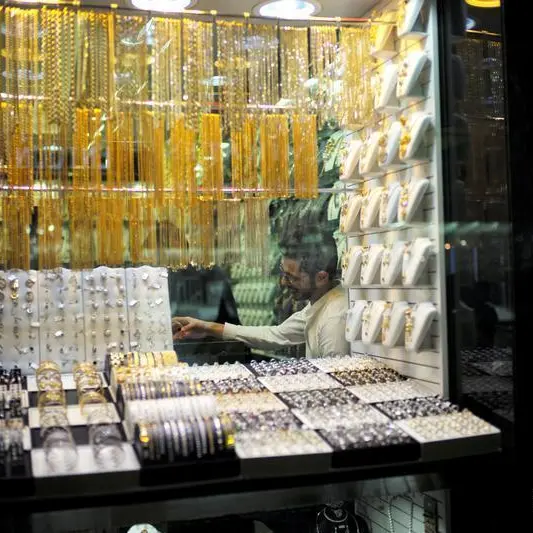
Shoppersg at a market in the Old City of Sana’a. Figures from the Central Bank of Yemen have showed a sharp increase in inflationary pressures at the end of last year, with consumer price inflation surging 16.5 per cent year-on-year.
income
public
revenues
2008 2009
Total revenues 1978.61255.9
Oil and Gas 1456.3 744.5
Oil exports 837.3377.7
By Arno Maierbrugger?Deputy Business Editor
Gulf News 2011. All rights reserved.