18 March 2011
BEIRUT: Leading businessmen have criticized Lebanese officials and politicians for fomenting tension through endless bickering and the constant exchange of accusations.
“Political disputes and the overlapping of powers among the different ministries in Lebanon are among the most important challenges facing oil importing companies,” Maroun Chammas, president of oil importing companies in Lebanon, said at a conference in Beirut Thursday.
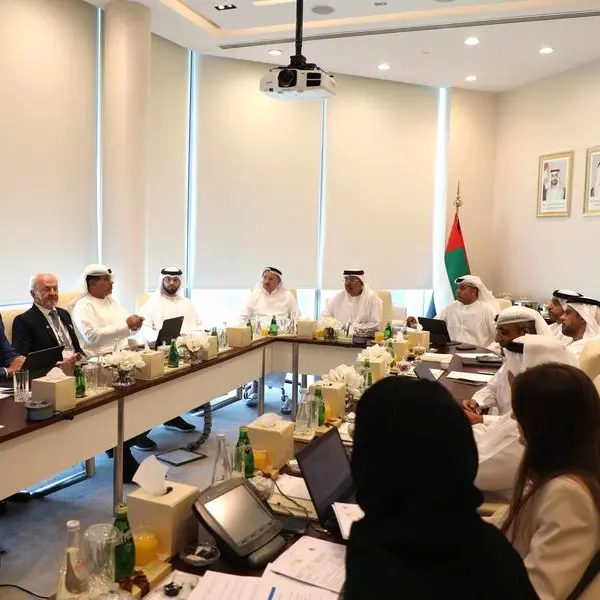
These sentiments were echoed by other prominent businessmen and heads of economic associations at the conference, which was organized by Confex International and dubbed “The role of economic organizations in the production of feasible opportunities.”
The session aimed to discuss the measures that must be taken by economic associations to maximize Lebanon’s benefit from the current regional turmoil. It also aimed at highlighting the challenges facing the main sectors in Lebanon.
Chammas said that the operations of oil companies are usually hampered by the conflicting decisions made by the various concerned ministries that make it difficult for these firms to keep their businesses running in Lebanon.
He added that oil firms usually have to deal with the ministries of Energy, Finance, Economy and Environment in addition to the Interior Ministry and the various municipalities to get their business done. “It is extremely hard to work in such an environment where you have to satisfy all of these parties to keep your business going,” said Chammas.
He added that this overlap in powers makes it difficult for current investors to keep their businesses running. “We should protect our current investments before we invite new ones,” he said.
Chammas emphasized the need to protect the investments of the 13 oil firms operating in Lebanon. “It’s of utmost importance to protect these firms’ investments as they amount to $3 billion and contribute to the treasury’s revenues by $700 million,” he said.
At the request of the audience, Chammas gave an overview of the change in oil commodities prices, saying that the rise in the international price of oil is pushing local prices upward.
He warned that if international oil prices rose to $150 per barrel, then the price of 20 liters of gasoline in Lebanon would rise to LL45,000. “We have to work on producing electricity in addition to resorting to alternative energy solutions to get over this problem but this needs a lot of time and money to be implemented,” he said.
Meanwhile, the head of the hotel owners association, Pierre Ashkar, said political debates are scaring tourists away. He added that the media in Lebanon tends to focus on the bad news most of the time instead of focusing on the country’s attractions.
Ashkar called upon the Tourism Ministry to launch a marketing campaign for the Lebanese tourism industry, similar to those launched by Turkey and other countries.
For his part, Mohammad Choucair, president of the Beirut and Mount Lebanon Chamber of Commerce, Industry and Agriculture, urged Lebanese politicians to stop their political bickering for the good of the economy. He added that Lebanon has to be up to the competition that will arise when other Arab countries start adopting freer economic systems in line with the push for reform.
Choucair called on the government to start the implementation of the necessary reforms in order to create more job opportunities and reduce the unemployment rate prevailing in Lebanon. “The security events taking place in the Arab world proved that securing people’s needs is a must for peace and stability,” he added.
The president of the Building Promoters Federation of Lebanon Elie Sawma said that the country must be well-prepared to absorb the huge amount of funds coming from the Middle East region due to the crisis that has erupted in many Arab countries. “New laws must be ratified by the Parliament for the facilitation of establishing businesses in Lebanon,” he said.
He called on Lebanese politicians to shun political squabbles in order to create a business friendly environment and facilitate partnerships between Lebanese and Arab investors.
Sawma argued that investments in the real estate sector are the most secure for the time being and create many job opportunities. However, he appealed to officials to complete the construction of roads and bridges to facilitate transportation between Beirut and the rest of the country and encourage people to buy apartments outside the capital.
“The relocation of residents outside the capital is likely to curb the astronomical surge in real estate prices in Beirut,” he said. – The Daily Star
Copyright The Daily Star 2011.