The Gulf's insurance market is maturing but also facing new challenges with the arrival of new players and tighter regulatory controls. Expect the less effective players to be absorbed, says S&P.
The Gulf's insurance market is maturing and deepening that has led to the companies' strong capital adequacy, strong asset liquidity, and strong technical earnings. However, the insurance players are feeling the pinch as growth slows and competition intensifies.
"In the region's maturing markets, larger companies are building markets at the expense of smaller competitors," Kevin Willis, analyst at Standard & Poor's.
"Mid-size firms are falling away, leaving a split in the region between large and small insurance companies. The abundance of small players with insufficient underwriting expertise continues to cause more risk-aware companies difficulty; the resulting fierce competition is unsustainable, in our view."
The insurers have managed to weather the poor investment climate quite well. Despite low interest rates, poor equity returns - globally as well as regionally -- and a depressed real estate market, Gulf insurers have large asset bases that are capable of generating positive cash flows.
"Earnings conditions are tougher for insurers that mainly write retail lines of business, predominately medical and motor, than for insurers that focus on the higher-value commercial lines," notes Willis. "However, retail lines develop over a shorter period, enabling insurers to correct prices more quickly. We anticipate that underwriting deficits from these sectors should prove containable."
Here are the key issues facing regional insurers, according to S&P:
CHANGING MARKETS
The Gulf's insurance landscape appears to be changing. Previously local players were content at playing the domestic field, but the bigger players are eyeing other regional markets and international players have also turned up.
"No single GCC primary insurer has yet achieved meaningful geographic diversity; none could use it to support resilience to single-market shock," says S&P. "That said, the GCC region and its neighboring regions are not prone to costly catastrophe losses. This mitigates our caution when assessing competitive strengths in such small markets."
REGULATORY COVER
Bahrain, Saudi Arabia and the financial centres of Dubai International Financial Centre and Qatar Financial Centre offer adequate regulatory cover.
"This is not to say that the other countries are weakly regulated, but in our opinion they do not consider the insurance sector's complete risk spectrum. Developments in countries such as the UAE are being proposed, which, if adopted and enforced, we expect to dramatically change the operational structures that currently dominate the market."
REINSURERS' MARKET
GCC insurers have long had a reputation for producing very attractive net combined ratios, usually heavily influenced by international reinsurers' willingness to write quota share treaties and give high commissions to the producing companies. This remains the case, but S&P sees a slow shift toward raising net retention levels from local insurers. This will reduce their apparent dependence on reinsurance.
RATING BAHRAIN
In Bahrain, the insurers are hamstrung by the sovereign rating of Bahrain, which has been downgraded to BBB/Negative, on account of recent political unrest in the country. This would like affect the quality of the asset bases and constraints the financial strengths of Bahraini insurance companies.
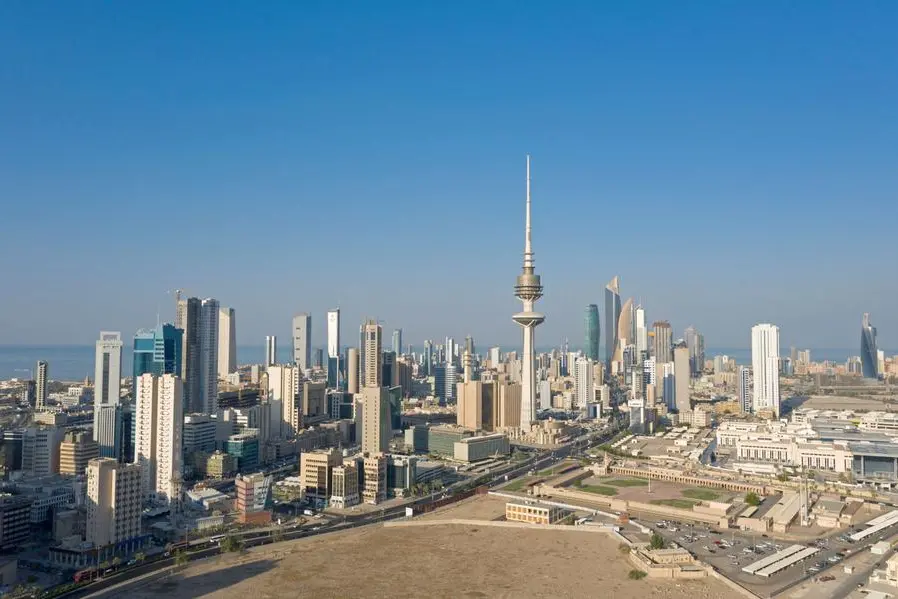
CROWDING IN KUWAIT
In Kuwait speculative takaful operators are ruining the market for the leading profitable Kuwaiti insurers.
"Retail, low-margin lines--typically medical and motor--are hardest hit by the activities of these companies, and technical profitability is under considerable pressure," says S&P's Willis.
LIFE AFTER OMANI CYCLONE
Omani insurers are adjusting to new risks after two major cyclones - Gonu and Phet - hit the Omani shores over the past four years. But greater regulatory supervision, especially for motor insurance, has affected policy risk covers and asset selection.
"We believe that insurers have made the necessary changes to their business models and that the resulting drag on market development has eased. Nevertheless, the market overall is very competitive, and technical earnings are unimpressive."
PROJECT QATAR
Qatari insurers are salivating at the prospects of the country's major infrastructure projects, especially in light of the FIFA World Cup in 2022, but so are international players who could enter the market through the Qatar Financial Centre.
TIME FOR M&A IN SAUDI
S&P expects some less effective insurers to be absorbed as competition intensifies in the Kingdom.
"Earnings are satisfactory overall, if volatile for some lines of business, particularly the low-value, high-volume, medical line, which is the dominant sector in Saudi Arabia. The market has experienced very strong gross premium growth in recent years. While we have seen this ease in 2011, at approximately 9% it remains higher than that in other GCC markets."
TIGHTER CONTROLS IN UAE
New insurance laws that were published in April 2011 could slowly see the market change, as insurers move away from volatile asset classes.
"We do not anticipate that these laws will be enacted soon--a seven-year transition period has been mentioned. Nevertheless, for many companies their adoption and enforcement will significantly disrupt an established business model. Standard & Poor's expects the changes to investment portfolio structures to lead to greater earnings and asset stability."
© alifarabia.com 2011