PHOTO
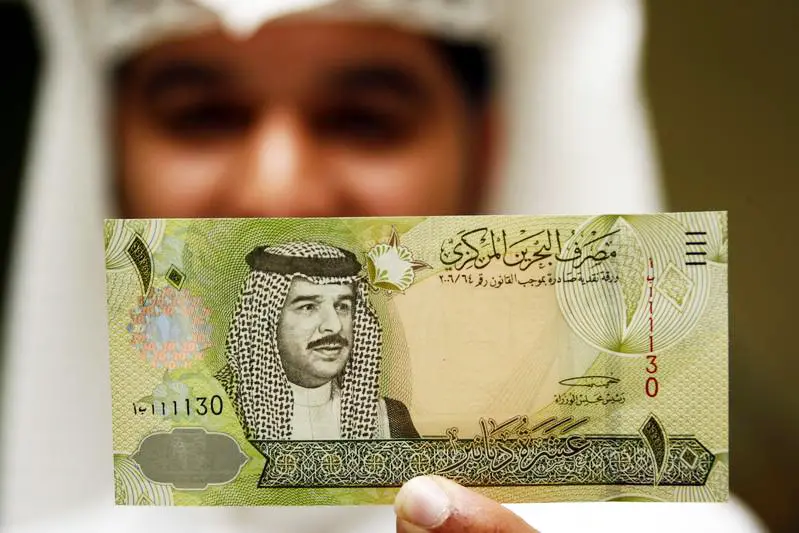
Bahrain has seen an increase in money supply and transactions last year, as shown by Central Bank of Bahrain (CBB) data, reflecting a boost in economic activity.
Total money supply increased to BD16 billion at the end of 2023, an increase of 5.5 per cent compared to the end of 2022, the CBB board of directors heard during their second meeting for 2024 yesterday.
Chaired by Hassan Al Jalahma, the board also approved the CBB’s annual report as well as the audited financial statements for 2023 and reviewed key economic developments during 2023 and activities thus far in 2024.
Money supply in its broad sense, (M3), totalled BD15.8bn at the end of January 2024, an increase of 0.8pc compared to the level as of end-January 2023, the regulator said in a statement.
According to economists, money supply is the total amount of money readily available for spending in an economy at a given time. An increase in the money supply can also lead to economic growth. This is because it can make it easier for businesses to borrow money and invest. This can create more jobs and production, which can boost the economy.
As for retail banks, total private deposits increased to BD14.2bn at the end of 2023, an increase of 5pc compared to level as of end-2022.
The outstanding balance of total loans and credit facilities extended to resident economic sectors increased to BD11.8bn as of end-2023, an increase of 4.3pc compared to end-2022, with the business sector accounting for 42.6pc and the personal sector claiming 49.5pc of total loans and credit facilities.
The balance sheet of the banking system (retail banks and wholesale sector banks) increased to $238.5bn as of end-2023, an increase of 6.4pc compared to end-2022.
During the first month of this year, total private deposits with retail banks increased by 0.9pc to BD14.1bn when compared to the level as of end-January 2023.
The outstanding balance of total loans and credit facilities extended to resident economic sectors increased to BD11.8bn as of end-January 2024, an increase of 4.8pc compared to end-January 2023, with the business sector accounting for 42.7pc and the personal sector take a bigger share (49.4pc) of total loans and credit facilities.
The balance sheet of the banking system (retail banks and wholesale sector banks) increased to $237.8bn as of end-January 2024, an increase of 10.4pc compared to end-January 2023.
The CBB also noted that a total of 183.9 million point of sales (POS) transactions were recorded in 2023 (77.6pc of which were contactless), an increase of 13pc compared to 2022.
Point of sale data is the information collected every time a customer makes a purchase. This can happen in a physical store, online, or even through a mobile app. Essentially, whenever a transaction is processed through a POS system, data is captured about that sale.
The total value of POS transactions during 2023 totalled BD4.1bn (50.7pc of them contactless), an increase of 7.9pc compared to 2022.
As for January 2024, 16.9m POS transactions were captured (77.2pc of them being contactless), an increase of 13pc compared to the figures in January 2023.
The total value of POS transactions for January 2024 totalled BD377.9m (50.1pc of which were contactless), an increase of 11.3pc compared to the first month of last year.
The banking sector maintained a high level of capital adequacy and liquidity, with the capital adequacy ratio reaching 19.7pc in Q4-2023 compared with 19.5pc in Q4 2022.
The capital adequacy ratio for the various banking sectors was 21.9pc for conventional retail banks, 18pc for conventional wholesale banks, 20pc for Islamic retail banks, and 17.4pc for Islamic wholesale banks in Q4 2023.
The total number of registered Collective Investment Undertakings (CIUs) as of January 2024 stood at 1678 CIUs, a decrease of 3.67pc compared to January 2023.
Collective Investment Undertakings are essentially investment pools that raise money from multiple investors and invest that money in a variety of assets, like stocks, bonds, real estate, or other financial instruments.
Examples include mutual funds, exchanage traded funds and hedge funds.
The net asset value (NAV) of CIUs decreased from $11.568bn in 2022 to $11.326bn in 2023, reflecting a decrease of 2.09pc. Moreover, the NAV of Bahrain domiciled CIUs decreased from $5.443bn in 2022 to $4.309bn in 2023, reflecting a decrease of 20.83pc.
Furthermore, the NAV of overseas domiciled CIUs increased from $6.125bn in 2022 to $7.017bn in 2023, reflecting an increase of 14.56pc.
Additionally, the NAV of Sharia-compliant CIUs increased from $1.107bn in 2022 to $1.805bn in 2023, reflecting an increase of 63.05pc.
Copyright 2022 Al Hilal Publishing and Marketing Group Provided by SyndiGate Media Inc. (Syndigate.info).