PHOTO
East African countries may face several more months of food shortages as a result of increasing funding cuts, which could jeopardise efforts to rebuild states.
This warning comes from a situational analysis of six critical crisis regions around the world, most of which are in the eastern Africa region. The World Food Programme (WFP) says that some 13.7 million people globally will plunge into a worse grade on food security, dropping from crisis (IPC3) to emergency (IPC4) levels of hunger, a direct impact on cuts on food rations supplied by WFP.
WFP, like most global humanitarian agencies, adopt the Integrated Food Security Phase Classification (IPC), a set of standards used globally to classify levels of food shortage. Countries are said to be safe at IPC1 (minimal), but in danger zone at IPC5 (famine).
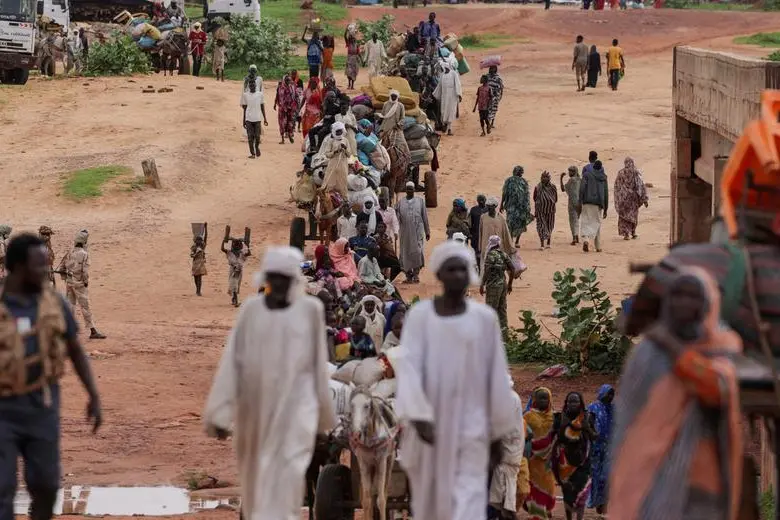
In the eastern Africa region, famine has already been reported in Darfur region in Sudan, where a deadly siege has endured for the last six months.
These revelations about the impact of aid cuts on nutrition are nothing new. Earlier, a study published in The Lancet had warned that reductions in US foreign aid alone could result in over 14 million preventable deaths worldwide by 2030, following funding cuts to the WFP by US President Donald Trump.
The Lancet said as many as 4.5 million children under five could die from reduced health services, nutrition, education, and humanitarian aid, due to medicine shortages and a resurgence of diseases in countries like the Democratic Republic of the Congo and Kenya.
However, the WFP says that aid cuts could have an even greater impact. State rebuilding could derail, which means these regions already in dire straits, could find it even harder to recover.“The collapse in humanitarian assistance risks further destabilising these fragile states. There is already evidence of broader impacts in some countries, such as forced migration,” the report says, warning that communities that previously relied on aid agencies for survival are losing trust in the humanitarian system.
Refugee outflowsThis has happened in Kenya’s Kakuma refugee camps, where angry refugees burned down empty grain stores in protest at a new model of distributing aid. Some have chosen to walk back to their homes, potentially returning to danger.
The WFP estimates that refugee outflows from aid cuts could increase by 0.4 percent for each additional year of conflict and by 1.9 percent for each one-percentage-point increase in food insecurity in Somalia, Sudan, South Sudan and the DRC.“Just as lives are at stake, the stability of nations hangs in the balance. Previous research on the link between food insecurity, conflict, and migration suggests that the crisis these funding cuts sparked may intensify global migration pressures and further destabilise vulnerable region.”
According to the UN Refugee Agency (UNHCR), there are about 25 million displaced people in the Horn of Africa, including 18.9 million internally displaced persons (IDPs) and six million refugees and asylum-seekers.“The world is facing a rising tide of acute hunger that threatens millions of the most vulnerable – and the funds needed to help us respond are drying up,” said WFP Executive Director Cindy McCain, commenting on the report.“Every ration cut means a child goes to bed hungry, a mother skips a meal, or a family loses the support they need to survive. The lifeline that sustains millions of people is being cut before our eyes.”Overall, WFP lists Afghanistan, DRC, Haiti, Somalia, South Sudan and Sudan as currently facing major disruptions, expected to worsen by 2026.
Funding shortfallsIn the DRC, where one in four people are food insecure, WFP was forced to cut support to 600,000 people, down from a planned 2.3 million.
The eastern parts of the country have 10.3 million people all marooned by conflict. Humanitarian agencies had said they needed $351.7 million over the next six months.
In Somalia, 4.4 million people are facing high levels of food insecurity, but WFP says it will be forced to reduce the number of people receiving emergency food assistance to just 350,000 people. The country operation has a $98.3 million funding shortfall.
South Sudan has 7.7 million people who are acutely food insecure. WFP says it has cut rations, prioritising communities in emergency and catastrophic levels (IPC4&5) of hunger. All 2.7 million people receiving WFP food assistance have since this October been missing key food items such as nutrition products. There is a $398.9 million funding shortfall.
Half the population of Sudan, or 25 million people, are facing acute hunger, with famine confirmed in some areas. WFP assists an average of 4.2 million people each month – including 1.8 million in famine or famine risk areas. However, it faces $600 million shortfall over the next six months.
© Copyright 2022 Nation Media Group. All Rights Reserved. Provided by SyndiGate Media Inc. (Syndigate.info).