PHOTO
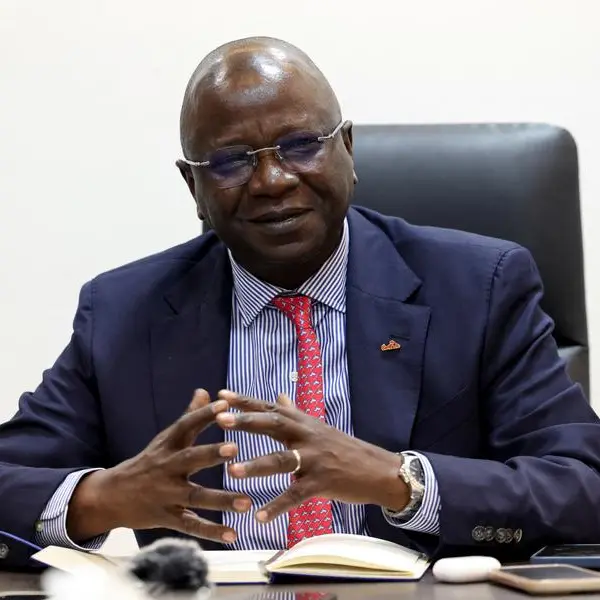
Claudia Shilumani recently took over as IPPF's Regional Director for Africa at a critical moment for reproductive health funding. She talks to The EastAfrican about funding crisis, the fightback, and why young people are her greatest source of hope.
You’ve taken over as IPPF Africa regional director at the most difficult moment for reproductive health funding in a generation. What is your plan? First, I want to strengthen the financial resilience of our member associations. To support them with resource mobilisation, diversification of funding, and making sure that all this financial pullback does not impact them to the point where they have to close.
Second, harnessing the voice of young people. I want to centre youth voices in all global debates on sexual and reproductive health and rights because, when we take care of young people today, we are taking care of the future of Africa. Third, building cohesion within the federation, because how we relate and communicate with each other determines everything.
What is your take on comprehensive sexuality education, and why are most African governments and religious leaders against it?The opposition comes from a misunderstanding. Religious groups and parents think we are teaching children about sex and encouraging them to engage in it. That’s not what the programme does. It empowers young people to make informed decisions, to understand their bodies, and to know they can say no.
The disagreement exists because we are not finding each other on why this matters. And I will be honest, that is partly our fault. We, in the health space, are terrible at speaking the economic language.
We go to parents and say we want to teach your children about sexuality, but we never make the connection that a child who understands their body, who can access contraceptives, is a child who stays in school longer, finishes their education and goes to university.
If we said it that way, if we showed parents that this programme is directly linked to whether their child contributes to the economy or becomes a statistic, the conversation would change.
The United States has withdrawn significantly from global health funding, including reproductive health programmes. What does that mean for your work in Africa?There are pros and cons of being the darling of one funder. For the longest time, Africa was the darling of the US Government. A lot of our member associations were beneficiaries of US Government funding. Then, overnight, some of our biggest member associations such as Nigeria, Ethiopia, had half their funding wiped out. These are service delivery organisations. They are providing family planning services and abortion care.
It is one thing if you are an advocacy organisation, because you can try to regroup. But if you are providing services to women and girls and the money is taken away, it means access issues for mothers and young women.
We lost over $87 million across the board. More than 1,500 facilities closed because they could no longer afford to keep those service points running.
At IPPF we’ve come up with what we call the fightback fund. We’ve raised over $7 million, which we are giving to our member associations so they can continue to provide services while we wait and see what changes will come on the global health landscape. But, more than that, we are working with them to build resilience.
We are helping them relocate clinics to higher volume sites, think about how to generate income. I do not want us to be begging funders to come back. We need to build organisations that are not dependent on external aid, which could be taken away any day.
We are seeing a condom supply-chain collapse in Kenya, and contraceptive shortages in several counties. How much of that is directly traceable to the funding withdrawal?All of it. Our clinics used to receive just under $10 million in commodity funding from UNFPA. Because the family planning commodities were stuck in Europe, and some had to be destroyed because of the new US Government's positioning, our supplier simply did not have the supplies to deliver. So, there will be stockouts.
What we have been able to do is use our own core resources and donor funding to procure some of these commodities and get them into our clinics. But it has a direct relationship with the stockouts you are observing in Kenya.
The consequences are not just unintended pregnancy; condoms are a double barrier — they prevent pregnancies and HIV. We have made significant progress in HIV prevention over the past decade.
If we do not have this affordable, effective prevention tool in place, we are heading back to a point where you are willing to pay for ARVs because somebody is HIV-positive but not willing to pay for a condom that could have prevented it.
There is a view that African governments should have been funding their own reproductive health programmes all along. Do you agree that Africa created this dependency?The well-being of any nation is the responsibility of the government. However, we have been in a symbiotic relationship with funding partners in the West who, for the longest time, have been funding us. They created this dependency because our governments said, "You have the global funds, the World Bank, so we can redirect that funding to other priorities.”Our governments got comfortable with the fact that social services, especially health, are being taken care of by somebody else.
But here is where the unfairness comes in. When you make somebody that dependent, you do not wake up overnight and say you no longer have it. You give them time to get ready. The government does not manufacture money overnight. There is a process that goes to Parliament and gets approved. If you do it overnight, they are caught with their pants down.
That is where the unfairness comes from, because we did not manufacture this dependency. They kept piling money, and the governments would say, "Oh, there's money at the table, therefore, I can buy something else.”If you give your daughter pocket money every day, and then one day you wake up and you're like, the pocket money is gone, you're going to have a big issue. But if you tell her that, look, in the next six months, I will stop, but this is how we plan around the fact that this will stop and then you start being on your own.
I think that's why there’s criticism about being unfair in how it was done, and I agree with it.
But, in terms of delegating responsibility for our own population to the western world, I do not think we should do that. Our governments need to figure out how to sustainably take care of their own people.
What is your assessment of where Kenya is on reproductive health?There is a lag between when policy is made by parliamentarians and how it trickles down to the county level. I will give an example of abortion.
Abortion is legal nationally when the mother’s life is at risk, but when you go to the county level, our service delivery member associations are still being arrested. You ask yourself, why is it that there is a law that allows it, but at the local level, we still have to go to court and find lawyers to defend our service providers?But I believe there are entry points in any government, including Kenya. We tend to think we are the movement and the only way to engage with government is by calling them out, demanding rights. I believe we can do that and still sit with the government and have an evidence-based conversation.
What has been the impact of IPPF in Kenya?We support the Reproductive Health Network in Kenya, and I must say I have been overwhelmed by the impact and the lives they have been able to reach over the past two years since they joined us.
When we started working with them, their clientele quadrupled. They were seeing about a million clients, they are now seeing 4.8 million in a matter of two years. That is a big jump. And it shows the benefit of being a member of IPPF because it opens opportunities.
We give them core funding that helps them to keep the lights on, but also restricted money through our multicountry projects. We sit with them, understand their interests, and build a resource mobilisation plan together.
Sexual and reproductive health has become a political battleground at every level. How do you navigate an environment where your work is being weaponised?The opposition is getting much stronger. They are more organised, they are well-funded, and they are infiltrating the spaces where our young people have felt free to express themselves. And because of that, they are gaining ground, dismantling the structures we have put together.
What we are saying among ourselves is that rather than looking at each other as opponents fighting for resources, let us come together and build a solid movement.
Adolescents, girls, and young women remain the most underserved in reproductive health across Africa. What is IPPF doing differently to reach them?Youth-friendly services and youth-friendly spaces. We earmark five percent of our budget specifically for young people, and they decide their own priorities. I visited RHNK and saw it working. They gave young people a room and a budget to design it themselves.
That is where they hang out, exchange information, talk freely about sexuality, about anything that challenges them. By creating those spaces, we are already contributing to young people becoming aware and free to express themselves.
On service delivery, you cannot have a nurse in their 60s coming with religious baggage into a consultation with a 13-year-old. The first thing they ask is, "Why are you even here? Does your mother know?” We need to change that. I want to create an accreditation programme, where young people use their smartphones to give feedback on facilities.
We crowdsource feedback and accredit the clinics that pass. Did the nurse treat you with dignity? Were they judgmental?Young people just want to be understood and treated like they have something to say. And they do. Sometimes you do not even have to be at the table. Just give them the table and let them run.
What gives you hope right now?When I look at young people, I look at their eyes, and I see so much hope, so many dreams. I visited RHNK, and I spoke to the young people from the heart. And the hunger and the thirst in the young people I saw that day is something that gave me hope.
These are people who are hungry for this knowledge, hungry to do something positive, and willing to join the movement and become the voice of the movement.
Africa will continue to be a young population. I met with Germans recently, and they told me their young population is 13 percent. In our continent, it is 60 percent and above. Harnessing the power of young people is what gives me hope. The future of this continent is in the hands of young people.
What do you want women and girls in Africa to know about what IPPF is fighting for on their behalf?You need to fight today for what you believe in. Sexual and reproductive health and rights will only be realised if young people stand together and say, these are our rights and we deserve to be treated with respect, with dignity, and be given the services we need in a friendly manner.
IPPF will walk the journey with them. But they need to say that bodily autonomy is their responsibility, and they will fight for it.
What we need is a mandate that will help us fight and win.
What is your ask of African governments?My ask is simple: African governments must stop negotiating these Government-to-Government memorandum of association one by one and come together as a bloc. Because when you negotiate alone, you are vulnerable. When you come together, you have bargaining power. And some of what is being asked for in these agreements, minerals, data, conditions attached in small print, is far more than Africa should be giving up.
Some countries are so desperate for money at the table that they will sign anything. That is what worries me. Because, when you sign something, you are committing not just your generation but the next ones, too.
What keeps you awake at night?What keeps me awake at night is the fear that one day a government will look at us and say, "We signed with the US Government and, therefore, we cannot work with you.”In Nigeria, there is over a billion dollars being put on the table by the Americans. What is the chance that the Nigerian Government would choose to keep working with us over losing that money? They would rather take a distance and play it safe.
That is the scenario I dread most. The conditions may not always be explicit, but the expectation is there, written somewhere in small letters. And that scares me.
The Global Gag Rule, in its expanded form, restricts what organisations receiving US funding can say or do around abortion. What does this mean?It means reduced services and shrinking access. Any organisation that wants US government funding must show they are not working with us, not even speaking to us. So, partners face a choice: do the right thing or take the money. Survival instincts kick in. And when they choose the money, our space gets smaller. We cannot do this work alone. We need governments, civil society, and young people.
© Copyright 2026 Nation Media Group. All Rights Reserved. Provided by SyndiGate Media Inc. (Syndigate.info).