PHOTO
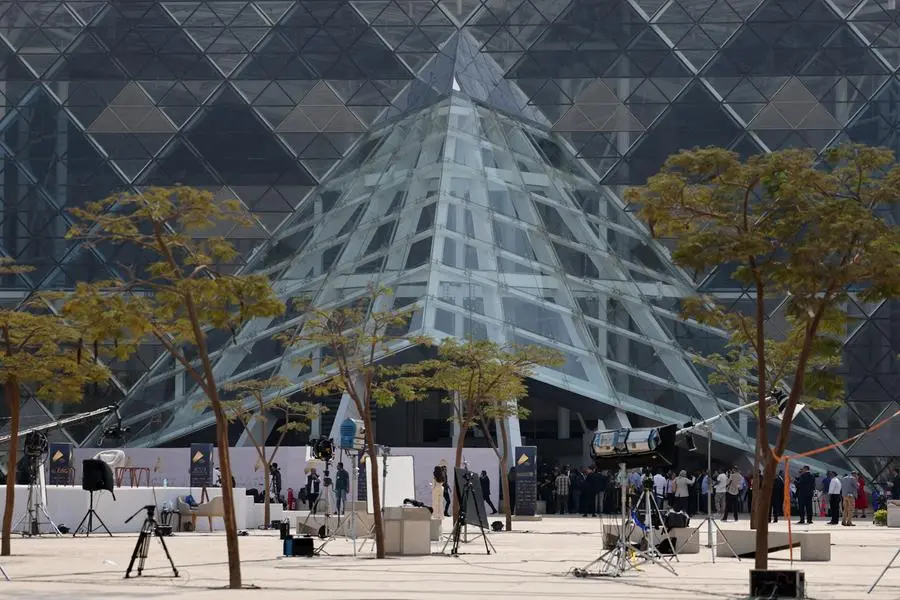
Egypt has declared the Grand Egyptian Museum carbon neutral, marking the first time carbon footprint accounting has been applied to a national mega project, officials said on Sunday—an important milestone in the country’s push toward green development.
Acting Minister of Environment Manal Awad and Minister of Tourism and Antiquities Sherif Fathy said the declaration follows the completion and handover of a verified carbon footprint report for the museum’s opening ceremony, enabling its official classification as a carbon-neutral facility.
Awad described the step as unprecedented among Egypt’s national projects and said it reflects presidential directives to integrate environmental and climate considerations into the planning and implementation of major developments. She added that the initiative aligns with Egypt Vision 2030 and the National Climate Change Strategy 2050.
Achieving carbon neutrality at the Grand Egyptian Museum demonstrates Egypt’s ability to deliver world-class cultural landmarks that meet international sustainability standards, Awad said. She noted that environmental certificates issued by the Ministry of Environment and registered with the United Nations enhance Egypt’s global standing and support the tourism and investment sectors.
Awad added that the museum is the first site in Egypt to have its environmental commitment legally documented and independently verified in accordance with international standards by a nationally accredited body. The process builds on earlier efforts to offset emissions during the museum’s trial operations in 2023 and 2024, with continued technical cooperation planned for the next phase.
Tourism and Antiquities Minister Sherif Fathy said the announcement reflects close coordination among the environment, tourism, and investment authorities, noting that the museum’s opening ceremony was organised to minimise environmental impact and comply with internationally recognised benchmarks.
Fathy underscored the growing importance of environmental responsibility in tourism policy, stating that more than 50% of Egypt’s hotels already apply environmental standards, including the use of renewable energy and reduced plastic consumption. He added that similar requirements are expected to be expanded to museums, archaeological sites, and tourism activities.
Ahmed Ghoneim, Chief Executive of the Grand Egyptian Museum Authority, said the verified report confirms the museum’s commitment to managing major events using robust emissions measurement methodologies, while linking heritage preservation with environmental protection.
According to an official statement, audits were conducted by an accredited verification unit under Egypt’s General Organization for Export and Import Control, in line with international standards, covering both operational emissions and those associated with the opening ceremony.
© 2026 Daily News Egypt. Provided by SyndiGate Media Inc. (Syndigate.info).