PHOTO
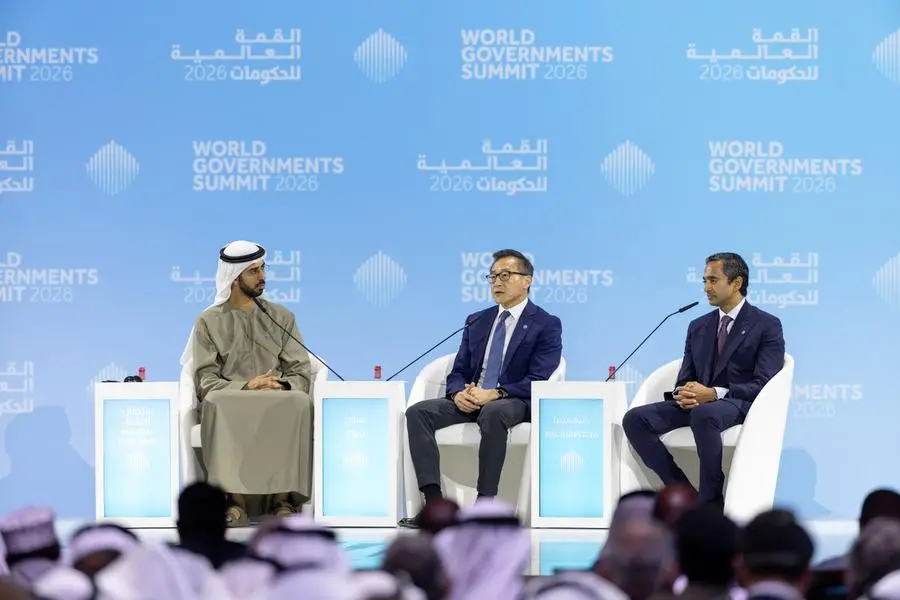
DUBAI: Global technology and investment leaders gathered on the second day of the World Governments Summit (WGS) 2026 to examine the evolving trajectory of artificial intelligence during a high-level session titled “Where Is AI Heading?”.
The discussion brought together Joseph Tsai, Co-founder and Chairman of Alibaba Group, and Chamath Palihapitiya, Founder and Managing Partner of Social Capital, moderated by Omar Sultan AlOlama, Minister of State for Artificial Intelligence, Digital Economy, and Remote Work Applications and Vice Chair of the WGS.
Palihapitiya emphasised the strategic implications of emerging technologies on nations, stating that “every country, probably in the next three to five years, will be forced to make a very important decision which is around their sovereignty of their own productivity in GDP.”
According to Palihapitiya, open-source models offer transparency, noting that, “the future is open source.”
Tsai aligned with this view, particularly on the ability of open-source to grant sovereignty and data control. He added that governments have taken notice because “they care about the sovereignty aspect and care about their data privacy.”
Addressing sustainability, Tsai distinguished between model-only companies and those with integrated infrastructure. Highlighting Alibaba’s approach, he said, “We have our Qwen model as open source, but we also run our cloud business,” noting that the company monetises through training and inference on its infrastructure.
However, he cautioned, “it remains to be seen… how can you, especially consumers, get paid for a monthly subscription and generate economics there.”
The conversation then turned to whether AI represents a speculative bubble. Palihapitiya rejected that framing, arguing that the technology could fundamentally reshape perceived “safe” investments. He warned that breakthroughs such as advanced batteries or room-temperature superconductors could “change how we use oil… natural gas… [and] build SMRs.” He concluded, “there is no bubble in that context,” urging openness to profound economic change.
Tsai reinforced this view, stating that “there is no bubble if these models operate on the current path of trajectory,” while underscoring the scale of current capital expenditure, noting that hyperscalers invested $60–80 billion per company annually last year, a figure that has now doubled to approximately $120–150 billion per company per year, according to the latest quarterly reports.
Together, the speakers underscored that AI’s future will be defined not only by algorithms, but by sovereignty, infrastructure, and long-term economic vision.
The WGS 2026, which runs for three days until Feb. 5 under the theme “Shaping the Governments of the Future,” brings together more than 60 heads of state and government and their deputies, over 500 ministers, representatives of more than 150 governments, more than 80 international and regional organisations, over 700 CEOs, and more than 6,250 participants from around the world.