PHOTO
China’s overseas infrastructure investment is set to increasingly flow toward Belt and Road Initiative (BRI) countries and emerging markets, with the Gulf positioned to capture a growing share of capital, Moody’s Ratings said in a new report.
China’s outbound direct investment reached $192.2 billion in 2024, while infrastructure-related investment rose to $14.1 billion. Moody’s Ratings expects overseas infrastructure spending to continue growing through 2026 and 2027, supported by strong demand across emerging markets and an increasing focus on energy transition projects.
The Middle East is expected to be among the key beneficiaries, underpinned by strong infrastructure demand, energy diversification efforts and deepening economic ties with China.
“We refer to the Middle East as a whole, consistent with the way China's overseas investment strategy is framed,” said Ivy Poon, vice president and senior credit officer at Moody’s Ratings.
“Rich natural resources and strong demand for energy transition underpin the region’s attractiveness as one of the key destinations for China’s overseas infrastructure investment,” she added.
Gulf advantages
The Gulf region offers distinct advantages compared with other emerging markets, Moody’s said.
According to China’s Ministry of Commerce, the UAE accounted for $9.5 billion in China’s cumulative direct investment in the Middle East as of the end of 2024, followed by Iran at $4.5 billion and Saudi Arabia at $4 billion.
Saudi Arabia and the UAE are expected to play a central role in China’s next phase of overseas infrastructure expansion as Chinese companies seek markets offering both sizeable project pipelines and stronger execution capabilities.
“The Gulf is becoming an increasingly attractive destination for Chinese infrastructure companies’ overseas expansion, combining substantial demand for large-scale projects with strong state-backed funding when needed,” said Aurelien Mali, VP at Moody’s Ratings.
He added: “Saudi Arabia has the region’s largest project pipeline, driven by its Vision 2030 diversification agenda, including giga-projects, logistics, industrialisation and renewables. The UAE offers a more mature platform across ports, utilities, airports, technology and regional headquarters.”
According to him, the Gulf stands out among emerging markets as an attractive destination due to its sizeable infrastructure pipelines, strong sponsors, and generally robust execution capacity.
Shifting investment strategy
Moody’s expects the next phase of Chinese overseas investment to be more selective, reflecting a shift from volume-driven expansion to a stronger focus on commercial viability and project quality.
The agency said China’s latest Government Work Report and the 15th Five-Year Plan for 2026-2030 encourage outbound investment under tighter oversight, prioritising clean energy, critical resources, transportation and logistics infrastructure.
“While we do not expect a fundamental change in the scope of BRI-related projects, we expect increasing emphasis on risk-adjusted returns, commercial viability and project quality, rather than scale and volume when China began its overseas investments,” Poon said.
“Investment is becoming more coordinated, with greater integration along industrial value chains instead of fragmented project deployment,” she added.
Energy transition is expected to remain the strongest driver of Chinese investment overseas. Moody’s estimates global energy investment will reach $3.4 trillion in 2026, while spending related to renewable energy, nuclear power, grids, storage, low-emission fuels and electrification will total $2.2 trillion.
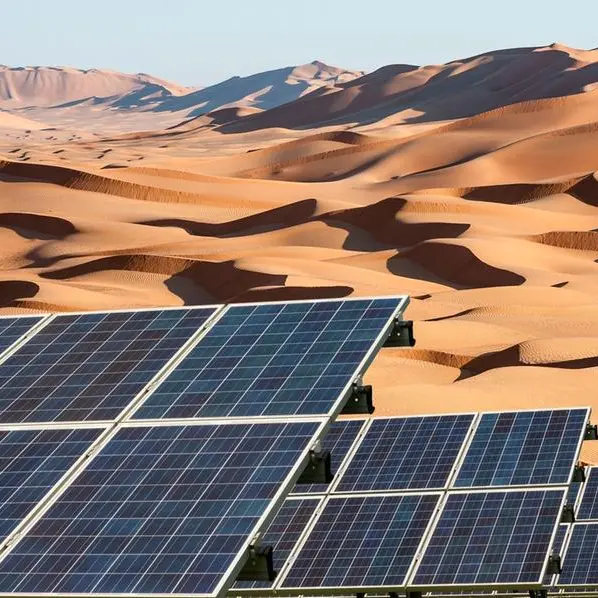
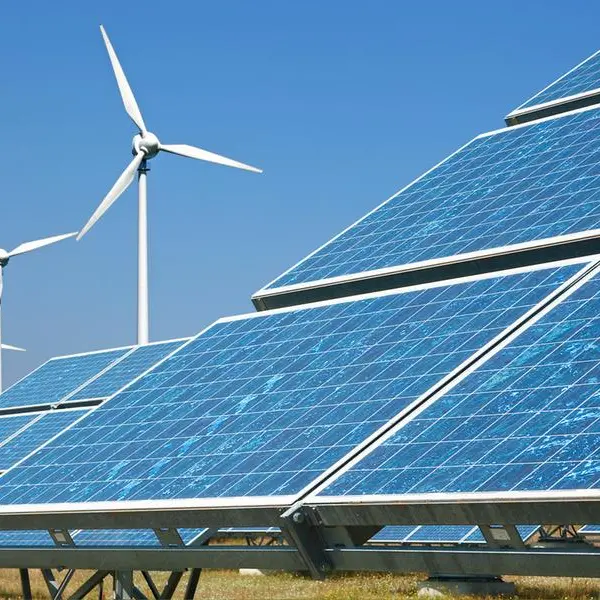
The report noted that China-led renewable energy projects have accelerated sharply across BRI markets. More than 500 renewable energy activities were recorded between October 2022 and June 2025, with solar photovoltaic projects accounting for the largest share at 299 projects and 133.8 gigawatts (GW) of capacity, followed by wind projects with 92 projects and 39.1 GW.
Within the GCC, renewable energy generation, battery storage and grid infrastructure are expected to attract increasing Chinese participation.
“We expect energy transition-related opportunities to remain a key driver of investment, including renewable energy generation and battery storage,” Poon said.
According to the IEA's World Energy Investment 2026, spending on low-emissions generation rose 70 percent in the last decade, with utility-scale solar PV investment increasing five-fold and wind investment nearly tripling, largely driven by GCC countries.
“We expect this trend to continue, as recent geopolitical developments have reinforced the importance of energy security and diversification across the region,” she said.
Regional tensions and energy security
Recent tensions affecting the Strait of Hormuz could further accelerate investments aimed at strengthening regional energy resilience, according to Moody’s.
“Most GCC countries entered this conflict from a position of strength on energy diversification, grid expansion and battery storage capacity, with strategies already in motion,” said Paul Feghaly, analyst at Moody’s Ratings.
He added: “Notable examples include Saudi Arabia’s 50/50 renewable target by 2030, the UAE Energy Strategy 2050, and Qatar’s solar expansion. The conflict supports a further acceleration of this trajectory.”
However, Feghaly noted that “hydrocarbon supply chain risk is less pronounced for the GCC itself given local sourcing. The more relevant residual risk is physical asset risk to generation and storage infrastructure, which an accelerated energy transition only partially mitigates.”
“Strengthening the GCC Interconnection Grid and broader transmission infrastructure could also be an option to enhance regional resilience and balance supply across member states,” he added.
Beyond renewables
Beyond renewable energy, Moody’s sees growing opportunities for Chinese participation in transport and logistics infrastructure as global trade routes continue to evolve.
The agency expects ports, logistics hubs and multimodal transport corridors linking Asia, the Middle East and Africa to become an increasingly important part of China’s overseas investment strategy.
“Chinese operators are increasingly positioning BRI ports as multi-directional regional hubs rather than purely China export gateways. These assets are evolving to support diversified trade flows, including intra-regional and transshipment traffic, as global supply chains and trade routes shift,” Poon said.
She added that recent BRI policy guidance highlights rail, road and port connectivity projects that strengthen cross-border trade links between Asia, the Middle East and Africa.
Financing structures are also expected to evolve as Chinese companies expand their presence in the region.
Moody’s said future projects are likely to rely on a broader mix of funding sources, including sovereign wealth funds, multilateral lenders, export credit agencies and commercial banks, alongside traditional Chinese financing channels.
“In Saudi Arabia for example, PIF remains the main investor behind the Kingdom’s diversification agenda, with a strategy to deploy close to $50 billion annually,” Mali said.
“Therefore, China’s role is likely to evolve from dominant lender to one participant in a broader mix of financing sources, including regional sovereign wealth funds and government-related entities providing some equity, while multilateral development banks and Western banks expand co-financing,” he added.
He said that the shift will support more blended finance, including public-private partnership and project-finance structures, alongside tighter terms and a greater emphasis on bankability, replacing the earlier model of large, policy-driven Chinese funding.
At the same time, geopolitical considerations are increasingly shaping project selection and investment decisions.
Geopolitical Risks and Mitigation
Chinese companies are adopting more stringent approaches to managing geopolitical risks when evaluating infrastructure opportunities in the Middle East.
“We expect the Chinese companies to evaluate their Middle East investment through more stringent screening in project selection and risk-adjusted approach, which included risks related to regional security dynamics,” Poon said.
“In general, Chinese companies will prioritise markets with stronger policy predictability and sovereign support, while favouring projects with clearer revenue visibility, such as those backed by long-term concessions, offtake agreements or government-linked counterparties,” she said.
Poon added that heightened sensitivity to regulatory and geopolitical risks would lead to a greater emphasis on risk-sharing structures, including consortium approaches, co-investment with local or regional partners, and support from export credit agency.
While the Middle East remains strategically important because of its role in global energy and trade flows, Chinese companies are expected to become more selective in choosing projects.
Looking ahead, Moody’s expects the Gulf to remain firmly embedded within China’s overseas infrastructure strategy as the next phase of BRI investment unfolds.
“We expect China will continue to invest in the Middle East projects as part of the country’s overseas investment and BRI initiatives,” Poon said.
(Reporting by SA Kader; Editing by Anoop Menon)
(anoop.menon@lseg.com)
Subscribe to our Projects' PULSE newsletter that brings you trustworthy news, updates and insights on project activities, developments, and partnerships across sectors in the Middle East and Africa.