PHOTO
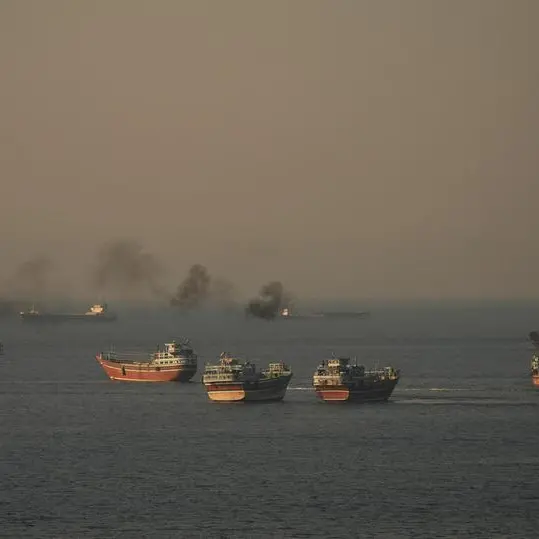
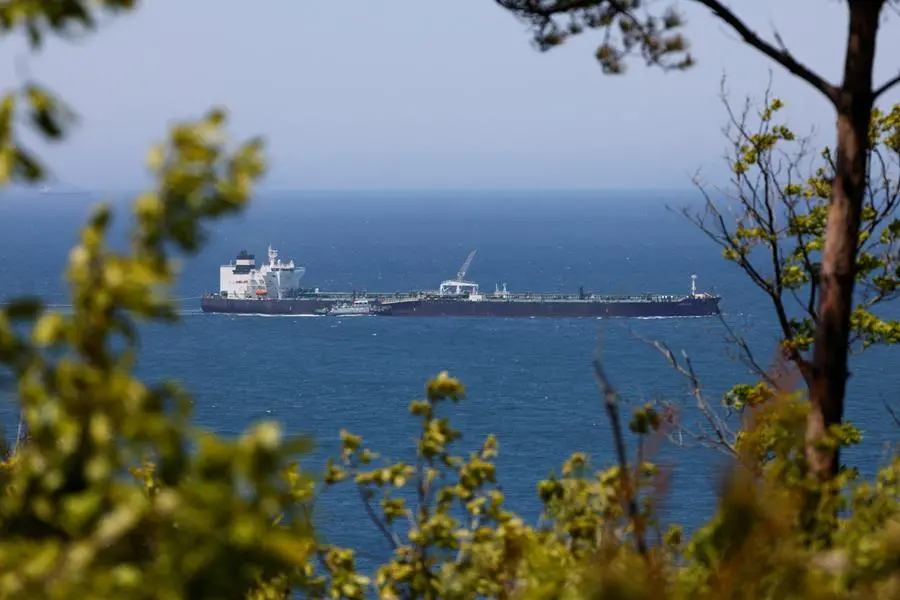
LONDON/SINGAPORE - Three Saudi-flagged supertankers with six million barrels of crude onboard sailed through the Strait of Hormuz hours after U.S. President Donald Trump signed a deal with Iran over an end to their war, ship tracking data showed on Thursday.
Other tankers showed their positions sailing through the strait on public ship tracking on Thursday after weeks of ships concealing their voyages when crossing through the waterway.
The sailings from Saudi ports were the biggest departures through the strait in weeks, according to Reuters analysis of shipping movements.
Saudi Arabia has mainly used its Red Sea port terminal of Yanbu to ship out oil due to the conflict which started on February 28 and which has stopped hundreds of millions of barrels of oil from leaving from Gulf producer ports through the Strait of Hormuz.
Saudi Arabian shipping group Bahri, which manages the three tankers, could not be immediately reached for comment.
The U.S. and Iran released the text of an interim agreement their presidents have signed to end their war on Wednesday, though Trump threatened to resume attacks and kill Iranian officials if they failed to honour their commitments.
The Hong Kong-flagged Aframax tanker Tong Lin Wan, which loaded naphtha from Abu Dhabi's Ruwais Refinery in early March and had remained inside the Gulf since then, passed through the strait on Thursday, LSEG data showed.
The QatarEnergy-controlled liquefied natural gas tanker Mraikh also crossed the strait on Thursday, LSEG and Kpler data showed. It loaded its cargo at Ras Laffan on June 12-13, and is set to deliver it to Port Qasim, Pakistan on June 18.
QatarEnergy did not immediately respond to a request for comment.
Another Hong Kong-flagged medium-range tanker Ye Chi sailed past Iran’s Larak island, but it has since stopped at the Strait of Hormuz, according to LSEG data.
Both Tong Lin Wan and Ye Chi are managed by COSCO Shipping Energy Transportation, LSEG data showed.
COSCO Shipping did not immediately respond to a request for comment.
(Reporting by Jonathan Saul, Siyi Liu, Emily Chow and Florence Tan; Editing by Philippa Fletcher and Emelia Sithole-Matarise)