PHOTO
Italy’s Eni reported this week new offshore gas discoveries in Libya and the start of production from a major non-associated gas project in Angola, as the company continues to expand its upstream gas portfolio in Africa.
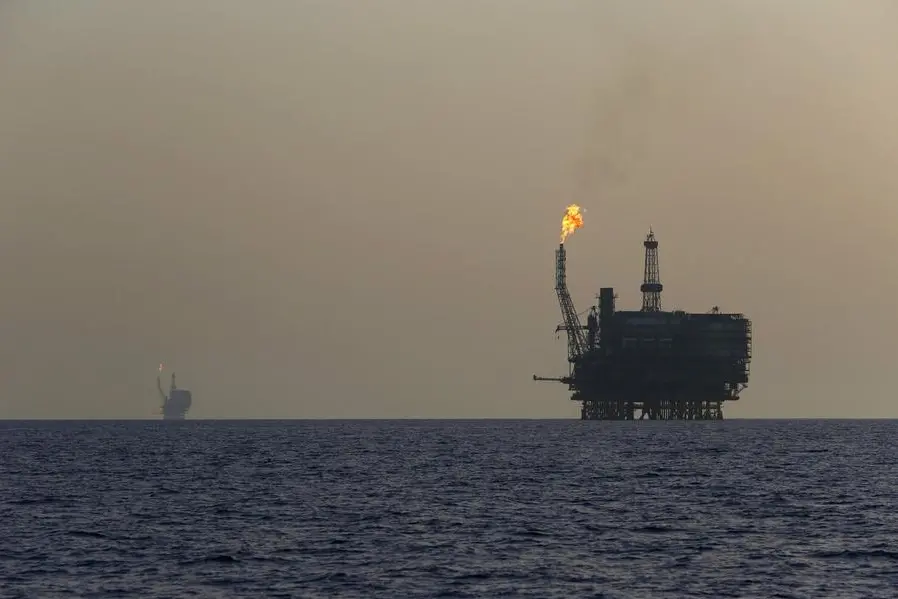
Eni said two gas discoveries were made offshore Libya following an exploration campaign carried out in recent months near the Bahr Essalam field, the country’s largest producing offshore gas field.
The discoveries were drilled in two adjacent structures, Bahr Essalam South 2 (BESS-2) and Bahr Essalam South 3 (BESS-3), through the B2-16/4 and C1-16/4 wells located about 85km offshore in water depth of around 650 feet, roughly 16km south of the existing Bahr Essalam facilities.
Both wells encountered gas-bearing intervals in the Metlaoui Formation, the main reservoir in the area, with well tests confirming good reservoir quality and production potential.
Preliminary estimates indicate the two structures contain more than 1 trillion cubic feet (Tcf) of gas in place, Eni said.
Due to their proximity to existing offshore infrastructure, the discoveries are expected to be developed through tie-backs to the Bahr Essalam facilities, enabling a fast-track development.
The gas is expected to be supplied to the Libyan domestic market, with part of the volumes exported to Italy, supporting both local energy supply and export revenues.
First gas from Quiluma project in Angola
Separately, Eni announced on Tuesday the start of gas delivery from the Quiluma field offshore Angola, part of the New Gas Consortium (NGC) project, marking the first development of non-associated gas fields in the country.
Initial output from Quiluma is expected at about 150 million standard cubic feet per day (MMSCF/d), with production planned to increase to around 330 MMSCF/d during 2026.
Gas from the field will be processed at the NGC gas treatment plant in Soyo, inaugurated in November 2025, before being supplied to the Angola LNG plant for export and to the domestic market.
The project aims to increase LNG feedstock supply while also improving gas availability for power generation and industrial use in Angola.
The NGC consortium includes Azule Energy as operator with 37.4 percent, CABGOC with 31 percent, Sonangol E&P with 19.8 percent, and TotalEnergies with 11.8 percent.
Azule Energy, the upstream joint venture between Eni and BP, was formed after Eni transferred its Angolan assets into the partnership, which currently produces more than 230,000 barrels of oil equivalent per day in the country.
(Writing by Majda Muhsen; Editing by Anoop Menon)
Subscribe to our Projects' PULSE newsletter that brings you trustworthy news, updates and insights on project activities, developments, and partnerships across sectors in the Middle East and Africa.