PHOTO
The Arab Energy Organisation (formerly the Organisation of Petroleum Exporting Countries – OAPEC) has called for greater investment in underground gas storage across Arab states, citing significant untapped potential and strategic benefits for energy security.
AEO’s new study titled, ‘Underground gas storage and its role in achieving energy security,’ found that depleted oil and gas fields, abundant resources, existing infrastructure near production areas, and favourable geological formations create optimal conditions for developing strategic storage facilities.
“Investment in underground gas storage in the Arab states has become a strategic necessity for ensuring continuous supplies, coping with energy crises, backing energy transformation, and integrating with hydrogen,” said Jamal Issa Al-Loughani, Secretary General of AEO.
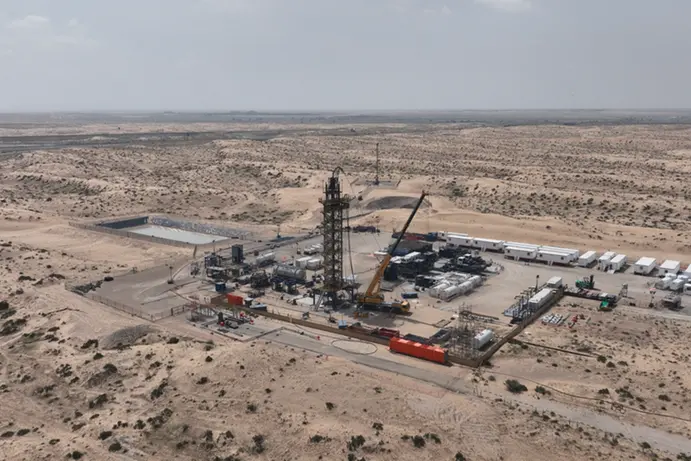
Despite vast reserves and strong production and export capabilities, only three underground gas storage facilities currently operate in the Arab region in the UAE and in Saudi Arabia. Most countries rely on above-ground storage in pipelines or on LNG tanks, which typically cover just a few days of demand. Underground storage can supply gas for several months and meet up to 30–40 percent of daily peak demand in importing markets, the study noted.
Global operating underground storage capacity reached 15.44 trillion cubic feet (tcf) in 2023, up from 11.1 tcf in 2000, the study observed. Underground storage projects currently being implemented will take the total global underground storage capacity to about 17.6 tcf by 2030.
Of the 76 projects currently under construction worldwide, most are in China, which has increased the number of facilities between 2017 to 2023 to 35 from 17 and more than doubled storage capacity to 0.939 trillion cubic metres from 0.374 trillion cubic metres. By 2030, China aims to further double its storage capacity from about one trillion cubic metres to two trillion cubic meters and the number of underground storage facilities to 71, the study noted.
In the Middle East, seven facilities - all located in Iran - are expected to add 0.328 trillion cubic feet of storage capacity by 2030, representing about 15 percent planned global capacity. Iran is investing in storage facilities to achieve the supply demand balance arising from sharp seasonal differences.
The study recommended five priority actions to spur investment in Arab states:
1. Geological and technical development through detailed mapping, geophysical studies, and site selection near existing gas networks.
2. Strengthening regulatory and institutional framework by framing clear laws, licensing rules, safety standards, and empowering regulators.
3. Providing investment incentives like tax breaks and early government support and risk mitigation through long-term offtake agreements.
4. Fostering global partnerships and pilot projects by collaborating with experienced international firms before scaling up.
5. Regional knowledge sharing to exchange best practices between pioneers like the UAE and Saudi Arabia.
(Writing by Sowmya Sundar; Editing by Anoop Menon)
Subscribe to our Projects' PULSE newsletter that brings you trustworthy news, updates and insights on project activities, developments, and partnerships across sectors in the Middle East and Africa.