PHOTO
Saudi Arabia’s capital Riyadh is rapidly emerging as the Gulf’s most attractive healthcare investment hub as a combination of population growth, insurance expansion, and digital reforms reshapes the city’s healthcare landscape.
With resident population projected to reach 12.5 million by 2040, developers, investors, and healthcare providers are racing to meet rising demand, particularly in outpatient and inpatient facilities, long-term care, and specialised services.
According to Knight Frank’s Healthcare in Saudi Arabia: Opportunities in Riyadh Province report, Riyadh will face a shortfall of nearly 7,500 inpatient and long-term care beds by 2030. It highlights the need for 2,000 new beds in the western zone, 1,500 in the east and south, and approximately 4,000 in long-term care facilities to support an ageing population and sustained population growth.
“The population growth will result in demand for outpatient and inpatient facilities alike,” said Dr. Gireesh Kumar, Associate Partner – Healthcare Advisory, MENA at Knight Frank. “However, with the current and planned investment in the sector, investment opportunities need to be carefully evaluated, with the catchment area becoming increasingly important.”
He added that investors are actively monitoring “outpatient and ambulatory care facilities, long-term care and post-acute care facilities, centres of excellence – Ophthalmology, Dental and Aesthetics – and inpatient facilities in the mid and value segments.”
Private sector leads expansion
Private healthcare providers have been rapidly scaling to meet demand. Currently, private providers deliver 70 percent of outpatient services in Riyadh, up sharply in recent years, driven by growing insurance coverage that now exceeds half the city’s population.
Kumar explained, “Broader insurance coverage, greater accessibility, specialised care, and more efficient service delivery have shifted patient demand to the private sector. Outpatient and inpatient volumes grew by 2.5X and 3.1X, respectively, in 2023 compared to the public sector.”
While Riyadh remains a major investment hub, Saudi Arabia’s Eastern Province is also experiencing rapid healthcare expansion. Almoosa Health Company, an integrated healthcare provider, has been actively investing in the region to meet rising demand.
“Given the strong outlook and growing demand for quality healthcare in Saudi Arabia, particularly in the Eastern Province, we believe this is the right time to invest in the growth and expansion of our business, to meet the needs of the region, while inviting new shareholders to be a part of our compelling growth story,” CEO Malek Almoosa told Zawya Projects in an interview last year.
The company successfully completed its $449 million initial public offering (IPO) on the Saudi Exchange in December 2024.
In August 2025, the company secured a Shariah-compliant 650 million Saudi riyal ($173 million) credit facility from Banque Saudi Fransi to support its expansion plans. Almoosa said the proceeds would be used to fund two new specialist hospitals in Al Khobar and Al Hofuf, which will collectively add 700 beds to the current network.
“Private healthcare providers are expected to play a key role in addressing these challenges,” he said in the 2024 interview, emphasising that expansion aligns with Vision 2030’s objectives to elevate private sector participation and expand healthcare accessibility.
Another key player in Saudi Arabia’s private healthcare landscape is Burjeel Holdings, which has been expanding its network of specialty services in the Kingdom.
In an August 2025 interview with Zawya Projects, CEO John Sunil highlighted the company’s focus on complex care areas, saying, “Saudi Arabia continues to be a key growth engine. We are scaling our PhysioTherabia network and preparing to launch day surgery platforms.”
Sunil explained in that interview that Burjeel’s strategy is anchored on building integrated care models that combine preventive, acute, and rehabilitative services. “With tools like AI-based diagnostics, we are gaining better visibility across the system and improving both clinical and operational performance,” he said.
Burjeel has also invested heavily in expanding specialty services such as oncology, surgical specialties, and women’s health.
Saudi Arabia’s growth story is mirrored across the broader Gulf region. According to JLL’s whitepaper Navigating the GCC Healthcare Investment Landscape, nearly 400 healthcare transactions were recorded across the GCC between 2021 and April 2025, with Saudi Arabia and the UAE accounting for 92 percent of the total.
JLL data shows that early-stage funding and M&A dominate the deal pipeline, with 28 percent of all transactions involving hospitals and clinics. The firm expects further consolidation as larger entities acquire successful startups to integrate innovative solutions into their existing healthcare offerings.
Digital transformation and AI integration
Digitalisation is playing a transformative role in Saudi healthcare. The Kingdom’s digital health market, valued at SAR 698 million in 2022, is projected to grow at a 25 percent compound annual rate through 2030, supported by the rollout of the Unified Electronic Health Record system and the NPHIES data exchange platform, according to the Ministry of Investment.
Kostas Deligiannis, Zone President for Eurasian & African Growth Markets at GE HealthCare, said, “Through streamlined analytics and improved visibility under NPHIES, Saudi Arabia has revolutionised patient data management… Enhanced interoperability and patient-centered care support evidence-based decision-making, reducing the complexity and cost of managing multiple systems and improving efficiency and care quality.”
He added that GE HealthCare’s “AI-enabled imaging and monitoring solutions align closely with the Kingdom’s vision of predictive and data-driven care. Telemedicine, remote monitoring, and AI-powered diagnostics are also expanding access, especially in remote areas.”
Vision 2030 anchors confidence
The Kingdom’s Vision 2030 anchors investor confidence and provides a clear roadmap for healthcare sector growth.
Deligiannis noted that Vision 2030’s Health Sector Transformation Programme has “directly fuelled the Kingdom’s emergence as a leading destination for healthcare investment within the GCC,” with private sector participation projected to rise from 40 percent to 65 percent of total healthcare spending by 2030.
Saudi Arabia’s National Centre for Privatisation & PPP (NCP) is actively promoting Public-Private Partnership (PPP) opportunities in the healthcare sector.
In October 2024, Altakassusi Alliance Medical (AAM), a joint venture between the Alliance Medical Group, King Faisal Specialist Hospital & Research Centre, and Lifeline Medical, achieved financial close for their diagnostic imaging public-private partnership (PPP) project, the very-first privatisation and partnership project between the private sector and Saudi Arabia’s Ministry of Health.
In July 2025, NCP and the Holy Makkah Municipality initiated tendering for a mixed-use project that included a 200-bed long-term care hospital and a 100-bed multi-specialty hospital.Knight Frank’s Kumar highlighted the potential for preventive and value-based care, saying, “As preventive care expands — through early disease detection, lifestyle management, and digital health interventions — it has the potential to accelerate healthy lifespan and reduce the burden of chronic diseases.”
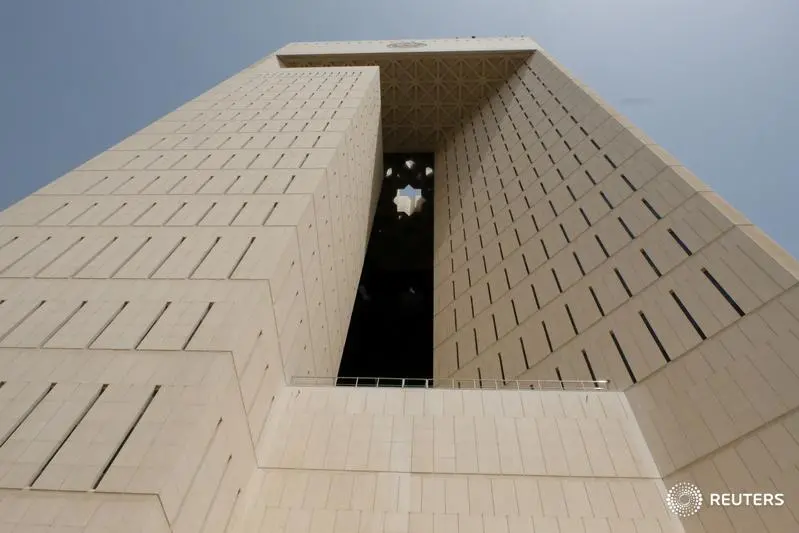
Developers and investors are already responding to rising demand. Approximately 3,575 new beds are planned through 2030 in Riyadh, with 63 percent concentrated in northern districts around King Abdullah Financial District and the Expo 2030 site.
Knight Frank’s zoning analysis recommends value-segment hospitals for the south, mid-segment hospitals for the east and west, and premium multispecialty clinics for central and northern districts.
Saudi Arabia’s combination of regulatory clarity, private sector investment, and adoption of advanced technology positions Riyadh — and the Kingdom more broadly — at the center of the Gulf’s healthcare transformation. As Knight Frank concludes, “Riyadh is well-positioned to lead the next wave of healthcare advancement in the region.”
(Reporting by SA Kader; Editing by Anoop Menon)
(anoop.menon@lseg.com)
Subscribe to our Projects' PULSE newsletter that brings you trustworthy news, updates and insights on project activities, developments, and partnerships across sectors in the Middle East and Africa.