PHOTO
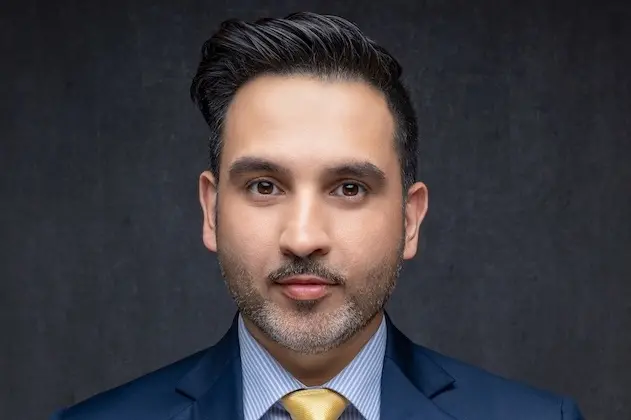
Dubai-based ZāZEN Properties is sticking to fundamentals, focusing on locations with clear planning direction and infrastructure visibility to support genuine demand, CEO Madhav Dhar told Zawya Projects.
One of the biggest challenges this year is managing “speed” in a very strong market, which may replace strategy, he said, adding there is constant pressure to fast-track launches, shorten timelines, and accelerate procurement decisions amid growing transaction activity.
Given current market conditions, the developer has moved away from building land banks for future development.
“We typically have a six-to-eight-month purchase and launch cycle, based on market conditions and the general economic outlook,” Dhar said.
ZāZEN Properties has issued the construction pre-tender for its upcoming Dubai South project early this month, subject to final authority approvals.
The main construction tender is expected to follow by the end of February, with the award anticipated within the next 90 days.
Site mobilisation is likely during the second quarter, the CEO said.
Dhar highlighted that high construction activity across Dubai has increased pressure on contractor availability and pricing, along with the availability of key materials.
“Rather than rushing this phase, our focus is on clarity of scope, realistic timelines, and alignment with contractors who have a proven track record in delivering quality residential projects in their micro market,” he said. “This approach significantly reduces execution risk during construction.”
In the immediate term, the company remains focussed on the UAE and particularly Dubai.
“Dubai still offers an unusual combination of scale, buyer liquidity, regulatory maturity, and long-term urban planning. When a market is doing AED 917 billion in annual transactions, it’s not lacking opportunity; it’s demanding focus.”
While he didn’t rule out expanding beyond Dubai in the long-term, Dhar emphasised that entering a market is not just a commercial decision, it’s also an operational one.
He continued: “To protect our brand, any move into another Middle Eastern or European market would require confidence that we can replicate the same standards of design quality, contractor capability, governance, and customer experience that we’re known for in Dubai. If those conditions aren’t present, expansion becomes dilution, and we’re not interested in that trade-off,”
Interview excerpts:
What market factors compelled you to launch a low-density residential community in Dubai South?
Our decision to enter Dubai South was driven by a convergence of factors rather than a single trigger. Over the past two years, the district has moved from being largely future-oriented to one where infrastructure delivery, transaction activity, and buyer interest are beginning to align.
In the first five months of 2025 alone, residential transactions in Dubai South exceeded 15 billion UAE dirhams, which is a strong indicator that demand is now responding to tangible on-the-ground progress rather than to long-term master plans alone.
At the same time, we are seeing a broader shift across Dubai’s residential market. Buyers, particularly end users, are becoming more discerning. There is less appetite for overly dense developments and more interest in homes that prioritise space, privacy, and everyday functionality.
Dubai South still offers the planning flexibility to respond to this shift thoughtfully, without being constrained by the intensity that characterises more mature districts. For us, launching a low-density community here felt like a measured response to where both the district and buyer expectations are heading, and our product is the ideal fit.
When do you intend to deliver/hand over the project? How important is it for you to meet your handover deadline?
The project is currently scheduled for handover in November 2027 and meeting this timeline is a priority for us. Delivery timelines are not just operational milestones; they also directly affect buyer confidence, particularly for end users planning relocations, schooling, or long-term living arrangements around these dates.
With the current market conditions, all developers must take a conservative approach to programme planning. We factor in buffers, stage procurement carefully, and avoid compressing timelines unnecessarily.
Our experience across previous projects has reinforced that consistent delivery builds long-term trust with both buyers and the wider market. While external factors can always influence construction, our objective is to deliver when we say we will, without compromising on quality.
When did you acquire the land for the project? Are you now seeing an increase in land prices in Dubai South?
The land for this development was acquired in the previous calendar year, following a period of close assessment of planning dynamics, infrastructure commitments, and transaction trends in Dubai South. We tend to be selective in land acquisitions, prioritising long-term fundamentals over short-term price movements.
Over the past 18 to 24 months, land values in Dubai South have shown upward movement, largely driven by improved visibility around major infrastructure projects such as the expansion of Al Maktoum International Airport.
That said, the area still offers relative value compared to more established residential districts. This balance between affordability and future connectivity is one of the reasons Dubai South continues to attract developers and buyers with a long-term outlook.
What is the total cost of the project? How do you intend to fund the project?
The total development cost is over AED 50 million ($14 million), inclusive of construction costs, professional fees, and contingency provisions. The project will be funded through a combination of developer equity and usage of sales proceeds from the official project escrow account.
Our funding strategy is intentionally conservative. We structure in enough personal equity to give buyers more confidence, rather than relying solely on sales velocity. This approach allows us to maintain control over quality, manage cash flow responsibly, and ensure that delivery timelines are not compromised by short-term market fluctuations.
Who is the project’s architect?
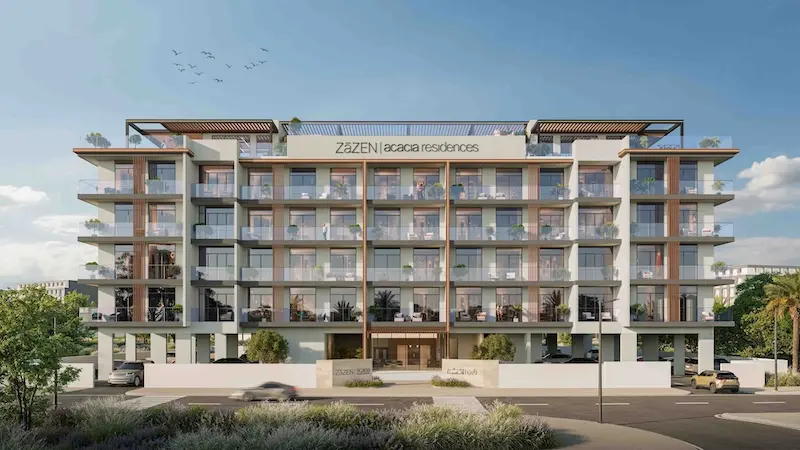
The project has been designed by Al Anwar Architectural Engineering Consultancy, selected for their alignment with our approach to human-centred, functional design and their experience of working on 12 other projects within Dubai South. Rather than focusing on visual statements, the design prioritises proportion, natural light, and flexibility of use.
With just 48 residences, the project offers more generous layouts, greater privacy between units, and a calmer residential environment. Rooftop amenities have been consolidated to preserve the quality of the living spaces below, creating a clear separation between private homes and shared facilities.
What will be the sustainable elements of the project?
The development will incorporate energy-efficient mechanical systems, water-saving fixtures, and materials selected for durability and reduced lifecycle impact. Passive design strategies, including orientation and shading, are also being used to improve thermal comfort and reduce energy demand.
Have you seen tender prices rise due to the UAE’s booming real estate sector?
Yes, tender prices have increased by 15-20 percent over the past year, largely reflecting the intensity of construction activity across the UAE.
In Dubai, particularly, strong demand across residential, commercial, and infrastructure projects has placed pressure on contractor capacity, skilled labour availability, and supply of key materials such as concrete, steel and aluminium.
Beyond headline activity levels, there are practical cost drivers at play. Contractors are operating in tighter labour markets, facing higher compliance and mobilisation costs, and managing longer lead times for certain materials. Even where material prices have stabilised, the cost of securing reliable supply and delivery certainty has risen.
As a result, current tender pricing is less about margin expansion and more about managing execution risk in a very busy market.
From a developer’s perspective, this environment requires a more disciplined approach. We are prioritising early engagement, clearer scopes, and realistic programmes rather than pushing for aggressive cost compression.
In our experience, the lowest initial tender rarely delivers the best outcome over the life of a project. Alignment and capability upfront are far more effective in controlling costs and protecting delivery timelines.
What are the biggest challenges you see this year?
One of the biggest challenges this year is managing speed in a very strong market. When transaction activity is high, there is constant pressure to accelerate launches, compress timelines, and make faster procurement decisions. The risk is that speed begins to replace strategy, and in real estate, that often leads to quality compromises, cost overruns, or delivery slippage later on.
A second challenge is execution capacity. With construction activity at elevated levels across Dubai, contractors, specialist trades, and consultants are stretched. This affects not just pricing, but also the depth of focus teams can dedicate to each project. Our response is to reduce uncertainty wherever possible: finalising designs more comprehensively before tendering, defining clearer scopes, and sequencing works more conservatively. We would rather start slightly later with higher certainty than move quickly with unresolved decisions that create variations and programme creep.
Thirdly, land availability and pricing have become a significant challenge. Since the start of 2024, over 100 developers have entered the Dubai real estate market, including experienced operators expanding from their home countries as well as first-time developers seeking to capitalise on the strength of the current cycle. This influx has intensified competition for well-located plots and, in certain areas, has pushed land prices up sharply over a relatively short period.
As a result, project feasibility has become more challenging, particularly for private mid-sized developers. In this environment, access to liquidity and financing is increasingly critical, as developers need to move quickly and decisively when the right opportunities arise.
Finally, buyer behaviour itself has evolved. Purchasers are no longer buying a market headline; they are buying a specific developer, location, and product. That shift rewards clarity and consistency.
Our approach is to stay true to our DNA: fewer projects, executed well, designed for long-term value. That discipline is what keeps us resilient in a fast market and credible if conditions moderate.
How large is your project portfolio in the UAE?
ZāZEN’s portfolio in the UAE is intentionally concentrated rather than expansive. Today, our portfolio includes completed projects (such as ZāZEN One and ZāZEN Gardens), projects under construction (including ZāZEN Ivy, scheduled for delivery in second quarter 2026, and The Hub Residences, scheduled for second quarter 2027), and a pipeline of projects under planning across Dubai. We expect to launch three to four projects a year, which aligns with our goal of delivering high-quality projects that give our owner community long-term value.
In terms of scale, the consolidated development value across delivered, under-construction, and planned projects is approximately AED 1 billion, comprising roughly 600 residential units, 45 commercial spaces and 15 retail units. We have delivered 240 units and currently have 420 units under construction.
The more important point for us is not the size of the portfolio in isolation, but the level of control we maintain over quality and delivery.
Do you have any new projects planned for this year?
Yes, we do have new projects planned, but we tend to announce them only once the planning and design are sufficiently advanced. In Dubai, especially, it’s easy to confuse “pipeline” with “launch calendar,” and we prefer not to over-communicate too early.
Beyond Dubai South, we’re progressing with our first waterfront development in Meydan Horizon, which will be next up on the slate. Each development is aligned with our focus on low- to mid-rise living, thoughtful layouts, and community spaces that feel usable rather than decorative.
What will remain consistent across new launches is the “why” behind them. We’re not interested in putting products into the market just because the market is active. Dubai’s 2025 performance (AED 917 billion in transactions) is a huge number, but it also creates a temptation across the industry to grow aggressively. Our view is that the best time to stay selective is when you don’t have to be.
So the short answer is yes, there will be new projects, but they’ll be paced, intentional, and on-brand.
How much land bank do you own in the UAE? Are you targeting land banks in neighbouring emirates?
With current market conditions, we no longer secure land banks for future use. We typically have a 6- to 8-month purchase-and-launch cycle, depending on market conditions and the general economic outlook. We don’t treat landbank as a vanity metric - accumulating land for the sake of scale can look impressive in a headline, but it often creates pressure to launch a product that doesn’t align with your positioning.
In Dubai, our acquisition approach is very fundamentals-led: we look for locations where infrastructure visibility and planning direction are clear enough to support genuine demand. That’s one reason Dubai South became compelling: it’s increasingly anchored to real infrastructure momentum, particularly the long-term expansion plan for Al Maktoum International Airport.
As for neighbouring emirates, if we expand, it would be because the market structure supports our model, not because it’s the next growth narrative. So the most accurate framing is: yes, we are continuously evaluating, but we are not expanding geographically at the expense of execution control and brand consistency.
What is your outlook on the real estate market in the UAE, particularly Dubai’s off-plan market, for 2026?
For 2026, we expect the Dubai market to remain active, but with sharper differentiation between projects that are genuinely end-user-friendly and those that are primarily momentum-driven. The off-plan segment has been a major driver of activity; for example, CBRE reported that off-plan sales accounted for around 75 percent of third quarter 2025 activity. That shows appetite is still strong, but it also means buyers are buying promises, and in 2026, the quality of those promises will matter more.
We also think the conversation will become more two-sided. Alongside demand, there is increasing scrutiny around supply and pricing sustainability. Fitch, for instance, flagged the risk of a double-digit price decline in Dubai in 2025–2026 tied to supply delivery expectations (while also noting that prime locations and construction delays could moderate the impact).
You don’t have to agree with every forecast to take the underlying point seriously: the market is maturing and mature markets reward credibility.
So our outlook is “positive, but disciplined”. We expect well-located, well-designed, realistically priced projects from credible developers to continue performing.
The off-plan market should remain an important engine, but buyers will be more selective, focusing on track record, product quality, realistic payment structures, and whether the development is designed for long-term living. For us, that’s actually an encouraging environment, because it shifts the basis of competition away from noise and toward fundamentals.
(Reporting by P Deol; Editing by Anoop Menon)
Subscribe to our Projects' PULSE newsletter that brings you trustworthy news, updates and insights on project activities, developments, and partnerships across sectors in the Middle East and Africa.