PHOTO
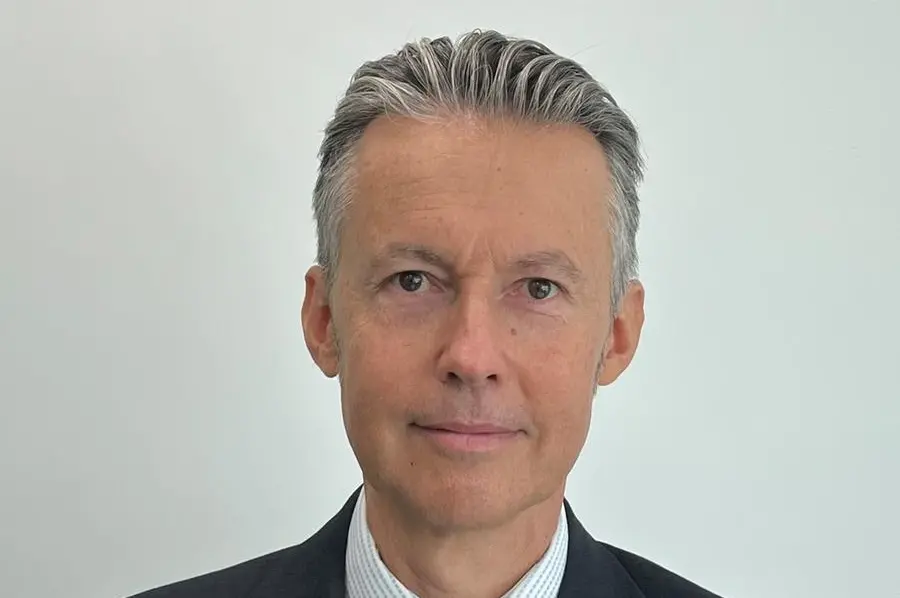
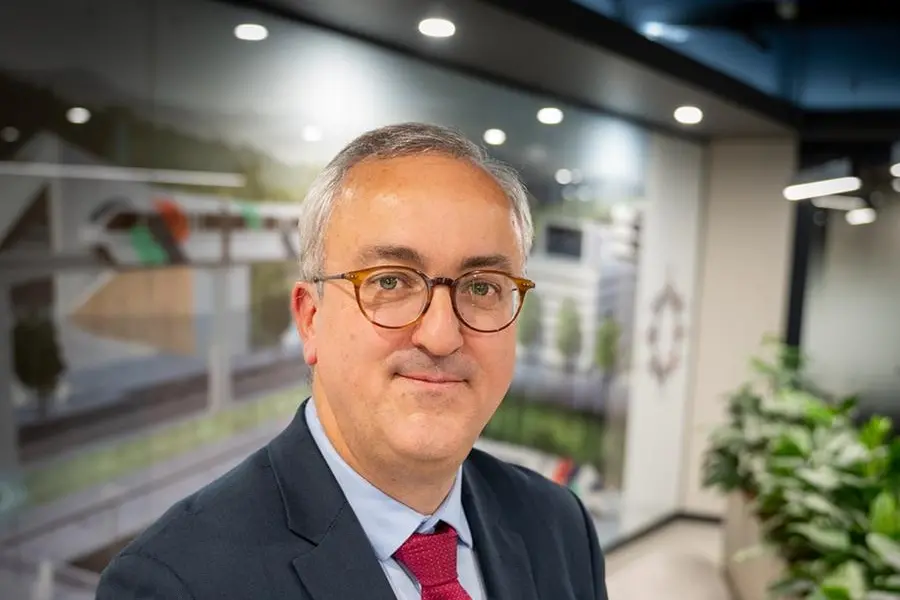
Alstom, the France-based global rail transport systems giant, expects a “multiplication” of regional high-speed rail (HSR) opportunities over the next decade as the segment experiences a strong global rebound, the company’s top executive told Zawya Projects.
Martin Vaujour, Alstom’s President of Africa, Middle East and Central Asia (AMECA) cited active tenders in Saudi Arabia and the UAE, along with ongoing projects in Egypt and Morocco, as key drivers of this optimistic outlook.
Saudi Arabia has announced two projects while UAE is advancing its HSR project linking Dubai and Abu Dhabi, he noted, adding that Turkey also has a potential project in the pipeline.
Last month, Saudi Arabia launched the Expression of Interest (EOI) phase to build and operate the Qiddiya HSR project connecting King Salman International Airport, King Abdullah Financial District (KAFD) and Qiddiya City.
Additionally, Saudi Arabia Railways (SAR) has launched an EOI for procuring an additional 20 trains for the Haramain High-Speed Railway, which connects Makkah, and Medina via Jeddah, KAIA (King Abdulaziz International Airport), KAEC (King Abdullah Economic City) and Madinah. The network currently operates 35 Talgo-Alstom trains running at speeds of up to 300 kilometres per hour.
For the 150-km Abu Dhabi-Dubai HSR, tender submissions for civil works and station design are expected to close in October.
Vaujour pointed out that Alstom is supplying 18 very high speed trains to Morocco for the extension of the high-speed line to Marrakech from Kenitra.
He also noted that competitor Siemens Mobility is leading a consortium which is building Egypt’s high-speed rail network.
“Outside these well-known projects, looking ahead over the next five to fifteen years, I expect a multiplication of such projects,” he said.
Vaujour said Alstom has quadrupled its production capacity for high speed trains in France and Italy to meet rising demand.
“There is huge demand in Europe and growing private operator participation shows the market is becoming bankable,” he said.
Towards the end of August, the company put into commercial service America’s fastest train with the debut of Amtrak’s NextGen Acela, which were built at Alstom’s Hornell, New York plant.
Vaujour emphasised that high-speed rail makes the most economic sense between city pairs 300–700 km apart.
“Beyond that, it becomes less practical, and below that, the benefits diminish,” he explained, noting that such distances allow competitive travel times and efficient integration with local public transport.
“You get a highly efficient city-centre-to-city-centre travel experience — something air travel cannot offer, since airports are located outside the city and involve long transfers, security checks, and waiting time,” he added.
Alstom is upgrading the signaling system on the busiest high-speed line in the world – the Paris to Lyon route – to reduce headways to just three minutes and forty-five seconds during peak hours
“That’s up to 16 trains per hour, effectively metro-level frequency. Two coupled TGVs can carry up to 1,300 passengers, which is equivalent to roughly seven A320 flights every three minute and forty-five seconds. The resulting mobility capacity is extraordinary.”
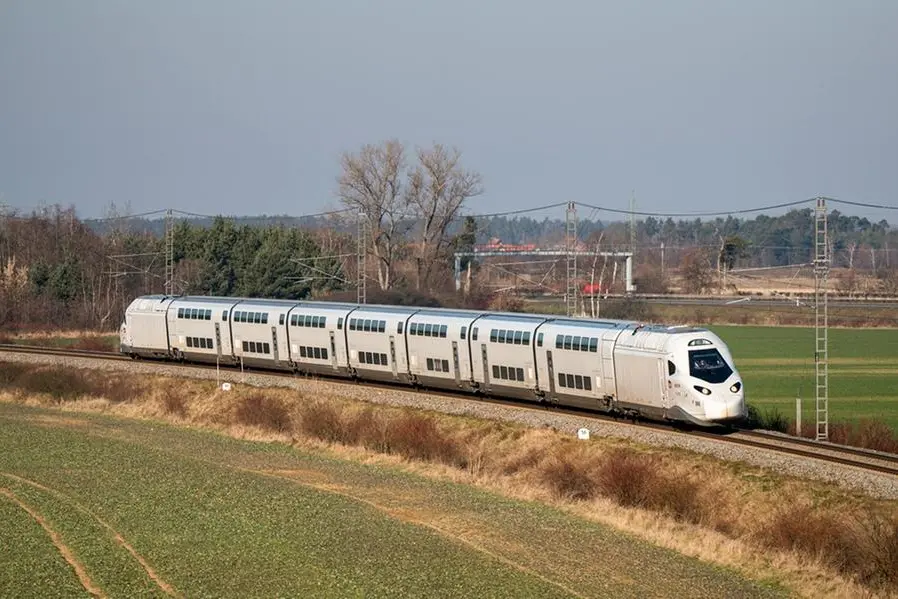
Alstom’s regional track record includes the Tangier–Casablanca TGV in Morocco and metro projects in Dubai and Riyadh. In the course of delivering these projects, the company adapted its train technology to withstand the region’s extreme heat, humidity, and dust conditions.
“We learned by doing, adapting both our technology and our methods along the way,” Vaujour said. “Alstom has been present in this region for decades, and our engineers have accumulated deep experience — sometimes through difficult lessons. That know-how is now embedded into our value proposition and our engineering.”
He explained that while adapting rail technology to extreme climates can have a minor cost impact, it is not significant enough to alter the overall project economics
“In a high-speed rail project, the train and electromechanical components typically account for only 15–20 percent of total costs. So even if those elements are 10 percent more expensive due to climate adaptations, it remains relatively minor in the grand scheme. The key challenge is technical, not financial.”
Excerpts from the interview:
In your experience, what are the most persistent obstacles to keeping high-speed rail projects on time and on budget, and how can they realistically be overcome?
High-speed rail (HSR) projects are highly ambitious and capital-intensive undertakings involving numerous stakeholders and complex financing structures. The infrastructure alone typically represents about 80 percent of the project’s total value, followed by the trains and electromechanical systems, and finally, operations and maintenance. These three buckets must be properly structured and financed through the right financing bodies to ensure overall project efficiency and sustainability.
The first key success factor is having the right financing structure for each component — one that is well adapted and fit for purpose. The Morocco TGV project is a great example of this because from the outset, it was well understood what had to be done by each of the parties.
The second key success factor is system integration. You can approach a project by procuring it lot by lot — one contract for civil works, another for stations, one for bridges, another for trains, track works, catenary, and signaling, and so on, ending up with an incredible multitude of interfaces to manage.
Operators like France’s SNCF, for example, can handle that because they have the in-house teams and expertise built over decades. But when a new HSR project emerges in a country without prior experience, it becomes extremely difficult to manage such complexity. You start facing major challenges — delays here, advances needed there, and constant coordination issues. This is where Alstom's expertise truly adds value.
We have the capability to act as full system integrators. That means we team up with civil works companies in joint ventures, usually forming a consortium with one leader as the single point of contact. We manage all the interfaces while reporting to the customer.
Without a system integrator at the helm, projects will, more often than not, neither be on budget nor on time.
Are there viable opportunities for Public-Private Partnerships (PPP) in high-speed rail projects?
HSR is not an obvious candidate for PPP. When it comes to structuring the financing for high-speed rail, the infrastructure is primarily the state’s responsibility. We don’t touch that. The risk has to be managed by the state because the payback period is too long for the private sector.
Infrastructure financing can be structured with the support of development banks or international bilateral or multilateral institutions.
Export Credit Agencies (ECA) typically support the financing of the electromechanical side, the trains and related elements, which tends to be on attractive terms for the host countries.
Operation and Maintenance (O&M) could involve PPP participation or even full private scope – as a company, we are always interested in the maintenance.
How do you strike the right balance between advocating cutting-edge technology solutions like digital twins or 3D modelling while respecting clients’ cost constraints?
HSR requires extensive design and development - design itself is a key competitive differentiator in winning projects. Historically, the process was sequential: we would agree on a design with the customer, build a prototype, run first-of-series tests, validate, then retrofit and modify.
Now, everything is done in advance. Every time a design work package is ready, the customer joins us in the 3D room, where we review and validate on the engineers’ digital model all the options that the customer may choose. Every design option can be tested and decided on the spot, recorded, and integrated immediately – this approach also considers maintainability. Once a design decision is made, we assess how easy or difficult it will be to maintain.
The use of 3D modelling is not limited to HSR; it is fundamentally transforming how we design and build trains across the board.
We have also onboarded the digital trains concept. Historically, train development was rooted in mechanical engineering. We started with metal bogies, and progressively over time, we found out that putting in a bit of software was efficient.
Today, that process has been reversed. Instead of importing and integrating the complexities and constraints of multiple components with their software, we start with a software backbone, which sets the rules for all components.
Major suppliers have traditionally preferred to keep their controllers as proprietary black boxes. Now, we’re saying: we define the system, and you align with it.
This reverse approach significantly improves efficiency. It reduces integration issues and ensures that everything works from day one.
What’s most costly in train development is testing, validation, and homologation. By starting with software and building the hardware around it – similar to the philosophy adopted by companies like Tesla – we expect to reduce development costs and timelines for new trains by up to 30 percent. It is great for high-speed because those are the most complex developments, and that's the most where you have the best savings.
What are the key factors that influence the timely delivery of complex rail projects, especially high-speed rail?
One of the most critical factors is having a customer who can make decisions. A major reason why projects are delayed or take longer than expected is indecision on the client side. Buying an aircraft like the A320 means acquiring a standard product but a high-speed train like the TGV is highly customized. Many decisions need to be made throughout the process, and if the customer isn’t equipped or empowered to make them, the project stalls.
Even though we integrate systems and simplify the customer’s life as much as possible, ultimately, you need someone who can take responsibility and make decisions.
Government involvement is essential—not only on the infrastructure front but also in readying the legislative framework to enable complex projects like High-Speed Rail.
Equally important is the role of certification and homologation bodies. For example, the launch of Amtrak’s NextGen Acela high-speed trains in the U.S. was delayed because there were no existing standards for high-speed rail in the country. By definition, a certification body must certify against a legally approved standard—and in this case, the standard had to be written while the project was underway. So, a very clear certification and validation plan is essential.
(Reporting by Anoop Menon; Editing by SA Kader)
Subscribe to our Projects' PULSE newsletter that brings you trustworthy news, updates and insights on project activities, developments, and partnerships across sectors in the Middle East and Africa.