Innovative pilot project using steam from DUBAL Power Plant saves 626,800 kWh per year in energy consumption
Dubai, United Arab Emirates: A quest for continuous improvement coupled with a determination to optimise organisation's energy consumption levels has led to Dubai Aluminium ("DUBAL") - the entirely state-owned corporation that owns and operates the world's largest primary aluminium smelter using pre-bake anode technology - achieving another pioneering milestone. On this occasion, the corporation has leveraged a nominal volume of the steam produced by the captive cogeneration and combined cycle DUBAL Power Station to drive the UAE's first-ever absorption chiller using waste heat; and the first such application in a power plant.
Built on the rooftop of DUBAL's Desalination Plant Control Building, the new absorption chiller has assumed the functions formerly fulfilled by the electrically-driven vapour compression air-conditioning chillers used for comfort cooling of the building. Tayeb Al Awadhi (Vice President: Power & Desalination) explains that the absorption chiller uses high vacuum conditions to lower the boiling point of water to 3.7˚C (versus 100˚C at atmospheric pressure) while leveraging the chemical affinity of Lithium Bromide (LiBR) to absorb water. "At this low temperature, highly concentrate Lithium Bromide (LiBr) absorbs the water vapour given off in the boiling process very effectively. As the LiBr becomes dilute, its capacity to absorb water vapour reduces. A heat source is required to re-concentrate the LiBr - whether steam, flue gases or even hot water. In DUBAL, steam generated from waste energy was utilised. Heating causes the solution to release the absorbed water vapour, which is then cooled in a separate chamber to become a liquid refrigerant (in the form of chilled water) through condensation. The process uses just 40 per cent of the electricity consumed by the conventional electrically-driven chillers and uses a nominal 0.6 tonnes of steam per hour to produce sufficient cooling for the same purpose."
Indeed, Al Awadhi asserts that DUBAL's new absorption chiller has the capacity to reduce the corporation's energy consumption by approximately 626,800 kWh per year. Based on the standard conversion factor, this equates to a reduction in CO2 generation by about 350 tonnes per year, also equivalent to an estimated 180 cars off the road per year. "Installing this first absorption chiller was a pilot project, targeted at demonstrating the concept's ability to save energy and protect the environment," continues Al Awadhi. "The concept can also be used for other applications where energy-efficient cooling is required - such as equipment cooling."
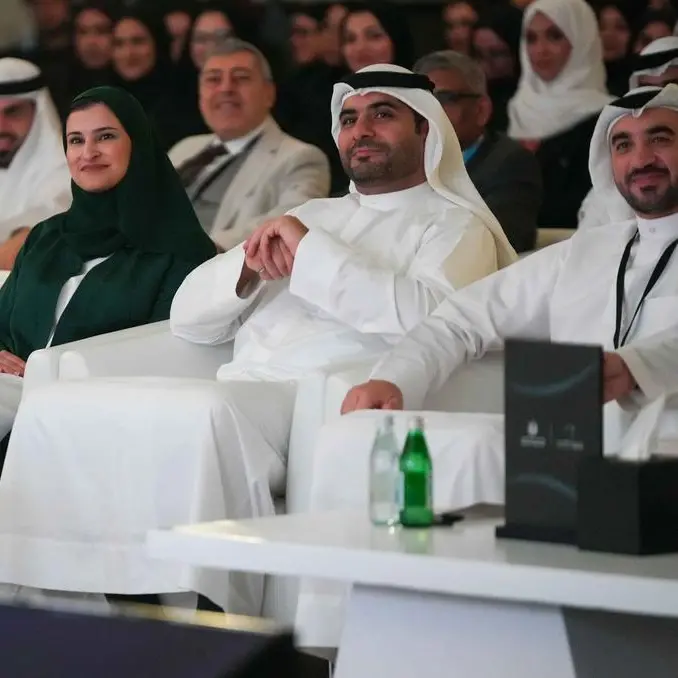
DUBAL's absorption chiller was officially inaugurated by Abdulla Kalban (President and CEO) during a special ceremony on 27 March 2013, attended by selected guests from the Dubai Supreme Council of Energy ("DSCE"), of which DUBAL is a member. Commenting on the project, Kalban says, "This absorption chiller is expected to reduce the auxiliary power consumption of the DUBAL plant, thus offering broader economic and environmental benefits to the business. It will also add real value by using readily available steam from our Power and Desalination Plants without compromising the processes of either."
Al Awadhi adds that the absorption chiller project is a great example of DUBAL's on-going focus on energy-savings, which has seen the corporation invest approximately AED 457 million on energy-efficiency projects since 2005. "We are strongly committed to the cause," he says. "As a member of the DSCE, DUBAL has whole-heartedly adopted the directives issued by His Highness Sheikh Ahmed Bin Saeed Al Maktoum (President of Dubai Civil Aviation, Chairman of Emirates Airline Group, and Chairman of DSCE) to all DSCE member companies in April 2011 regarding the measures which the Dubai Government is taking to minimize energy consumption in Dubai, in fulfilment of the Dubai Integrated Energy Strategy ("DIES") 2030. DUBAL's efforts in this area saved approximately 17,375,000 kWh over the first twenty-one months of implementing the directives, that is, until December 2012. This means that we are well on the way towards DUBAL's overall target to achieve energy-savings of approximately 22,000,000 kWh per year by the end of 2013."
About DUBAL
An entirely state-owned enterprise, DUBAL owns and operates a one million metric tonne per annum primary aluminium smelter at Jebel Ali, Dubai the world's largest single-site primary aluminium smelter using pre-bake anode technology. Since its commissioning in 1979, DUBAL has been renowned internationally for its premium purity, high quality products and services; as well as its commitment to sustainable development through conscious efforts to maximise the health and safety people, reduce the impact of its operations on the environment, and invest in the social and economic development of the community. Dedicated programmes support the Emiratization goals of the UAE, including targeted recruitment, skills development, management training and strategic career planning.
High quality products are made in three main forms: foundry alloy; extrusion billet; and high purity. More than 300 customers are served in 50-plus countries. Approximately 88 per cent of DUBAL's annual production is exported globally, the company's key markets being Asia, Europe, the Middle East North Africa ("MENA") region and the Americas.
DUBAL owns 50 per cent of Emirates Aluminium ("EMAL") in Al Taweelah, Abu Dhabi. The company also has investments in upstream development alumina/bauxite joint venture projects in Brazil, Cameroon and Republic of Guinea; and in a calcined petroleum coke joint venture development project in China.
Aiming for continuous improvement through innovation, DUBAL has invested substantially in developing advanced reduction cell technologies that not only improve productivity but also reduce the operations' impact on the environment through improved energy efficiency and minimized emission levels. This has culminated in proprietary DUBAL DX and DX+ Technologies -- both of which operate at high amperage levels and rank among the best reduction technologies available. DUBAL's DX Technology is operational in a 40-cell potline at DUBAL and the 756-cell EMAL Phase I. DX+ Technology has been licensed to EMAL Phase II (444 cells), currently under construction; and has been selected by Aluminium Bahrain ("Alba") for its Line 6 Bankable Feasibility study.
For more information, visit www.dubal.ae
© Press Release 2013