In NBK's latest GCC Brief:
We have revised up our forecast for the UAE's non-oil GDP growth this year from 3% to 4%, close to the economy's long-run trend. The improvement comes from a combination of higher than expected oil prices, a strong performance from the trade sector, and expectations that faster regional growth will benefit Dubai. In addition, lower than expected inflation will boost the country's international competitiveness and support real incomes, benefiting consumer-facing sectors. These factors are set against the continued drag on activity from the debt overhang, corporate restructuring, weakness in the construction and property sectors and sluggish bank lending.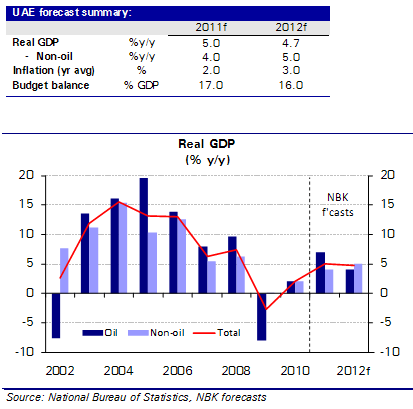
Meanwhile, the recent massive upward revisions to the UAE's population figures - to 8.2 million in 2009 from 5.1 million before - have somewhat strengthened our confidence in the domestic economy's resilience, as well as the UAE's importance for the GCC region as a whole.
Growth in hydrocarbon sector output in 2011 has also been revised up, from 5% to 7%. Crude oil output increased by more than 150,000 barrels per day, or 7%, between November and March, as OPEC responded to higher oil prices and some member countries increased production to compensate for lost Libyan output. So long as oil prices remain high, further - albeit more modest increases in output are seen in 2012. As a result of these changes, overall GDP growth is seen at close to 5% this year and next.
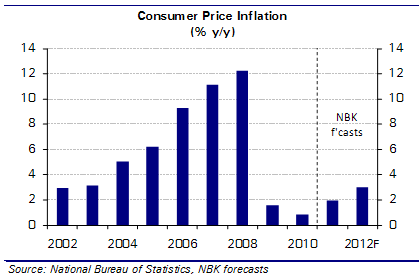
Consumer price inflation dropped from a recent peak of 1.8% in October to just 1.2% in March - the opposite trend to that expected by most analysts. The fall was driven by lower than expected food price inflation, which stood at 5% in March. Housing rents are also falling again, perhaps reflecting the addition of new apartment supply to the market. So long as food price inflation continues to decelerate, inflation is likely to remain very low this year, averaging 2.0%. Faster economic growth and the effect of the weak US dollar on import prices could see inflation accelerate next year. But at 3%, it will remain amongst the lowest in the GCC.
A lack of published data obscures the true picture of the UAE's fiscal position, but we suspect that the outlook is very comfortable. Spending is seen rising only slowly in 2011, as earlier state support measures for the corporate and banking sectors fade and Dubai endures a further round of budget cuts. Meanwhile, a leap in oil revenues could push the budget surplus back above 15% of GDP for the first time since 2008, at least when the government's off balance sheet revenues - investment income and profits from state oil company, ADNOC - are included. The current account is likely to see a surplus of a similar size.
Note: Full country-by-country analysis and forecasts for the GCC region appears in our latest GCC Outlook publication, which can be found on our website at http://www.nbk.com
-Ends-
© Press Release 2011