
PHOTO
WASHINGTON — Saudi Arabia ranks first in global public sector AI adoption, with around two-thirds of workers reporting daily use of AI tools, according to the new Public Sector AI Adoption Index 2026 released today by Public First for the Center for Data Innovation, with sponsorship from Google.
The Public Sector AI Adoption Index is based on a survey of 3,335 public servants across 10 countries—including the United States, UK, Germany, France, Japan, Brazil, South Africa, India, Singapore, and Saudi Arabia (KSA). It evaluates how effectively governments use AI in public services across five dimensions: Enthusiasm, measuring public servants’ enthusiasm for AI; Empowerment, confidence and support to use AI in daily work; Enablement, availability of approved tools and clarity of leadership guidance; Embedding, the integration of AI into everyday work; and Education, their access to training. These measures highlight both areas of progress and persistent barriers to impact.
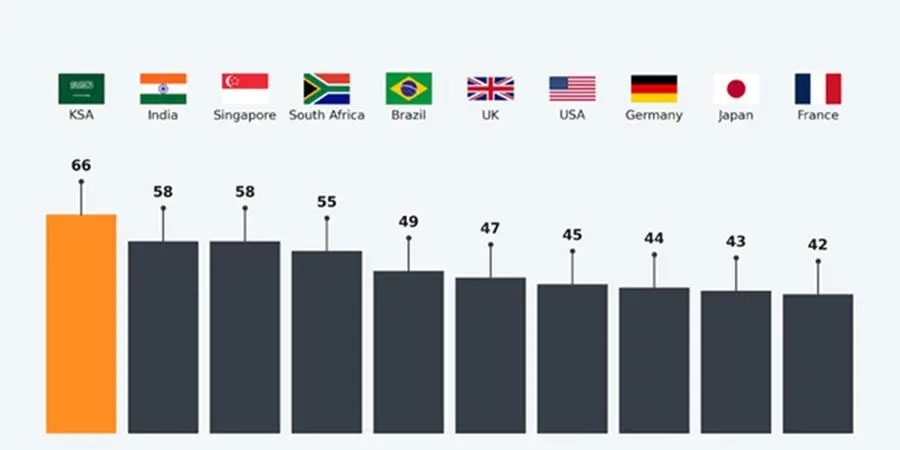
Figure 1: Index Composite by Country
Saudi Arabia ranks first across all measures in the index, with clear policies, integrated workflows, and formal processes supporting consistent adoption. Public servants report widespread daily use, with nearly half having used AI for more than a year. Around 77% say their organization has invested in AI, and over one in three report that their organization played a primary role in teaching or supporting their AI use. Enthusiasm is high, with most public servants optimistic about AI and hoping it will transform how they work.
Education and support are strong but could be improved. 84% of public servants received training on AI tools, though half said it focused more on compliance than practical skills. Saudi Arabia’s challenge is not a lack of enthusiasm, but ensuring public servants have the time and space to develop practical AI expertise. Translating training into hands-on skills is essential to fully harness the innovative potential of a workforce eager to use AI.
“Many governments have ambitious plans for AI in the public sector, but some are creating better conditions for real‑world use than others,” said Rachel Wolf, CEO of Public First. “Our research shows who is succeeding and where improvement is needed. This matters because effective AI enables better public services, stronger outcomes for citizens, and more resilient public institutions.”
Globally, public sector AI adoption is accelerating. Nearly three-quarters of public servants report using AI, with 74% adopting it in the past year. Eighty percent report feeling empowered by AI in their daily roles, particularly in countries with clear guidance and leadership support. Still, only 18% believe their governments are using AI very effectively, pointing to significant room for improvement.
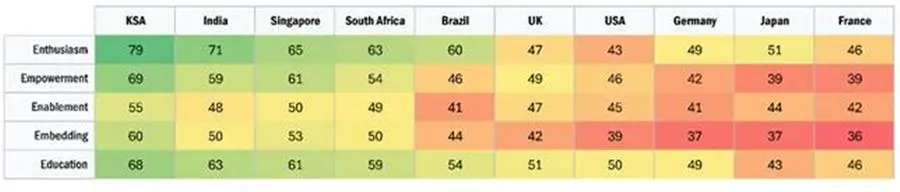
Figure 2: Country Scores by Index Dimensions
The index also reveals clear differences in adoption across countries. Advanced Adopters such as Singapore, Saudi Arabia, and India combine strong leadership with widespread, everyday AI use. Uneven Adopters—including the United States, UK, South Africa, and Brazil—show progress but face gaps in infrastructure or guidance. Cautious Adopters such as Germany, France, and Japan remain more risk-averse, with AI largely confined to limited or specialist use.
Scores for each dimension and the overall index are calculated from respondents’ answers on a 0–100 scale, enabling clear cross-country comparison. Higher scores indicate more mature, supportive conditions for effective AI adoption.
“Turning AI ambition into results depends on translating strategy into day-to-day practice,” said Daniel Castro, director of the Center for Data Innovation. “Policymakers can learn from advanced adopters and focus on removing barriers, so AI delivers real improvements for citizens.”
View the Public Sector AI Adoption Index 2026.
Contact: Nicole Hinojosa, press@datainnovation.org
# # #
The Center for Data Innovation is the leading global think tank studying the intersection of data, technology, and public policy. With staff in Washington, D.C. and Europe, the Center formulates and promotes pragmatic public policies designed to maximize the benefits of data-driven innovation in the public and private sectors. It educates policymakers and the public about the opportunities and challenges associated with data, as well as technology trends such as open data, artificial intelligence, and the Internet of Things. The Center is a part of the nonprofit, nonpartisan Information Technology and Innovation Foundation.
For more about the Center, visit datainnovation.org.