PHOTO
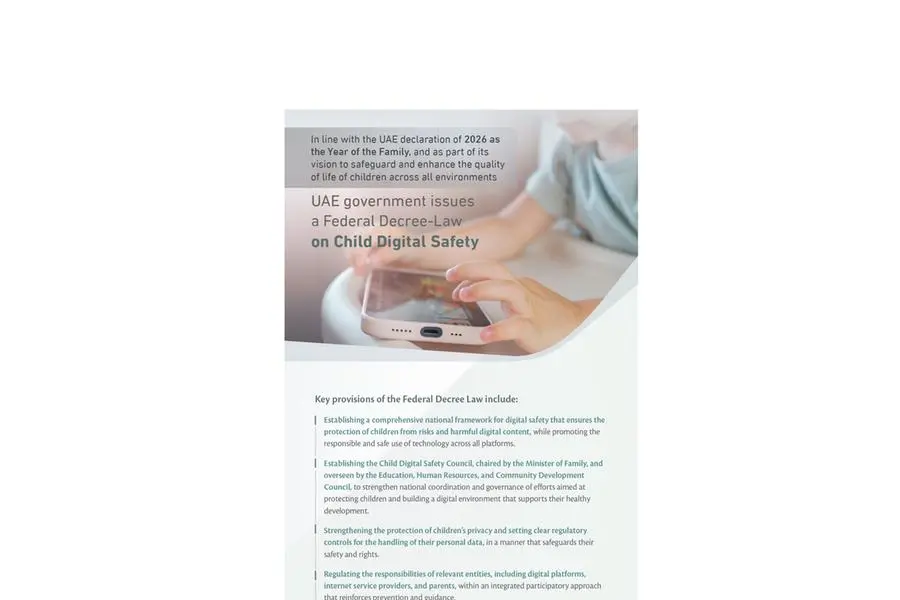
United Arab Emirates: The UAE government has issued a Federal Decree-Law concerning child digital safety, which introduces a comprehensive legislative framework to protect children from online risks and encourage the responsible use of safe and age-appropriate digital content.
This comes in line with the UAE’s declaration of 2026 as the Year of the Family, and as part of its vision to safeguard and enhance the quality of life of children across all environments
The new legislation aims to protect children from harmful digital content and practices that negatively affect their physical, psychological, and moral well-being.
It also establishes a comprehensive governance framework that defines the roles and functions of relevant authorities in this regard, and ensures coordination and integration among them to protect children and their rights in the digital ecosystem.
The decree-law applies to internet service providers and digital platforms, whether operating within the UAE or targeting users within the UAE. Digital platforms covered by the decree-law include: websites, search engines, smart applications, messaging applications, forums, online gaming platforms, social media platforms, live streaming platforms, podcast platforms, streaming services, online video-on-demand platforms, and e-commerce platforms. The decree-law also applies to those responsible for the care of children and defines their obligations regarding the digital safety of the children under their care.
Child Digital Safety Council
Additionally, the decree-law establishes the "Child Digital Safety Council” in the UAE, chaired by the Minister of Family, as an advisory and coordinating body to achieve integration between federal and local entities and the private sector regarding efforts to ensure children's digital safety. The decree-law also defines the council's functions, which include: proposing policies, legislation, and strategies to ensure the highest levels of digital safety for children; proposing a comprehensive awareness campaign; and conducting studies to monitor emerging digital risks in light of rapid technological advancements.
This Decree-Law, issued by a UAE Cabinet’s decision following approval from the Education, Human Development, and Community Development Council, establishes a system for categorising all digital platforms, whether operating within the UAE or directed to users within the UAE, based on an assessment of their risks and impact on children. This system serves as the reference framework, outlining regulatory standards for classifying platforms according to their type, content, usage volume, and impact on children. It also defines the controls and restrictions related to the use of these platforms by different age groups of children.
The Decree-Law prohibits digital platforms from collecting, processing, publishing, or sharing the personal data of children under the age of 13, except under specific conditions. The Decree-Law also allows for the exemption of platforms used for educational or health purposes from this prohibition, subject to a UAE Cabinet resolution, while ensuring that necessary measures are taken to protect the safety and privacy of children.
The decree-law outlines a set of obligations for digital platforms to ensure the protection of children from harmful content in the digital environment. These obligations include establishing and implementing default privacy settings, providing age verification mechanisms, offering tools to enforce age restrictions on the use of digital platforms, activating blocking, filtering, and age-rating tools for content, and regulating targeted online advertising.
The new legislation also prohibits digital platforms from allowing children to take part in, create accounts for, or access online commercial games involving gambling or digital activities that involve betting on money.
Furthermore, the decree-law outlines a set of obligations for internet service providers, including activating content filtering systems on their networks to enhance compliance with policies prohibiting harmful content for children, and taking the necessary measures to ensure safe and supervised use of internet services or electronic devices by children. This includes requiring the child's guardian to sign the terms of service, including those that mandate the integration of parental control tools.
The decree-law also outlines a set of obligations for child caregivers, most importantly: monitoring the child's digital activities, using parental control tools to ensure safe use and protection from harmful content, and refraining from creating accounts for children under their care on digital platforms that are not age-appropriate or do not comply with enhanced child protection standards.
The Ministry of Family and the relevant local authorities responsible for child affairs, each within its jurisdiction, are tasked with developing the necessary programs and mechanisms to ensure that child caregivers fulfil the obligations stipulated in the decree-law and its implementing regulations. The new legislation also regulates the mechanism for reporting harmful content to children, ensuring swift action in cases of online abuse or exploitation of children.