PHOTO
Sharjah: The UAE Inter Businesswomen Councils Forum 2025 brought together leading voices in business sustainability, social innovation and education to explore the future of the circular economy in the UAE, and the role of resilient communities and human-centric work models in accelerating comprehensive and sustainable development.
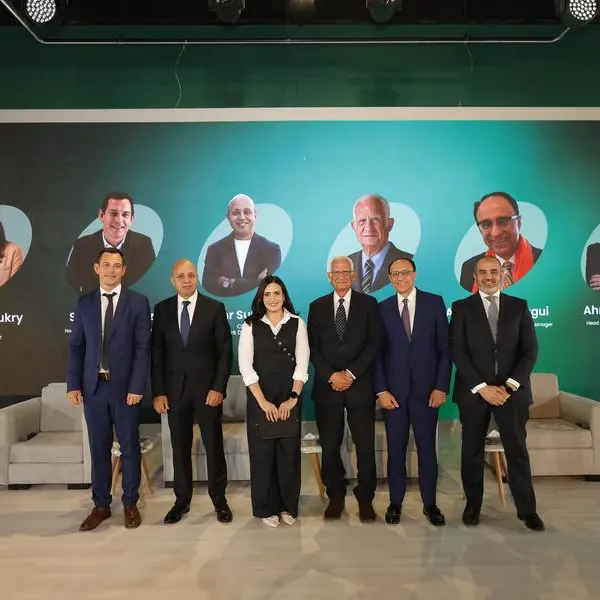
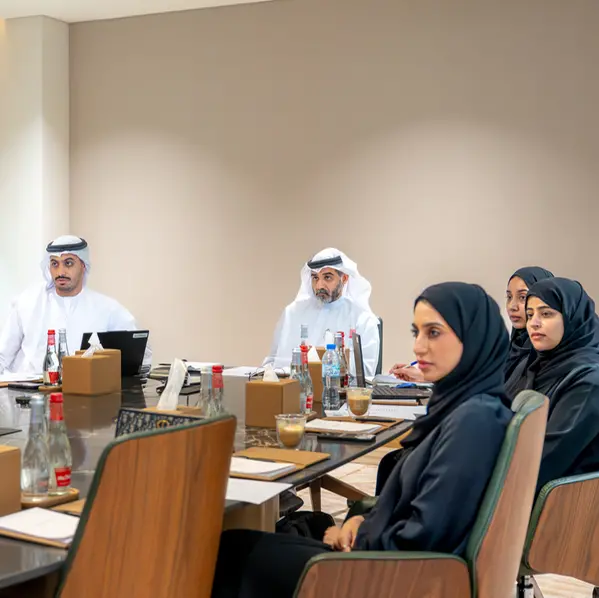
Organised by the Sharjah Businesswomen Council (SBWC), in collaboration with Abu Dhabi Businesswomen Council (ADBWC), and CCI France UAE under the theme “Empowering Connections, Driving Impact, Building the Future.” The 3rd edition, held on Monday at Yourspace in Al Jada, was inaugurated in the presence of H.E. Sheikha Hind Bint Majid Al Qasimi, Chairperson of SBWC; Agnes Lopez-Cruz, Managing Director of CCI France UAE; alongside businesswomen, officials, and media representatives.
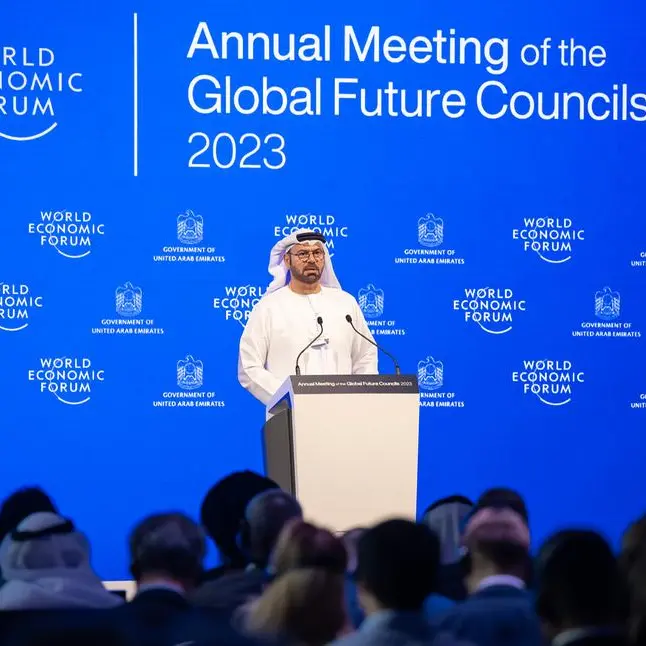
In her keynote, H.E. Sheikha Hind Bint Majid Al Qasimi, said: "Women are defining the direction of the UAE’s next economy. Through innovation, inclusion and enterprise, we are building competitive, sustainable business models and influencing national growth priorities. Our leadership is not symbolic. It is structural, shaping how the economy evolves and ensuring that progress is both resilient and equitable."
The Chairperson added: “This forum is a strategic platform for aligning efforts, sharing insights and accelerating the impact of women-led enterprise across the UAE. Our partnership with ADBWC and CCI France UAE reflects a united approach to economic inclusion, founded on practical collaboration. Together, we are creating the conditions for scalable innovation, stronger networks and measurable outcomes that advance women’s leadership in the national and global economy."
For her part, Agnes Lopez-Cruz, Managing Director of CCI France UAE, said: "It is an honour to join the 3rd edition of this forum, which continues to demonstrate the strength and purpose of our partnership with the SBWC and ADBWC. This collaboration is rooted in shared values and a mutual commitment to driving inclusive economic growth. We are grateful to all those who contribute to making this platform a catalyst for meaningful enterprise, innovation, and long-term impact."
Driving the circular economy revolution
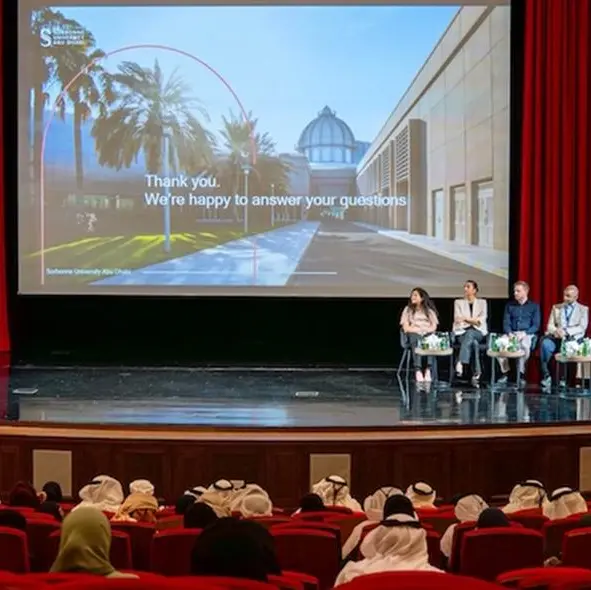
The forum opened with a panel discussion titled ‘The New Model: Driving the Circular Economy Revolution’. Speakers, including Maya Tawil, Director of Business Development at Veolia UAE; Florence Bulte, Chief Sustainability Officer at Chalhoub Group; Jelena Lefavrais, Sustainability Manager at the Emirates Foundation; and Dr. Kholoud Al Naimi, Assistant Professor, Materials Science, Sustainable Engineering and Nanotechnology Researcher, Khalifa University; explored how businesses and institutions can transition from linear to circular models without compromising profitability.
Speaking on circularity in the luxury retail sector, Bulte said: "At Chalhoub Group, we see circularity as a commercial strategy, not just an environmental one. We've built models like pre-loved and rental platforms by listening to our customers and using data to understand demand. These initiatives have helped us protect margins, reach new audiences, and keep existing customers engaged. Circular models succeed when they are relevant, scalable, and aligned with real business needs."
Highlighting the link between waste reduction and value creation, Lefavrais said: "Food loss and waste are not just environmental concerns. They have a direct impact on business performance. By applying data, behavioural insights, and reuse models, we work to reduce waste across the entire value chain. When companies adopt this mindset, they cut costs and also uncover new opportunities for adding value."
On resource efficiency and closed-loop systems, Tawil said: "Transitioning from a linear model to a circular one starts with rethinking design, production, and the entire supply chain. By using secondary materials and repurposing waste, businesses can reduce costs and open new value streams. At Veolia, we've shown how recycled water can be used for reirrigation and how waste can be transformed into energy or raw materials. This approach not only supports profitability but also reduces dependency on oil and conventional energy sources."
Emphasising the role of academic research in commercial application, Al Naimi said: "Research alone is not enough. Advancing the circular economy requires strong, sustained collaboration between academia, government, and industry.”
The new era of community building
The second panel, titled ‘A Year of Impact: The New Era of Community Building’, brought together H.E. Reem Binkaram, Director General of Irthi Contemporary Crafts Council; Tatiana Abella, Founder and Managing Director of Goumbook; and Latifa Bin Haidar, Founder of baytukum.ae. The discussion focused on community-driven approaches across crafts, sustainability, and financial inclusion.
Speaking on cultural preservation and craft as social infrastructure, H.E. Reem Binkaram said: "Preserving craft isn’t about nostalgia; it’s about building livelihoods through precision, pride, and participation. Every weave, stitch, and knot carries generational knowledge that deserves respect, not replication. At Irthi, we’ve spent a decade refining a model that supports artisans, protects tradition and transfers knowledge to newer generations. This proves that heritage can generate stable, dignified work. When communities take ownership of their cultural skills, they build economic independence that lasts."
Addressing the link between environmental sustainability and local action, Abella said: "True sustainability begins when people see their role in the system. It is not about one-off campaigns. It is about changing how communities use resources, share responsibility, and value what surrounds them. When environmental solutions are rooted in local context, they are more likely to last and become a norm."
On expanding access to economic opportunity, Latifa Bin Haidar said: "Building wealth should not be limited to a few. At baytukum.ae, we have made real estate investment accessible to all segments of the community, including students, homemakers, and grandmothers, so that they can pool resources and co-own assets. It is a model and a platform that turns financial exclusion into participation, where communities invest together, learn together, and grow together."
Skills and education in the AI era
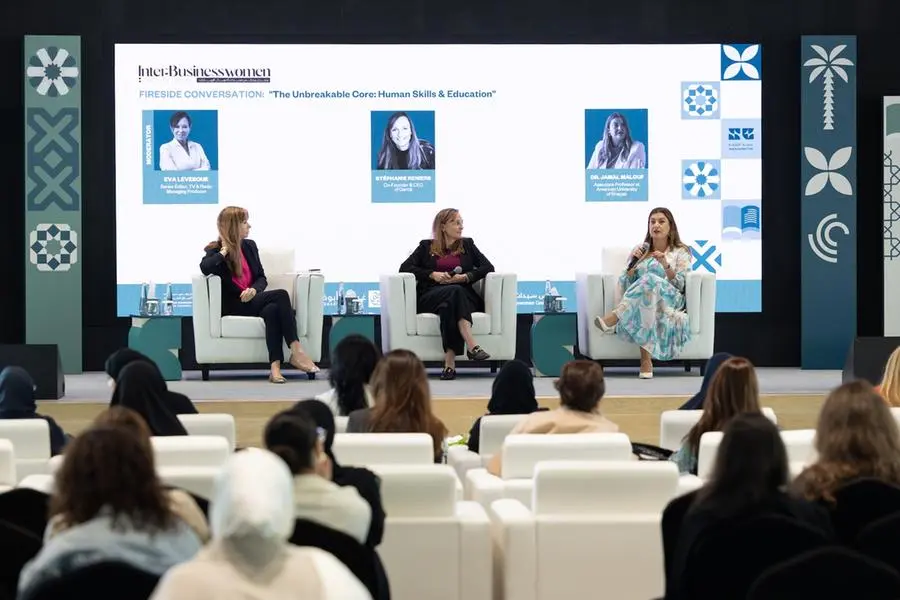
In a session titled “The Unbreakable Core: Human Skills and Education,” Stephanie Reniers, founder of Gentis and Assistant Professor Dr. Jamal Maalouf, American University of Sharjah, explored how human capabilities like creativity, critical thinking, emotional and cultural intelligence remain essential in an AI-driven world, with education and industry needing to adapt quickly. Both speakers agreed that collaboration between universities and companies is crucial to developing future-ready talent and creating flexible, practical learning environments.
Reniers said: "AI will not replace recruiters or the human element in business. But we have to be realistic. Roles are evolving rapidly, and 70 per cent of today's jobs will not exist in 2030. What we see in companies is a gap between the eagerness to learn and the commitment to do so. If organisations do not embed learning into performance and create clear development pathways, they will not keep up. That is why collaboration between universities and businesses is no longer optional. It is the only way to stay relevant."
For her part, Maalouf noted: "Machines may outperform us in memory and data processing, but they cannot replicate human creativity, critical thinking, or ethical judgment. At the university, we are shifting away from traditional models. Students are no longer passive receivers of knowledge; they are partners. We build platforms where students build ventures, collaborate with industry, and pitch to real investors. Education today must be adaptive, experiential and deeply human-centred if it is to prepare graduates for a world shaped by AI."
Creative industries driving circular change
In the session “Circular innovation: From concept to application,” Hala Al Gergawi, Founder of Tea Before Noon and 11ish, discussed how circularity goes beyond materials to include talent development and creative collaboration. In “Impact Showcase on Social Impact and Community Building,” Zain Al Tawil, Founder of Yello Sustainable Clothing, shared how her brand integrates biodegradable materials such as pineapple and banana fibres to reduce waste and promote circular practices in fashion.