PHOTO
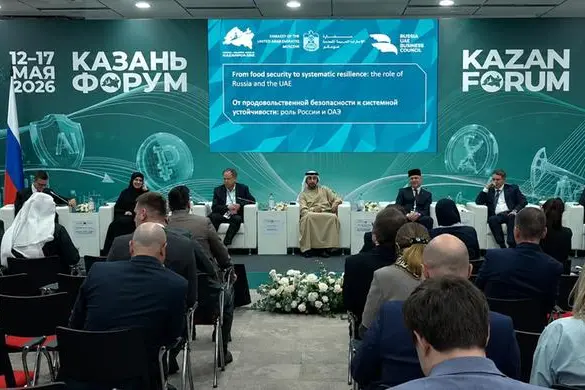
Kazan, Russia –The Russia-UAE Business Council (RUBC), as part of the International Economic Forum in Kazan (Russia), held a strategic session titled “From food security to systemic sustainability: the role of Russia and the UAE”, focused on advancing bilateral cooperation in agriculture, logistics, and food trade.
Participants discussed the transformation of global food markets, the development of resilient supply chains, emerging trade and investment mechanisms, and opportunities for Russia and the UAE to jointly expand into the markets of Africa, Asia, and the Middle East.
Opening the session, Dmitry Birichevsky, Director of the Department for Economic Cooperation at the Russian Ministry of Foreign Affairs, emphasized that the rapid development of Russia-UAE relations has been driven in large part by the close attention both countries’ leaders devote to bilateral cooperation. According to him, further expansion of the partnership will require systematic joint efforts, the development of projects aligned with mutual interests, and stronger economic ties at every level — from businesses to government institutions.
One of the session’s key speakers was Abdullah Ahmed Al Saleh, Undersecretary of the UAE Ministry of Economy & Tourism. He noted that cooperation between Russia and the UAE in food trade continues to expand steadily. According to him, bilateral trade in agricultural products reached $400 million in 2025, marking a 25% increase year-on-year. He also stressed that the UAE today serves not only as one of the region’s largest food importers, but also as a strategic platform for the distribution of Russian products across the wider Islamic world.
The UAE official also highlighted the significance of the agreement signed earlier in Abu Dhabi between the RUBC and the UAE Food Cluster. He noted that the participation of leading agribusiness companies and government stakeholders within the platform creates additional opportunities for practical business cooperation between the two countries.
Special attention during the discussion was given to the development of the halal industry, the digitalization of trade infrastructure, new financial instruments for the agricultural sector, and the creation of joint logistics solutions for exports to third-country markets.
The session also featured representatives of major agribusiness companies and industry organizations from Russia and the UAE, including the Resource Group of Agricultural Enterprises, EcoNiva Group of Companies, National Pulse Group, the International Halal Standardization and Certification Center, and the UAE Businesswomen Council.