PHOTO
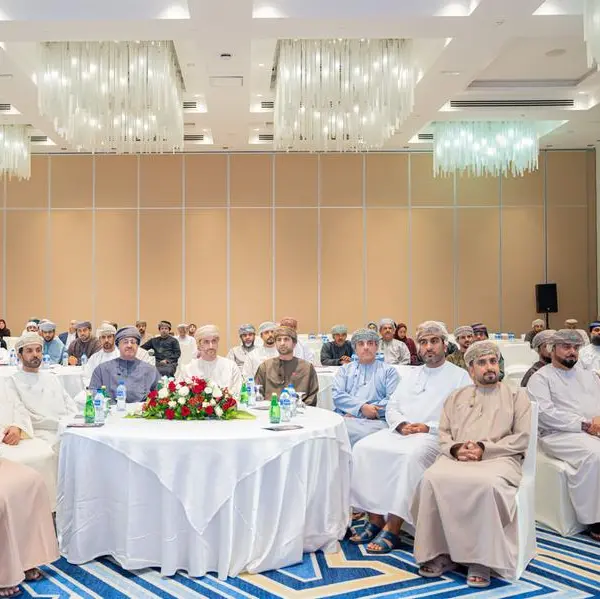
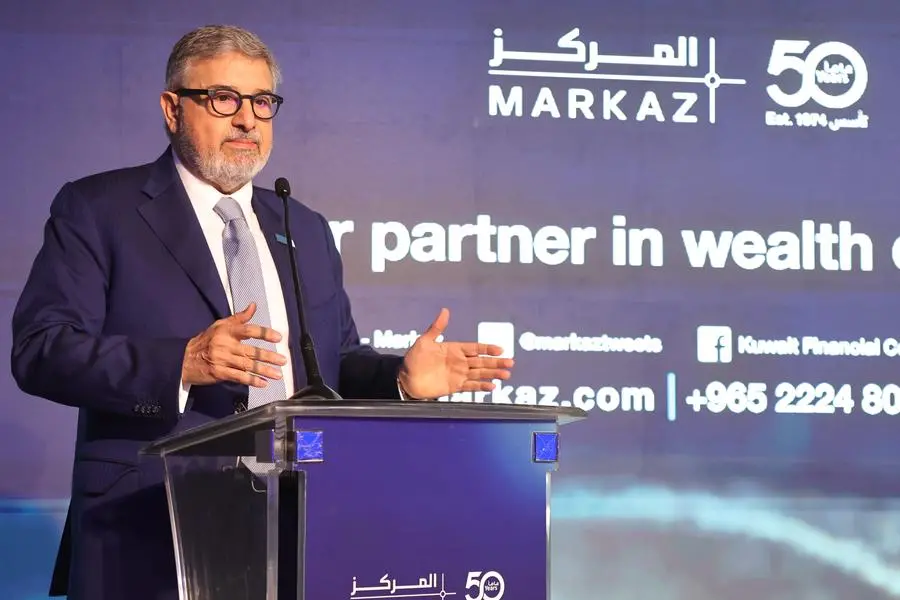
Kuwait,: Reaffirming its leadership in asset management and investment banking in the region, Kuwait Financial Centre “Markaz” held its annual seminar titled “Markaz 2026 Outlook: Navigating Trends and Investment Opportunities.” The event took place on December 8, at the St. Regis Hotel Kuwait, bringing together Markaz experts alongside distinguished international speakers from the financial sector to examine global and regional market developments and the forces shaping investment opportunities in the coming year.
The seminar featured in-depth discussions covering global macro trends, GCC market dynamics, real estate cycles, fixed income, private markets, private credit, and investment-banking insights. Attendees also gained perspectives on how technology, policy shifts, and demographic trends are influencing capital flows and sector performance across the region. The event underscored Markaz’s ongoing commitment to supporting investors with timely insights, disciplined research, and access to diversified opportunities.
During his opening keynote, Ali H. Khalil, CEO of Markaz, stated: “As we look toward 2026, the global economic environment is undergoing steady and meaningful change. Technological shifts, policy movements, and geopolitical dynamics are shaping investment behavior, and economies that adapt will be best positioned to navigate this transition. Across the region, and particularly in Kuwait, we see reform momentum gaining clarity, with governance improving and investment priorities becoming more focused. These developments support a more stable and resilient economic outlook. This confidence is also reflected in market performance, with Kuwait’s local index rising over 25% this year, signalling strong investor belief in the reform path.”
He added: “Our markets remain cyclical, and opportunities often arise during periods of volatility, which is why disciplined liquidity and risk management are essential. Regionally, we are confident in the prospects of the Saudi market as we expand our presence there, and we remain optimistic about Kuwait’s outlook. The country benefits from real opportunities and a strong capital market, supported by viable projects, low public debt, and high lending capacity in the banking sector. Looking ahead, Kuwait is set to deploy nearly KD 40 billion in housing, logistics, energy, and oil and gas over the next 5 to 10 years. Investment that carries a meaningful multiplier effect across the broader economy. Combined with ongoing governance, regulatory, and fiscal reforms, and investments in housing, logistics, infrastructure, oil, and technology, Kuwait is laying the groundwork for sustainable returns and the development of new sectors and businesses. With our diversified capabilities, deep expertise, and trusted investment platform, Markaz is well positioned to help clients navigate change with confidence and seize opportunities across Kuwait, the region, and global markets.”
Abdullatif W. Al-Nusif, Managing Director of Wealth Management and Business Development at Markaz, added: “At Markaz, we believe that informed decision-making begins with clarity. Clarity in understanding market shifts, opportunities, and risks. As a wealth partner, our role is to translate these insights into solutions that support individuals, families, and long-term wealth plans. The discussions today reinforce the importance of solid strategies and a forward-looking approach, and we remain committed to empowering our clients with the perspective and tools needed to navigate the years ahead.”
Global Market Overview
The seminar opened with a presentation by Giovanni Leonardo, CFA, Head of Investment Management and Executive Board Member at Schroders, who shared an outlook on global economic trends for 2026. His session addressed interest-rate expectations, global growth, inflation rates, shifting capital flows, and the accelerating influence of technology and AI across markets.
Leonardo stated: “As 2026 approaches, on the broader economic trends, we stay constructive on equities, supported by rising real wages, resilient earnings, and cooling—if still imperfect—inflation. In a world of steady growth and markets that have already priced in much of the optimism, we remain neutral on fixed income, favouring shorter maturities and leaning toward government bonds as tight corporate spreads leave little margin for error. After taking profits on gold, we’re underweight alternatives for now, though gold remains an important hedge in portfolios, and we continue to see long-term value in private markets and real estate as we look for the right moment to rebuild broader alternatives exposure.”
GCC & Kuwait Market Perspectives
Moderated by Deena Refai, Executive Vice President, Wealth Management and Business Development at Markaz, a panel discussion titled “Opportunities in Equities, Real Estate, and Fixed Income” featured a panel of senior Markaz specialists who examined key themes across regional equities, real estate, and fixed income. Markaz experts provided an in-depth overview of the economic landscape across the GCC, noting the continued impact of reforms, fiscal stability, and long-term development programs on investment activity. Discussions highlighted how government-led diversification efforts, particularly in housing, logistics, industrial capacity, and technology infrastructure, continue to support sectors’ resilience and attract both regional and international capital.
Rasha Othman, Executive Vice President, Investment Banking (Capital Markets & Fixed Income) at Markaz, said: "Fixed-income markets delivered positive performance in 2025, supported by interest rate cuts and a broad rally in bond prices. The GCC fixed-income index has returned approximately 9% year-to-date. GCC governments, particularly in Saudi Arabia, Kuwait, and Oman, continue to deepen their debt capital markets as part of broader financing diversification efforts, with ongoing sovereign issuances contributing to a more mature and well-defined yield curve. Looking ahead to 2026, we expect further cuts in interest rates. GCC bonds remain highly attractive, offering yields above those available in U.S. and European markets, alongside growing regional momentum in green bonds, which is drawing increased foreign investor interest. We believe that market volatility will also present meaningful investment opportunities. Despite the challenges, Markaz remains committed to identifying resilient opportunities through effective asset allocation and selecting low-risk sectors capable of performing across market cycles."
Milad Elia, Executive Vice President of MENA Real Estate, at Markaz said: “Real estate opportunities are emerging in Kuwait housing sector as well as in warehousing in Kuwait and Saudi Arabia, driven by infrastructure investments and structural changes. Another theme for the coming few years, for institutional investors and family offices with large real estate portfolios, is to structure these portfolios to future proof them and unlock value through restructuring and separating the role of investor from Asset Management. Noting that asset managers create value by selecting high-quality assets, enhancing leasing and collection performance, and managing operations efficiently through on the ground knowledge and the use of modern technologies; all of which represent key strengths of Markaz.”
Lisa Amin, Head of European Real Estate - Business Development at Markaz said: “Global real estate is entering a more selective phase of the cycle, where rigorous underwriting and strong operating partners are essential. In the US, and across key European markets, long-term demand in logistics, housing, and specialized assets remains supported by structural trends and constrained supply. As markets recalibrate, we see targeted opportunities in resilient assets that can deliver stable, cycle-aware performance.”
Mohammed Al-Abdulkader, Senior Vice President of MENA Equities at Markaz said: “GCC equity markets continue to benefit from structural growth drivers supported by demographic demand, regulatory reforms, stable liquidity levels, large-scale development projects, and housing and logistics activity. These factors provide greater visibility across several sectors, most notably finance, construction, industrials, real estate, and logistics. They are also expected to strengthen partnerships and alliances with regional and international companies involved in delivering the country’s major projects. With fundamentals improving, we see promising selective opportunities for long-term investors within these sectors.”
Abdulaziz Alhajeri, Senior Analyst in International Real Estate at Markaz, delivered a focused overview of the global real estate cycle, highlighting where major markets stand today and how that positioning influences returns, risk, and allocation decisions. His presentation emphasized the importance of understanding where we are in the cycle and identifying opportunities that emerge as markets adjust, particularly in segments supported by structural demand and long-term fundamentals.
Kashish Tandon, CFA, Executive Vice President, Investment Advisory, at Markaz, moderated a panel titled “Private Markets — The New Frontier for Growth”, which featured experts from Blackstone, BlackRock, Goldman Sachs, and Macquarie. The panelists discussed growth opportunities in private markets and private credit, noting the asset class’s expanding role in diversified portfolios.
Andrew Park, Managing Director, Blackstone Credit and Insurance (BXCI), New York said: “Allocating to private markets is now becoming a core portfolio decision for private wealth clients, as broader access and a greater opportunity set across asset classes (such as private credit, equity, infrastructure, and real estate) are driving adoption for eligible investors. At Blackstone, we are seeing this momentum globally – including in the Middle East, where access is expanding and client appetite is rising, reinforcing the case for integrating private markets.”
Hannah Wallis, Head of Multi-Alternatives Strategy, EMEA, BlackRock said: “We are entering a new era in which alternatives are no longer optional for clients, with the sector on track to exceed $32T in AUM by the end of the decade. As we continue transforming access to institutional-quality private markets investments through new evergreen and semi-liquid solutions, we see future portfolios for wealth clients shifting beyond the traditional 60/40 to include up to 20% in private assets.”
Victoria Baker-Duly, Managing Director, Private Equity Capital Raising EMEA, Goldman Sachs said:
“As deal activity rises in private markets, it will provide Limited Partners (LPs) with new data to evaluate manager track records as they allocate new capital to existing and potential new relationships. General Partners (GPs) will need to strategically identify growth areas that exceed overall economic growth, potentially shifting in geographic focus. The pursuit of higher-growth sectors is expected to continue. As data science, AI, and automation continue to mature and accelerate, there is greater potential for driving revenue growth and enhancing efficiency. Dealmaking activity is accelerating, with strong capital markets and lower financing costs as tailwinds. With valuations still high, the importance of value creation and operational resilience is paramount, with the strongest companies now able to attract interest from strategic buyers and public market investors.”
Ilias Benjelloun, Portfolio Strategy, Macquarie Infrastructure Fund, said: "Once previously reserved for institutional investors, the private market opportunity is increasingly becoming a necessity for sophisticated investors as they look to move away from the traditional stock and bond portfolio and towards genuine diversification and resilient returns. The future of portfolio construction lies in taking a diversified approach and harnessing the power of private markets. This is especially true for private infrastructure, which offers tangible downside protection, stable income, and direct exposure to the real economy - providing investors with exposure to physical assets and long-term contracts that can weather macroeconomic volatility, hedge against inflation, and deliver sustainable value over the long term."
From the investment-banking perspective, Ahmed Al-Falah, Managing Director, and Fay Al-Bader, Manager Advisory & M&A, presented key trends shaping corporate strategy in the region. Their session highlighted the rise in IPO activity, cross-border expansion, and the impact of technology, particularly AI, on business models, capital raising, and competitive positioning. They noted that the current transformations are creating significant opportunities for companies to develop more flexible and adaptive strategies, enhancing growth prospects and contributing to the creation of sustainable value in an environment that is evolving at an accelerated pace.
The seminar also featured a short video outlining Markaz’s digital-transformation initiatives, including advancements in data infrastructure, AI-enabled insights, upgraded client-service platforms, CRM modernization, and enhanced internal systems, all part of a long-term roadmap to strengthen transparency, efficiency, and digital client experience.
Expertise and Legacy
Anchored in over 50 years of trust and financial leadership, the “Markaz Outlook 2026” seminar once again served as a key platform for knowledge exchange and forward-looking insights, underscoring Markaz’s role as a trusted partner in wealth creation.
About Kuwait Financial Centre “Markaz”
Established in 1974, Kuwait Financial Centre K.P.S.C “Markaz” is one of the leading asset management and investment banking institutions in the MENA region with total assets under management of over KD 1.61 billion (USD 5.28 billion) as of 30 September 2025. Markaz was listed on the Boursa Kuwait in 1997. Over the years, Markaz has pioneered innovation through the creation of new investment channels. These channels enjoy unique characteristics and help Markaz widen investors’ horizons. Examples include Mumtaz (the first domestic mutual fund), MREF (the first real estate investment fund in Kuwait), Forsa Financial Fund (the first options market maker in the GCC since 2005), and the GCC Momentum Fund (the first passive fund of its kind in Kuwait and across GCC that follows the momentum methodology), all conceptualized, established, and managed by Markaz.
For further information, please contact:
Sondos Saad
Corporate Communications Department
Kuwait Financial Centre K.P.S.C. "Markaz"
Tel: +965 2224 8000
Email: Ssaad@markaz.com
markaz.com