PHOTO
Abu Dhabi, UAE:– The 8th World Investment Forum hosted a pivotal Investment Ministerial Roundtable earlier today, that addressed the pressing concerns surrounding international investment. With the global foreign direct investment (FDI) flows witnessing a significant downturn during the pandemic followed by an uneven recovery, the roundtable discussion expressed the urgent need for strategic policy interventions.
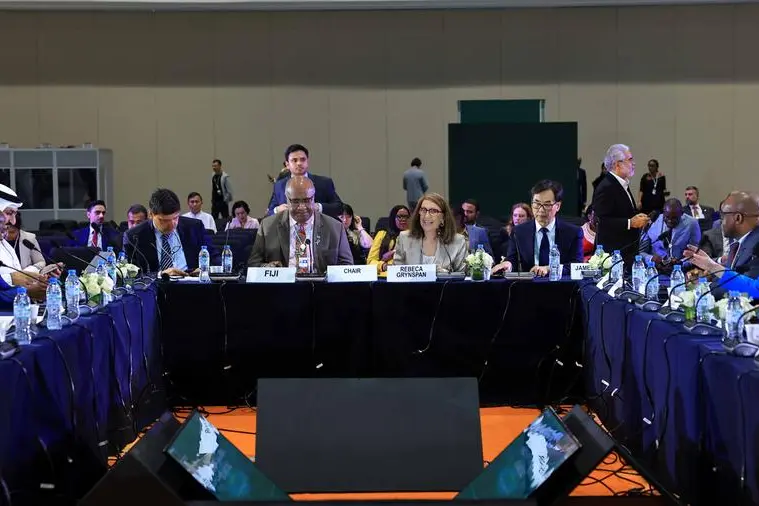
The roundtable was opened by Rebeca Grynspan, Secretary-General, United Nations Conference on Trade and Development (UNCTAD), and chaired by Hon. Manoa Seru Kamikamica, Deputy Prime Minister and Minister for Trade, Cooperatives, Small and Medium Enterprises and Communications, Republic of Fiji. The conversation examined some of the difficulties today’s world faces, including the crucial need to invest in health systems, food security, ensuring supply chain resilience, and the effects on developoing countries. With a notable focus on climate finance, investment, and the energy transition, the deliberations underscored the significance of international cooperation to meet the Paris Agreement climate goals.
Rebeca Grynspan, Secretary-General, UNCTAD spoke of the downward trajectory of foreign direct investment over the past three decades, emphasizing the unfavourable disconnect between regional and global value chains, saying: “Regional integration is becoming much more important when observing these trends. Regional value chains are becoming more prominent than global ones lately. Promoting FDIs through SMEs rather than only through multinational corporations is receiving concrete policy attention, and connecting local firms is increasingly seen as a very important development.”
The roundtable was a platform where several world leaders discussed national and international investment policy priorities and drawing from their experiences. Sharing successful approaches to finance mobilization and channelling investments towards sustainable development was a key highlight. The session paved the way for a deeper understanding of challenges and potential solutions, especially in areas like energy transition and sustainable infrastructure.
Among the session themes were the key global priorities in national and international investment policymaking for the upcoming years, along with lessons learned in investment policymaking for sustainable development, and the approaches adopted to stimulate international investment specifically for the energy transition.
-Ends-
About UNCTAD
UNCTAD is the UN trade and development body. It supports developing countries to access the benefits of a globalized economy more fairly and effectively and equips them to deal with the potential drawbacks of greater economic integration.
It provides analysis, facilitates consensus-building and offers technical assistance to help developing countries use trade, investment, finance and technology as vehicles for inclusive and sustainable development.