PHOTO
- Organised by the Arab Authority for Agricultural Investment and Development, under the patronage of the Ministry of Finance
- 6 key themes on agricultural investment and financing, food manufacturing, trade exchange, innovation, and investment portfolio management for agricultural companies
- Exploring practical challenges and sustainable solutions to enhance food security
- Featuring discussions on 67 scientific research papers aligned with the conference themes
Al Hussaini: Enhancing Arab food security requires stronger cooperation among Arab nations and institutions, integrating initiatives, and exchanging expertise and experiences.
Al Zaabi: A package of high-impact initiatives, including food security benchmarks, a financing fund for farmers and fishermen, and a digital platform.
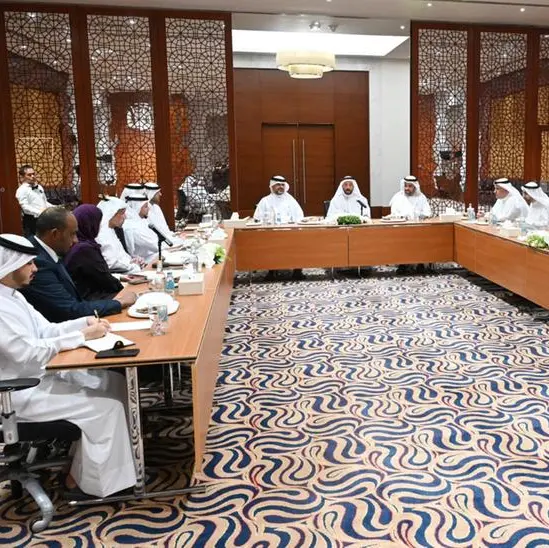
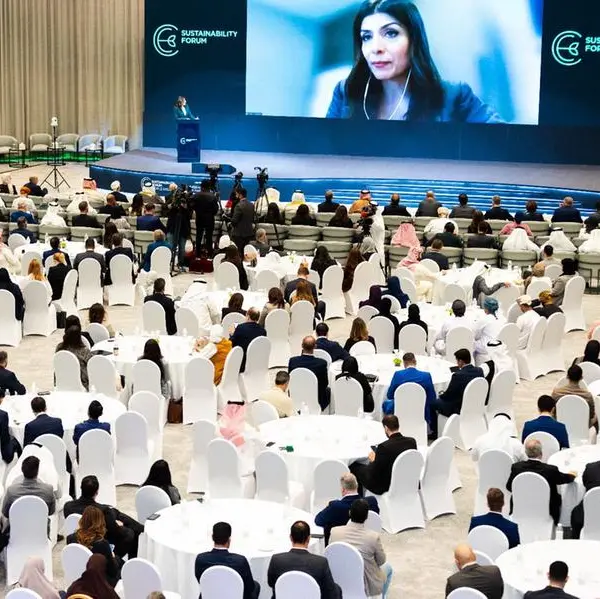
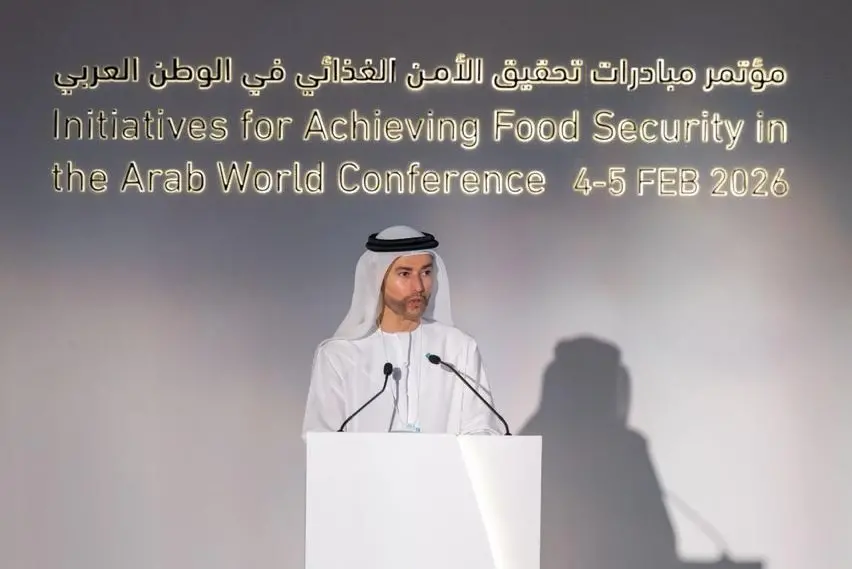
Dubai,The Conference on Initiatives to Achieve Food Security in the Arab World commenced today in Dubai. Organised by the Arab Authority for Agricultural Investment and Development under the theme “Sustainability Is the Path to Food Security,” the conference is held under the patronage of the UAE Ministry of Finance.
The event features high-level participation from ministers, senior government officials, representatives of Arab and international organisations, financial and development institutions, as well as experts, academics, and specialists in the agriculture, food, and investment sectors.
Integrating initiatives
In his opening address, H.E. Mohamed bin Hadi Al Hussaini, Minister of State for Financial Affairs, stressed that food security has been and will continue to be a strategic pillar of sustainable economic development in the Arab world. He noted that strengthening food security requires comprehensive approaches that align fiscal policies, mobilise long-term investment, and position innovation as a central driver of productivity, sustainability, and resilience within food systems.
Al Hussaini added that fiscal policies have a vital role to play in creating an enabling environment for investment in agriculture and food. By developing innovative financing tools and encouraging strong public-private partnerships, governments can help channel capital into projects that deliver long-term economic and development impact, while building more efficient and adaptable food supply chains.
Al Hussaini further emphasised that bolstering Arab food security necessitates deeper cooperation among Arab countries and institutions, greater integration of initiatives, and the exchange of expertise and best practices. He added that specialised Arab institutions can significantly contribute to supporting agricultural investment, narrowing the food gap, and building a more integrated and sustainable Arab food system.
H.E. Younis Haji AlKhoori, Undersecretary of the Ministry of Finance, and H.E. Obaid Saif Hamad Al Zaabi, Chairman of the Authority’s Board of Directors, have launched the first Food Security Index in the Arab world, in partnership with the global Azimut Group and S&P Global.
The index is the first financial benchmark of its kind in the region to track the performance of companies operating in the food sector, providing investors with a transparent and standardised analytical tool that supports increased capital flows into this vital sector.
Keynote addresses
The conference featured a number of speeches addressing the current state of food security, as well as the importance of investment, innovation, and institutional integration.
H.E. Abdullah bin Suleiman bin Sheikh Sidiya, Minister of Economic Affairs and Development of Mauritania and Chairman of the Shareholders’ Council of the Arab Authority for Agricultural Investment and Development, affirmed that organising the conference demonstrates the growing Arab awareness that food security has become a pillar of national sovereignty amid rapidly evolving global challenges.
His Excellency explained that the conference addressed the food security ecosystem through a comprehensive sustainability-driven approach, covering investment, production, innovation, and marketing.
He also stressed the importance of bringing together decision-makers, experts, and researchers on a single platform to enhance integration and Arab investment cooperation, expressing his hope that the conference outcomes will contribute to strengthening Arab food security and achieving sustainable development.
For his part, H.E. Obaid Saif Hamad Al Zaabi, Chairman of the Authority’s Board of Directors, affirmed that the conference is being held at a pivotal moment coinciding with the 50th anniversary of the authority’s establishment.
He noted that the authority has recently launched its new corporate identity and outlined four strategic pillars that form the roadmap for the next phase, aimed at bridging the Arab food gap and strengthening food security through integrated investment and development frameworks.
These pillars, he said, include developing food security benchmark indicators, stimulating digital transformation through the implementation of an advanced electronic platform, launching a small farmers and fishermen financing fund as a permanent platform in partnership with international financial institutions, as well as strengthening regional integration and supporting food sovereignty by deepening investments in strategic markets.
Meanwhile, Dr. Conrad Rein, Director of the University of Chicago Innovation Commission for Climate Change, Food Security and Agriculture and Secretary of the Global Flagship Initiative for Food Security, said that sustainability is the primary pathway to achieving long-term food security, emphasising the importance of relying on scientific solutions, strengthening international partnerships, and scaling up successful initiatives that can be applied on a wide scale.
The opening session concluded with honouring outstanding scientific research papers across the conference’s various themes, which were evaluated by specialised scientific judging committees.
The papers were developed in support of scientific research and to encourage researchers to present high-quality studies that contribute to developing the sector and enhancing food security in the Arab world, as well as recognising the conference’s sponsoring entities in appreciation of their support and contributions.
The conference was attended on behalf of the Ministry of Finance by H.E. Mohamed bin Hadi Al Hussaini, and H.E. Younis Haji AlKhoori, alongside H.E. Saeed Rashid Al Yateem, Assistant Undersecretary for the Government Budget and Revenue Sector, and H.E. Ali Abdullah Sharafi, Assistant Undersecretary for International Financial Relations.
Six thematic tracks
The conference featured six main themes: Arab efforts to achieve food security; agricultural investment and financing initiatives and economic development; investment and financing initiatives in the production of essential food commodities; investment initiatives in food manufacturing and trade exchange; innovation and advanced technologies in the agricultural sector; and investment initiatives in agricultural companies’ investment portfolios.
The conference also included a number of specialised panel discussions, in addition to research sessions. The first session, titled “Arab Efforts to Achieve Food Security,” addressed Arab efforts and successful experiences in agricultural investment.
Dialogue sessions
The conference also featured a series of parallel dialogue sessions, including a roundtable titled “Challenges and Ways to Achieve Sustainable Food Security.” The session examined practical challenges and sustainable solutions to strengthen food security. It was attended by representatives from the public and private sectors, alongside experts and researchers from Arab and international institutions.
A second roundtable, titled “FAO Experts' Views on Investment and Agricultural Financing for Economic Development,” addressed the role of financing policies and financial institutions in supporting the agricultural sector. It reviewed financing mechanisms and highlighted the importance of investment in achieving sustainable economic development. Participating in the session were experts from the Food and Agriculture Organization of the United Nations (FAO).
On the second day of the conference, 67 distinguished scientific papers were discussed across the conference themes through 12 parallel sessions, which focused primarily on initiatives related to the conference’s core pillars. This was complemented by closing sessions dedicated to presenting discussion outcomes, key messages, and formulating final recommendations.
It is worth noting that the Arab Authority for Agricultural Investment and Development (AAAID) is an independent Arab financial institution established in 1976 under an agreement among Arab states. It has 21 Arab countries as members and is headquartered in Dubai.
The Authority aims to develop agricultural resources and promote investment in the Arab agricultural sector. AAAID currently contributes to 42 companies and projects, including 39 operating companies and three projects under establishment and implementation across several Arab countries.
The Authority’s investments are concentrated in four main sectors: agro-industrial processing, crop production, livestock production, and agricultural services.
It also plays an active developmental role in supporting sustainable agricultural development, narrowing the Arab food gap, and empowering local communities and small farmers through the transfer of modern technologies, financing programmes, and knowledge dissemination.