PHOTO
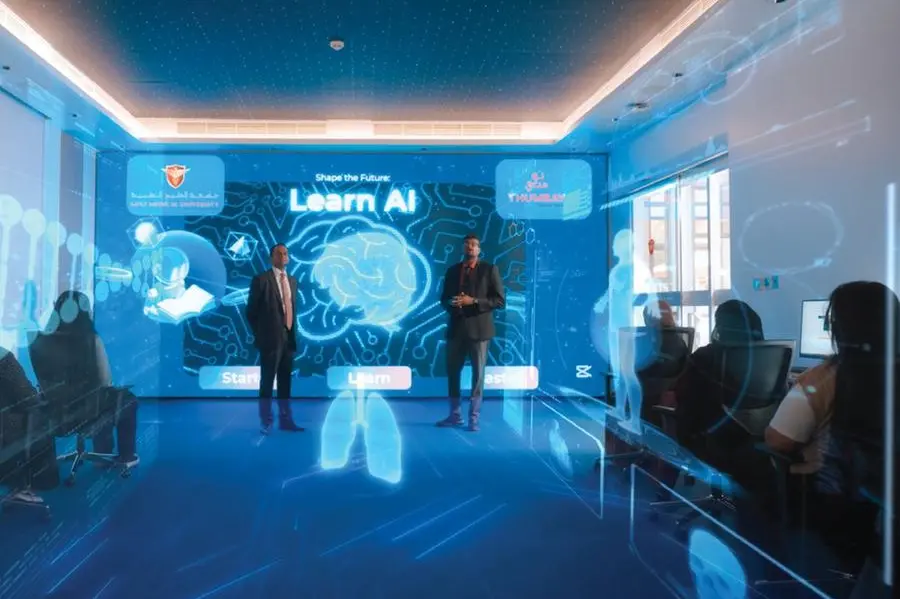
Healthcare is undergoing a powerful transformation driven by artificial intelligence, data intelligence, and digitally connected care systems. Clinical expertise alone is no longer enough. Hospitals and healthcare organizations now require professionals who can combine medical understanding with strategic thinking, analytics, and technology leadership. Responding to this shift, Thumbay College of Management and AI in Healthcare at Gulf Medical University has introduced a new generation of academic programs designed to prepare students for careers at the intersection of healthcare and intelligent technology.
The college reflects the clear vision of Dr. Thumbay Moideen to provide modern healthcare education. By integrating artificial intelligence, healthcare management, economics, and clinical insight into a unified academic framework, students are prepared to lead in environments where technology and patient care must work together. The approach moves beyond traditional learning by emphasizing responsible AI adoption, data-driven decision-making, and ethical healthcare leadership.
Prof. Amir Zeid, Dean of the College, emphasized that healthcare leadership today requires analytical thinking, adaptability, and a deep understanding of evolving healthcare systems. The college aims to nurture professionals who combine empathy with innovation, producing graduates with the heart of a doctor and the mind of an engineer, capable of managing complex healthcare operations.
The college offers a diverse portfolio of undergraduate and postgraduate programs aligned with global healthcare demands. The Bachelor of Science in Applied AI in Healthcare equips students with expertise in artificial intelligence, machine learning, and healthcare analytics, preparing them for roles in digital health and health technology. The Bachelor of Science in Healthcare Management and Economics provides a strong foundation in healthcare leadership, quality management, policy, and hospital administration. For advanced learners, the Master in AI and Health Informatics focuses on data-driven healthcare systems and AI-enabled clinical decision support, while the Master in Healthcare Management and Economics prepares professionals to lead healthcare organizations with strategic and financial insight.
A defining strength of the college is its immersive learning ecosystem. Students benefit from hands-on research, advanced AI laboratories, and exposure to academic hospitals within the Gulf Medical University health system. This real-world integration ensures graduates develop practical skills, industry awareness, and confidence before entering the workforce. Global partnerships and more than 100 industry collaborations further enhance employability and provide exposure to international healthcare perspectives.
All programs are accredited by the UAE Ministry of Higher Education through the Commission for Academic Accreditation, while Gulf Medical University holds international recognition, including quality assurance acknowledgment from the UK Quality Assurance Agency. This reinforces academic credibility and global career mobility for graduates.
Prof. Manda Venkatramana, Chancellor of Gulf Medical University, highlighted that the institution continues to be among the region’s most sought-after medical universities, recognized for producing competent and future-ready healthcare professionals.
With the global AI in healthcare market projected to reach $187.7 billion by 2030 and $674 billion by 2034, demand continues to grow for professionals who understand both healthcare delivery and intelligent systems. Admissions are now open for students seeking to lead the future of digital healthcare through innovation, compassion, and strategic expertise.
For more information, visit www.gmu.ac.ae