PHOTO
Al-Fulaij:
- Operating profit before taxation grew by 11.3% year-on-year, driven by higher business volumes
- Our strategic focus on innovation and digital banking serves as a catalyst, positioning the Bank to actively capture the growth potential of Kuwait’s young population
- NBK’s footprint across regional and international markets remains a cornerstone of the Bank’s strategy
- NBK Wealth continues to leverage its deep expertise to deliver comprehensive investment tools and solutions
- We remain committed to sustainability and to reinforcing NBK’s position as a responsible financial institution focused on long-term value creation
- The government’s continued commitment to advancing its development agenda and legislative reforms are key catalysts in shaping and supporting investment momentum going forward
Ronghe:
- NBK continues to navigate efficiently through global economic uncertainties, underscoring the resilience and robustness of its business model.
- The Group’s balance sheet remains strong, supported by stable credit quality and a solid capital base
- We have upgraded our 2025 loan growth guidance to be in the low double-digit range, driven by the strong performance during the first nine months of the year
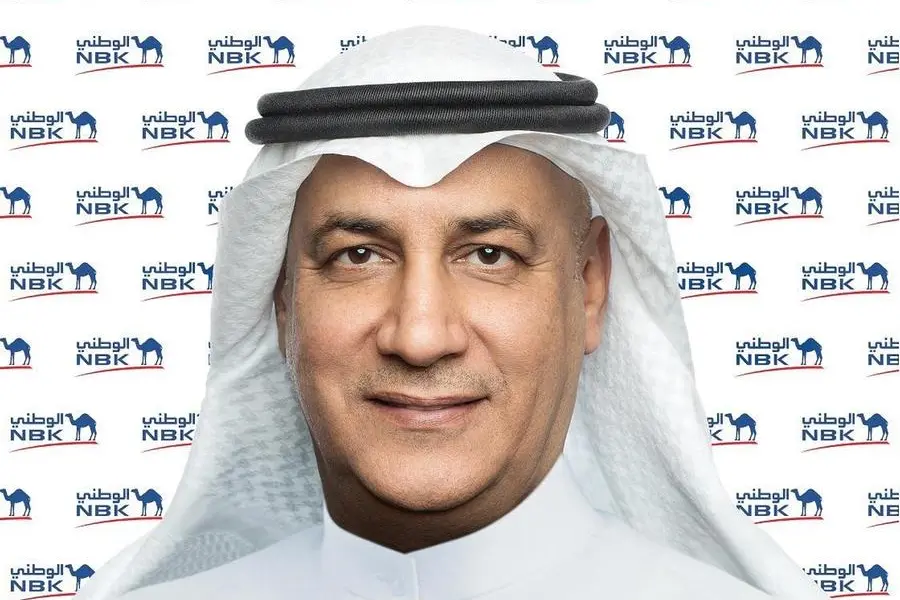
Mr. Salah Al-Fulaij, Chief Executive Officer of National Bank of Kuwait (NBK) – Kuwait, stated that the Bank’s operating profit before taxation grew by 11.3% year-on-year during the first nine months of 2025, reaching KD 592.5 million. This solid performance was driven by higher business volumes, strong growth in core non-interest income, stable operating costs, and a notable decline in credit loss provisions and impairment charges.
Al-Fulaij added, during NBK’s Analyst Conference Call for 9M2025, that the Bank’s returns remained robust, with a return on average assets of 1.47% and a return on average equity of 14.5%. He expressed his confidence in NBK’s ability to sustain its market leadership amid Kuwait’s dynamic economic landscape, which continues to offer abundant opportunities for growth.
Al-Fulaij explained that NBK reported a net profit of KD 467.4 million for the first nine months of 2025, compared to KD 457.0 million in the corresponding period of 2024, reflecting a growth of 2.3%. He noted that profitability was partially impacted by the continued effect of the new tax regime, with the effective tax rate rising to 15.9% in the first nine months of 2025, compared to 8.7% during the corresponding period of the previous year.
“We foresee promising prospects that will enable NBK to capitalize on the improving business sentiment by delivering innovative, tailored banking solutions designed to meet the needs of both corporates and individuals. Building on our deep-rooted domestic presence and strong client relationships, we remain well-positioned to drive sustainable growth. Our strategic focus on innovation and digital transformation continues to be a key enabler in allowing the Bank to harness the vast growth potential presented by Kuwait’s young and dynamic population,” Al-Fulaij highlighted.
He affirmed that NBK’s solid footprint across regional and international markets will remain a cornerstone of the Bank’s long-term strategy, serving as an effective tool to mitigate risks, ensure stable returns, and enhance operational efficiency. Al-Fulaij noted that NBK will continue to leverage cross-selling opportunities across its diverse geographical presence to maximize value creation and foster greater integration among its business segments.
“At the same time, NBK Wealth will continue to leverage its deep expertise to deliver comprehensive investment tools and solutions, including portfolio management and financial advisory services tailored to the diverse needs of our clients. Meanwhile, our Islamic banking arm, Boubyan Bank, will further strengthen its solid domestic presence and continue to contribute to the diversification of the Group’s income and profitability streams,” Al-Fulaij added.
Furthermore, he stated that NBK remains firmly committed to sustainability and advancing its sustainable finance agenda, noting the recognition the Bank has recently received for its unwavering dedication to environmental responsibility, social impact, and strong corporate governance. This was reflected in Sustainalytics’ revision of NBK’s ESG Risk Rating from “Medium” to “Low Risk”, in addition to MSCI’s upgrade of NBK’s ESG rating to “A”, further reinforcing the Bank’s position among the top regional performers in ESG ratings.
Al-Fulaij also pointed out that the Bank has published its Green Bond Allocation and Impact Report, its inaugural Task Force on Climate-related Financial Disclosures (TCFD) Report, and its 2024 Sustainability Report, underscoring NBK’s significant progress in embedding ESG principles across all its operations. He emphasized that these commitments and disclosures further strengthen NBK’s position as a responsible financial institution focused on long-term value creation.
Lending Demand
On lending demand and the sectors driving it in Kuwait, Al-Fulaij said: “When looking at the retail segment, activity has been relatively subdued in recent periods due to the prevailing high-interest rate environment. On the other hand, corporate credit demand has been gaining momentum, particularly for financing the purchase of securities and select real estate activities. Notably, the demand for corporate lending continues to be driven more by the actual needs of institutions rather than the magnitude of interest rate cuts.
He also noted that Weyay Bank, NBK’s digital arm, started offering digital loans during the second quarter of this year, which witnessed strong demand compared to the relatively subdued growth in the retail sector, adding that NBK is expected to launch its own digital lending service early next year.
Robust Economic Activity in the Domestic Market
Regarding economic conditions in Kuwait, Al-Fulaij said: “Domestic economic activity witnessed notable growth in 2025, supported by strong credit expansion, particularly within the business lending segment, which recorded solid growth. Supportive policy measures, ongoing reforms, and progress on legislative initiatives are expected to further strengthen non-oil growth and sustain economic momentum through the remainder of the year. Additionally, the winding of OPEC production cuts is anticipated to provide an additional boost to overall growth.”
He noted that, looking ahead, Kuwait’s GDP growth is forecasted at around 2.4% for the year, with oil related activity projected to expand by 2.6% and the non-oil sector by 2.2%.
On another note, Al-Fulaij highlighted that Kuwait’s projects market activity remained positive, with year-to-date awards of KD 2.1 billion and an estimated KD 9.15 billion of projects in the pipeline. He emphasized that the government’s continued commitment to advancing its development agenda and legislative reforms serves as a key catalyst in shaping and supporting investment momentum, reinforcing confidence in the domestic market and sustaining investment activity going forward.
The GCC
As for the GCC region, Al-Fulaij stated that the economic outlook remains broadly positive, supported by strong fiscal buffers, ongoing structural reforms, and sustained global oil demand growth throughout 2025 and 2026. He explained that, driven by resilient non-oil activity, solid investments, and the unwinding of OPEC+ production cuts, GCC economies are expected to maintain strong growth momentum through the remainder of the year.
Operational Momentum
In the meantime, Mr. Sujit Ronghe, Group Chief Financial Officer of National Bank of Kuwait, stated that the Group’s operating momentum remains strong, supported by notable growth in business volumes, particularly in loans and investments. He explained that, despite ongoing geopolitical tensions at both regional and global levels, the operating environment in Kuwait and across the GCC has remained relatively stable, while macroeconomic uncertainty has heightened globally amid growing concerns over the potential implications of tariff measures, which have cast a shadow over the broader business landscape.
Ronghe added that NBK continues to navigate efficiently through an uncertain global environment, reflecting the strength and resilience of its business model. He pointed out that the Group’s key business segments continue to deliver strong contributions to overall profitability, reaffirming their role as core drivers of income diversification and key pillars of resilience for the Group’s earnings.
He noted that NBK Group continues to leverage its unique competitive advantages among Kuwaiti banks, both in terms of its broad geographical footprint and its ability to operate across Conventional and Islamic banking platforms.
“Following the passage of the Public Debt Law in Kuwait, the Central Bank of Kuwait has recently begun issuing Kuwaiti Dinar-denominated government treasury bonds, with KD 2.0 billion issued since June 2025. Although the CBK asset mix has remained unchanged, we are cautiously optimistic that continued debt issuances will enable the Bank to deploy its KD liquidity more profitably,” Ronghe added.
Furthermore, he noted that NBK Group continues to invest in key strategic initiatives, digital technologies, and process enhancements, enabling the Bank to deliver best-in-class banking services and achieve greater operational efficiency through optimized resource utilization. He emphasized that the Group’s balance sheet remains notably strong, supported by stable credit quality and a robust capital base, which, together with NBK’s strong operating profitability, provides a high level of resilience and credit loss absorption capacity.
“Total assets reached KD 44.9 billion as of September 2025, reflecting a 14.7% increase compared to September 2024 levels. Group loans and advances stood at KD 26.1 billion, marking growth of KD 2.9 billion or 12.5% year-on-year, and 9.9% during the first nine months of the year. Loan growth was achieved in Kuwait across both conventional and Islamic segments, in addition to solid growth across our international operations. Similarly, investment securities grew by 21.1% year-on-year to reach KD 9.0 billion. The overall balance sheet composition has remained stable throughout the year,” Ronghe added.
Commenting on loan growth, Ronghe stated: “The Group continues to benefit from the strong momentum of its approved loan pipeline, which reflects high-quality assets and well-diversified growth sources. Based on the solid performance achieved during the first nine months of 2025, we have revised our full-year growth guidance to remain within the low double-digit range. Looking ahead, and in line with current trends, loan growth is expected to continue within a range of high single digits to low double digits through next year as well.”
Regarding asset quality ratios, Ronghe highlighted that “the Non-Performing Loan (NPL) ratio stood at 1.37%, while the loan loss coverage ratio reached 241%, reflecting the Group’s conservative provisioning policy.”