PHOTO
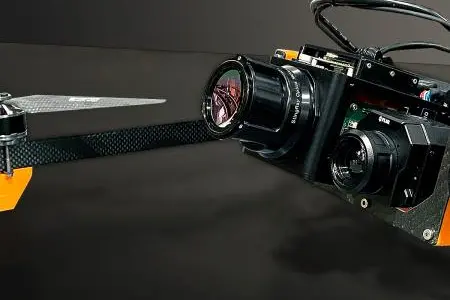
The global oil and gas inspection industry is set to benefit from the world’s first lightweight optical gas imaging inspection system developed by Air Control Entech, the certified remote inspection technology specialist.
Weighing less than 5000 grams, the unmanned aerial vehicle (UAV) is less than half the weight of other optical systems, allowing pinpoint visual accuracy of gas leak locations in the most challenging and previously inaccessible areas.
The system, which can spot leaks from more than 100m away, can be used in a variety of upstream, midstream and downstream environments including refineries, process plants and decommissioning projects such as well plugging and abandonment.
The lightweight camera with digital zoom capability and real time data transfer provides high definition gas imaging to accurately detect leaks beyond the scope of normal human vision. Colour coding gasses can help their identification.
The system can improve process safety by reducing the risks of fire or explosion through early and fast gas detection. It can also visually scan vast areas more quickly than alternative sensing technology, which is unable to offer pinpoint accuracy of leak location.
Enhanced data from optical gas imaging can help improve maintenance plans, reduce unplanned shutdowns and meet regulatory requirements.
Oil and Gas UK recently revealed the number of oil and gas leaks in the North Sea in 2019 increased by almost a quarter to 125. Most of those releases were of gas.
Kieran Hope, COO at Air Control Entech said: “Our optical gas imaging system has the potential to change the way the industry inspects the safety of its assets. Now operators can visualise exactly where a gas leak has occurred as opposed to relying on sensing systems, which can only provide accuracy to within a 3ft radius. In environments where winds can confuse sensing systems, seeing the leak rather than relying on sniffing for it has obvious benefits.
“Visual gas inspections were previously limited to either deck level or reduced use of UAV due to camera weight and flight time capacity. However operators can now reach heights and sites that were previously inaccessible and can double flight time to increase valuable data gathering.”
Air Control Entech, founded in 2016, is an independent partner, designing and implementing inspection solutions for complex and often unique problems on land, sea or in the air.
-Ends-
Air Control Entech, founded in 2016, is an independent partner, designing and implementing inspection solutions for complex and often unique problems on land, sea or in the air.
For more information, visit https://aircontrolentech.com/
Media contact
Andrew Bradshaw
Andrew@fifthring.com
01224 628071
© Press Release 2021
Disclaimer: The contents of this press release was provided from an external third party provider. This website is not responsible for, and does not control, such external content. This content is provided on an “as is” and “as available” basis and has not been edited in any way. Neither this website nor our affiliates guarantee the accuracy of or endorse the views or opinions expressed in this press release.
The press release is provided for informational purposes only. The content does not provide tax, legal or investment advice or opinion regarding the suitability, value or profitability of any particular security, portfolio or investment strategy. Neither this website nor our affiliates shall be liable for any errors or inaccuracies in the content, or for any actions taken by you in reliance thereon. You expressly agree that your use of the information within this article is at your sole risk.
To the fullest extent permitted by applicable law, this website, its parent company, its subsidiaries, its affiliates and the respective shareholders, directors, officers, employees, agents, advertisers, content providers and licensors will not be liable (jointly or severally) to you for any direct, indirect, consequential, special, incidental, punitive or exemplary damages, including without limitation, lost profits, lost savings and lost revenues, whether in negligence, tort, contract or any other theory of liability, even if the parties have been advised of the possibility or could have foreseen any such damages.