African ministers, representatives from continental institutions, the private sector, and development partners have called for Africa’s critical minerals to drive a new era of economic transformation, industrialisation and job creation – especially for young people and women, through value addition, regional value chains and beneficiation.
They made the call at the Ministerial Forum on Critical Minerals, Value Chains, and Beneficiation, held in Abidjan on Friday, 10 July 2026.
In a statement released at the end of the Forum organised by the African Development Bank Group, participants emphasised that the continent must extract more value from its abundant mineral resources by developing regional value chains, local processing capacities, and competitive industries, rather than continuing to primarily export raw materials.
Africa holds about 30% of the world's most critical mineral deposits, including cobalt, lithium, graphite, rare earths, platinum group metals, copper, manganese, and nickel. Yet, the continent continues to export raw and unprocessed minerals, capturing only a negligible share of the total economic value of its own resources.
This situation perpetuates an extraction model that shifts job creation, industrial capacities, and technological know-how outside the continent. Fragmentation due to national approaches further weakens Africa’s bargaining power in global mining value chains, reducing its strategic influence when it should be maximised by building regional value chains.
Participants stressed the need to establish a favorable environment for local processing of critical minerals, notably through investments in energy and transport infrastructure, better knowledge of geological resources, coherent public policies, a regulatory framework conducive to investments, and stronger governance of natural resources.
Titled “Ministerial Forum on Critical Minerals, Value Chains, and Beneficiation: Pathways to Transformation for Africa,” the meeting brought together African ministers responsible for Mines, Energy, Industry, Natural Resources, and the Green Economy. There were also representatives of the African Union Commission, the United Nations Economic Commission for Africa (UNECA), the African Continental Free Trade Area Secretariat, regional development banks, the private sector, and technical partners.
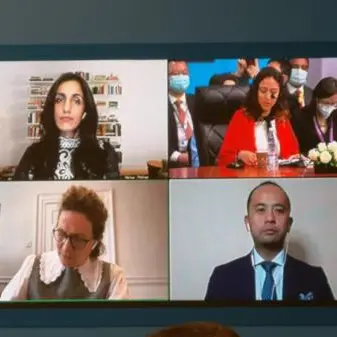
Dr Hanan Morsy, Deputy Executive Secretary of UNECA; Mr Jeremy Wiggins, Deputy Secretary for International Affairs at the U.S. Department of the Treasury, and Shuichi Hosoda, Deputy Vice Minister for International Affairs at the Japanese Ministry of Finance, also joined the meeting.
“By bringing together African governments, investors, development financing institutions, technical and financial partners here in Abidjan, we have opened a new chapter in relations between Africa and the rest of the world regarding the exploitation and management of critical minerals,” said Dr. Sidi Ould Tah, President of the African Development Bank Group.
He set the tone at the opening of the event, emphasising that Africa needs to make a paradigm shift to establish a new partnership for the continent so it can better manage its resources and derive all necessary benefits for its populations.
The Abidjan meeting focused on regional cooperation as an essential path to connect mineral deposits, energy systems, transport corridors, ports, industrial zones, skills, financing, and markets, thereby creating integrated and viable African production systems.
“Africa is ready to make critical minerals a lever for industrial transformation,” said Mamadou Sangafowa Coulibaly, Ivorian Minister of Mines, Petroleum, and Energy, who read the Forum’s declaration.
“The world is entering an era that is built on critical minerals,” said Hanan Morsy at the opening. “For Africa, this presents an opportunity that is as significant as independence 60 years ago. But opportunities don’t transform economies. Strategy does.”
Morsy said Africa’s comparative advantage lay not in competing national strategies, but in an integrated value chain system under AfCFTA where countries specialise according to their comparative advantage while collectively capturing far greater value.
Jeremy Wiggins said : “Africa has the human capital, the resources, and the opportunity to become the greatest industrial growth story of the 21st century.” But he emphasised the importance of good governance, saying the opportunity offered by Africa’s critical minerals require transparent, predictable and well-governed regulatory regimes. “Good governance is not an obstacle to investment. It is what makes it endurable”, Wiggins said.
Forum participants emphasised the importance of strengthening African partnerships, promoting technology transfer, developing local skills, and ensuring greater transparency and traceability in supply chains so that the benefits of critical minerals can sustainably support African economies.
They insisted that the African Development Bank Group can play a key role in assisting African countries with the preparation of bankable projects, risk reduction, infrastructure financing, and mobilising investments needed to develop competitive and sustainable value chains, particularly within the framework of the New African Financial Architecture for Development (NAFAD).
As the leading development finance institution in Africa, the African Development Bank Group aims to play a major role in transforming critical minerals in Africa by contributing to large-scale capital mobilisation, identifying priority segments of value chains that can be localised in Africa, and securing national commitments for reforms, infrastructure, and project preparation.
Distributed by APO Group on behalf of African Development Bank Group (AfDB).Media contact:
Department of Communication and External Relations
media@afdb.org