PHOTO
Continent’s future depends more on producing goods that drive modern economiesAfrica often debates economic growth, but the more important question is what kind of economy enables a state to govern effectively, raise revenue, withstand external shocks and protect its strategic interests. That question goes beyond development. It lies at the heart of state-building.
History offers a clear lesson. Natural resources have helped many countries, but they have rarely delivered lasting prosperity on their own. Britain, Germany, Japan, South Korea, China and Vietnam followed different development paths, yet they all strengthened their states by building productive economies capable of manufacturing increasingly sophisticated goods. The rewards extended beyond higher incomes. Governments collected more revenue, institutions became more capable, technical skills accumulated and national influence expanded.
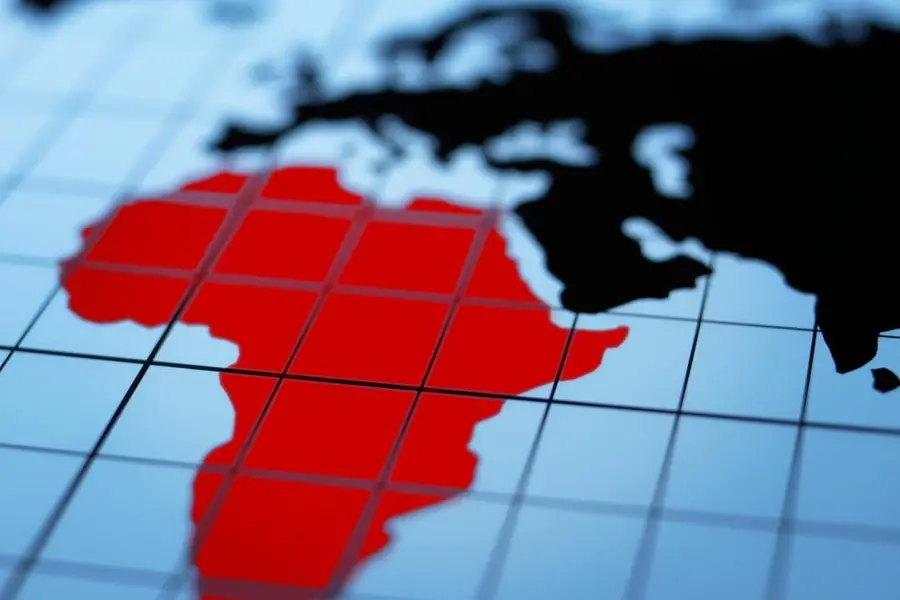
Africa, by contrast, remains largely positioned at the lower end of global value chains. The continent exports raw materials while importing machinery, medicines, fertilisers, electronics, refined fuel and industrial equipment at much higher prices. It continues to supply the inputs for other countries’ industries while retaining only a fraction of the value created. The consequences are not merely economic; they are deeply political.
Economies built primarily on extraction tend to reward access to licences, customs, contracts, aid, foreign capital and state patronage. Political competition becomes centred on distributing scarce resources rather than expanding production. Where industrial capacity is limited, governments struggle to create skilled employment, broaden the tax base, strengthen institutions and reduce dependence on external financing and imports.
A stronger productive economy changes the role of the state. Modern industry depends not only on infrastructure but also on effective public institutions. Reliable electricity, transport networks, finance, technical education, customs systems, quality standards, courts and predictable regulation all require capable government. As states develop these systems, administrative competence becomes state capacity.
Industrialisation also creates capabilities that extend beyond the factory floor. Manufacturing develops skilled workers, competitive firms and supplier networks while linking education, research and finance to production. As businesses expand, governments collect more taxes, invest more in public services and strengthen their administrative reach. Institutions improve because economic success increasingly depends on performance rather than patronage.
Production is therefore closely linked to sovereignty. International recognition may establish a state’s legal status, but productive capacity determines whether it can feed, power, equip, medicate and defend its people. Much of Africa’s post-independence history has unfolded within the gap between political sovereignty and economic capability.
Recent crises have exposed that vulnerability. The Covid-19 pandemic highlighted Africa’s dependence on imported medicines and medical supplies. Disruptions to Red Sea shipping routes demonstrated how conflicts elsewhere can quickly translate into higher prices, supply shortages and fiscal pressure across the continent.
This reality also shaped the recent Extraordinary Ministerial Conference of the African Political Alliance in Lomé, whose declaration recognised that external conflicts increasingly affect Africa through food systems, energy markets, maritime routes, finance and supply chains. Economic resilience has become inseparable from national security.
Dependence today rarely resembles colonial occupation. Instead, it is expressed through imported fuel, foreign creditors, offshore processing, pharmaceutical dependence, external technology platforms and supply chains controlled elsewhere. Formal independence remains intact, but strategic autonomy becomes constrained.
Africa’s response must be to build greater productive capability rather than retreat from global markets. Trade should strengthen regional value chains. Investment should transfer technology and skills. Partnerships should deepen industrial learning rather than simply expand exports of raw materials.
Achieving that goal requires investment in reliable power, ports, transport corridors, industrial finance, technical education, logistics, research, standards and competitive firms. These foundations must advance together if industrial ambition is to succeed.
Africa already possesses many of the ingredients needed to transform its economies. Agro-processing, fertiliser production, pharmaceuticals, mineral beneficiation, construction materials, machinery and renewable energy technologies all offer opportunities to create skilled jobs, strengthen domestic industries and expand regional supply chains. Services such as engineering, finance, logistics, software and research become strategic assets when they support production.
Ultimately, the measure of progress should extend beyond annual growth figures. Growth reflects what an economy produces today. Capability determines what it will be able to produce tomorrow. The next phase of Africa’s development will depend less on discovering new resources than on organising existing ones into productive industries that generate skills, strengthen institutions, broaden public revenues and give governments greater freedom to shape their own future.
© Copyright 2026 Nation Media Group. All Rights Reserved. Provided by SyndiGate Media Inc. (Syndigate.info).