PHOTO
(The views expressed here are those of the author, the chief market analyst for Zaner Ag Hedge and former Reuters agricultural columnist.)
NAPERVILLE, Illinois - The prospect of renewed Chinese interest in U.S. farm goods sparked excitement across grain markets last month, but enthusiasm has faded with no purchases immediately materializing.
The initial bullish reaction wasn’t surprising. China has dominated growth in U.S. agriculture, helping drive record soybean exports, supporting grain prices and emerging as a major buyer of everything from corn to beef. Last month's trade agreement, which included at least $17 billion in U.S. agricultural purchases beyond existing soybean deals, revived hopes that China could again become a leading driver of growth for American farm exports.
But years of trade tensions and South America's rise have changed the dynamic. China remains enormously important to U.S. agriculture, though its role now varies by commodity.
SOYBEANS: CHINA LEFT THE U.S., NOT THE MARKET
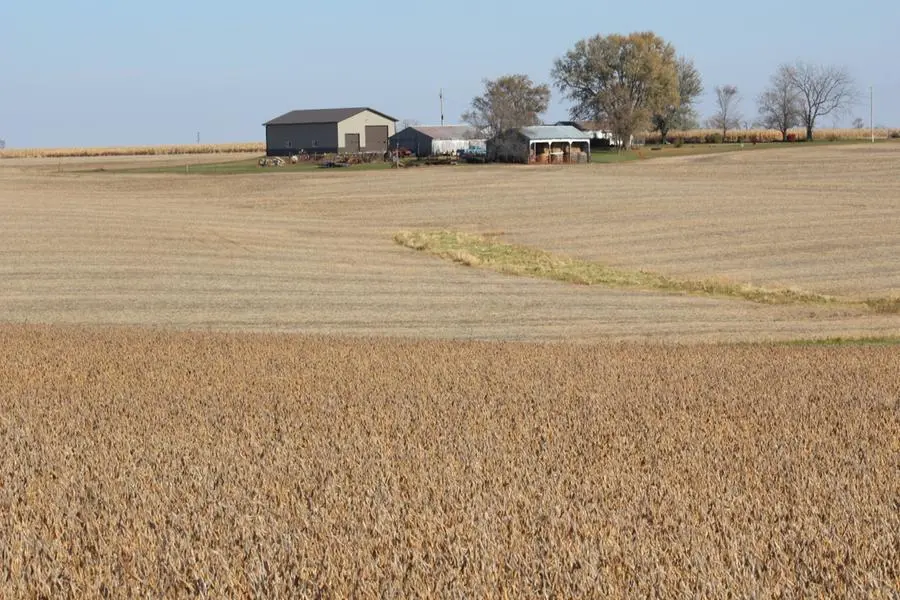
China's dependence on U.S. soybeans has fallen dramatically in recent years, though its influence over the global soybean market has not. The Asian buyer’s share of global imports has remained relatively steady around 60% for nearly two decades. Chinese purchases of U.S. soybeans have sharply declined from the record levels seen earlier this decade as Brazil expanded production and exports. U.S. soybean export volume to China for the 2025/26 season, which ends on August 31, is set to fall almost 50% on the year to a 19-year low, according to the U.S. Department of Agriculture.
But by the end of May, China had secured more than 90% of its 2025/26 needs, according to industry estimates, on par with last year’s pace thanks to a notable boost in South American purchases.
Recent trade deals suggest that U.S. soybean exports to China could double in 2026/27, but the overall picture is less rosy. Excluding China’s presumed share, the USDA projections imply that U.S. soybean exports to all other destinations would fall to a 13-year low in 2026/27, perhaps reflecting that forced demand with one partner may impact demand with the others.
CORN: HEALTHIER WITHOUT CHINA?
The story couldn’t be more different for U.S. corn exports. Chinese buying, accounting for almost one-third of U.S. corn shipments in 2020/21, helped lift U.S. corn exports to a record 2.75 billion bushels that year. At the time, many viewed China as critical to further export growth. Yet that record was broken in 2024/25 without any Chinese involvement, and shipments in 2025/26 are expected to reach another high of 3.3 billion bushels, again without Chinese participation.
The explanation is simple: U.S. corn demand has become more diversified, supported by reliable, long-term buyers such as Mexico.
In fact, USDA projects a larger share of the 2026/27 corn crop entering the export channel than in 2020/21, with little evidence that meaningful Chinese purchases were built into the forecast.
That doesn't mean Chinese demand no longer matters or that it wouldn't have bullish market implications.
But if China returns as a major buyer, would total U.S. corn exports expand further, or would higher prices displace some existing demand, as is seemingly on tap for soybeans?
BEEF: TRADE DEAL WEAKNESSES EXPOSED
Beef falls somewhere in between soybeans and corn, but it presents a different set of tradeoffs. China became a key customer for U.S. beef exporters a few years ago, and U.S. officials are eager to restore that business following the recent trade agreement.
The problem is that U.S. beef prices have reached record highs, and the domestic cattle herd has hit a 75-year low with little near-term relief in sight.
U.S. officials have emphasized China's appetite for variety meats and lesser-valued cuts, suggesting that Chinese consumers are buying products Americans consume less frequently.
But that portrayal omits important details.
Historically, most U.S. beef exports to China have consisted of products that overlap heavily with domestic consumption, similar to what is seen with other major U.S. beef buyers.
China does buy U.S. variety cuts and offal, though it is not the leading destination for those products.
Even if Chinese demand for lesser-valued cuts somewhat benefits U.S. ranchers, it also risks intensifying competition for already-limited supplies.
The notion that expanded beef trade with China can occur without affecting the domestic market may therefore deserve closer scrutiny.
NEW MARKET, OLD THINKING?
Soybeans, corn and beef help explain why China's role in U.S. agriculture cannot be defined by a single narrative.
Yet grain markets usually react to Chinese buying as though the implications are uniform across all sectors. Purchase commitments can still trigger sharp moves in futures prices and speculative positioning.
In fact, the prospect of renewed Chinese buying helped push speculators' combined position in U.S. grains and oilseeds to record bullish levels last month.
That reaction made sense: stronger Chinese demand usually translated into stronger prospects for U.S. agriculture for at least the past two decades. But now, the impacts are less straightforward.
Markets will certainly continue to react to China-related developments, but the more important question may no longer be whether China matters, but where it matters most.
(The views expressed here are those of Karen Braun, the Chief Market Analyst for Zaner Ag Hedge and former Reuters agricultural columnist. Karen is the author of Karen’s Market Context, opens new tab, a data-driven newsletter featuring her agricultural commentary, charts and other insights.)
Enjoying this column? Check out Reuters Open Interest (ROI), your essential new source for global financial commentary. Follow ROI on LinkedIn, and X. And listen to the Morning Bid daily podcast on Apple, Spotify, or the Reuters app. Subscribe to hear Reuters journalists discuss the biggest news in markets and finance seven days a week.
(Writing by Karen Braun; Editing by Anna Szymanski and Marguerita Choy)