PHOTO
According to the Ministry of Petroleum and Mineral Resources, the country plans to invest $19 billion between 2020 and 2035 to implement 11 new projects, as part of the national plan to develop the industry. This amount aims to expand Egypt’s export market, as well as address the growing domestic demand, according to a May press release.
Export Ambitions
In terms of exports, economist Karim el Omda told Al Bawaba news in October the country had committed to exporting $6.5 billion worth of petrochemicals during 2019. No official data is available to confirm this div.
The Minister of Planning and Economic Development Hala el Said announced in September the country’s plans to export some 32 million tons of crude, natural gas, petroleum, and petrochemical products as part of FY 2020/2021 targets. Specific data regarding petrochemical exports are yet to be released.
However, according to Apicorp’s report, the country’s push to pursue its “petrochemicals ambitions” comes despite the slump in liquified natural gas (LNG) exports.
While there is no official data for 2019, Fitch report estimates that Egypt’s exports grew by 24.8% to reach $5.48 billion in 2018 compared to that of 2016.
The same report, however, also stated that the country’s imports rose by 17.7% to $10.82 billion during the same period, leading to a slight widening of the petrochemical trade deficit.
However, the rating agency believes this trade deficit will fall back over a medium-term forecast, based on the expected output of new projects.
Refining expansions
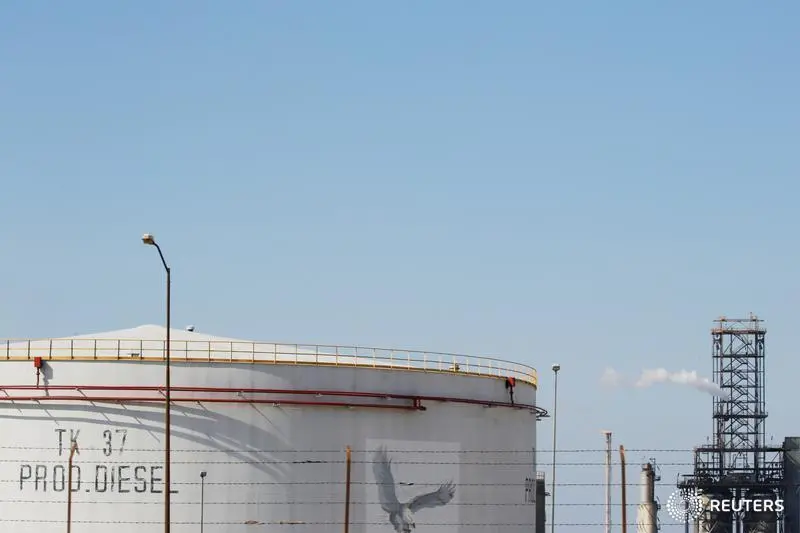
Assessing the sector’s performance, the Central Bank of Egypt does not issue divs for the petrochemical industry, but rather focuses on petroleum refining, where the latest divs of its gross domestic product stood at EGP 145.4 million in the first three quarters of the fiscal year 2019/2020, an increase by almost 34% from EGP 108.754 million recorded in the prior-year period.
However, the refining sector continues to “suffer from underinvestment” due to fuel price subsidies, Fitch noted. In addition, there are low complexity levels of existing refineries; many are unable to efficiently produce the most sought after higher-end products such as gasoline, diesel, and liquified petroleum gas.
Egypt's current refining capacity is estimated at 796,110 barrels per day, supplied from the country's eight refineries, according to the rating agency.
Furthermore, there is a new wave of petrochemicals projects led by state-owned Egyptian Petrochemicals Holding Company’s (ECHEM) $8.5 billion Alamein petrochemicals cluster, the ministry said in May.
The crude and condensate refinery plant is expected to produce 1 million tons per annum (mtpa) of petrochemicals and 0.85 mtpa of refined products.
The facility is aimed to cover domestic consumption needs by providing the industry with “specialty chemicals feedstocks,” while earmarking surplus output for exports.
El Molla said principle agreements have been signed to execute detailed studies for the complex, yet he did not reveal any details of the project timeline.
State-owned Enppi is expected to issue a tender to find a general contractor for the project before the year is out, a local news platform reported.
According to Fitch's report, the ministry will hold a minor equity share in this project and will seek a combination of institutional equity investors (as partners) and project financiers though no disclosure has been made so far on financing arrangements.
Another major project involved in the new strategy includes ECHEM’s earlier announced project to build an integrated refining and petrochemicals complex in the Suez Canal Economic Zone (SCZone).
According to Fitch, the project’s commercial operation might start by 2022.
The proposed $7.5 million complex would produce 2.2 mtpa of petrochemical products and 0.65 mtpa of fuels, according to El Molla.
The ministry said Bechtel has been selected as the EPC partner to provide engineering, procurement, and construction, as well as assisting in facilitating project financing financial institutions.
The US International Development Finance Corporation and US Exim Bank have expressed intention to contribute to the project’s finance, Apicorp added.
As for the private sector, there’s the Egypt Hydrocarbon Corporation’s (EHC) planned 0.48 mtpa ammonia plant in Ain Sokhna. EHC signed a $550 million agreement with Italian company Maire Tecnimont in May to set up the plant, but the project has yet to reach financial closure, according to Apicorp.
The plant could come operational as early as 2025 if EHC manages to reach financial closure in 2021, the report showed.
Meanwhile, the private sector $10 billion Tahrir Petrochemicals Project remains stalled due to pending financing issues
Positive future?
Egypt’s petrochemicals market might see some turbulences before seeing an uptick in the long term.
The Fitch Ratings agency's report underlined that Egypt's petrochemical market is set to be battered by external economic pressures.
The decline will both negatively affect domestic value chains as well as imports of intermediate products on which Egypt depends, the report highlighted.
Fitch noted that “the slump in crude prices, however, cast a pall over Egypt's plans for gas-fed petrochemicals capacities, especially with a likely glut in global supply until a full market recovery is underway.”
On the positive side of the spectrum, the long-term scenario is brighter due to the country's strong upstream and downstream potential and performance through the value chain.
The rating agency expected delays to planned capacity to largely benefit the sector, ensuring that completions coincide with an expected market upswing.
Copyright © 2020 Arab Finance Brokerage Company All rights reserved. Provided by SyndiGate Media Inc. (Syndigate.info).