PHOTO
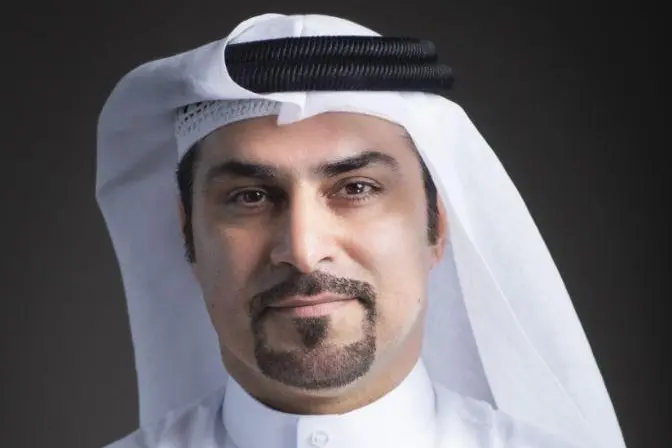
As the world approaches the end of the COVID-19 pandemic and the promise of new vaccines signals the start of economic recovery, Dubai is making sure that it is the first choice for foreign investments. Leading the charge on the FDI front is Fahad Al Gergawi, Chief Executive of the Dubai Investment Development Agency (Dubai FDI), a division of Dubai Economy.
In an exclusive interview with Zawya, Al Gergawi spoke about the potential global migration of business to cities and countries that continue to offer the most competitive ecosystems, especially after governments worldwide raise taxes to spur post-pandemic recovery. Dubai, he said, has recognized this potential and made its investment environment a welcome one to accelerate growth. The city’s response to the economic impact of the pandemic has focused on ensuring continuity, recovery, and a flexible economic environment that can adapt to any challenge or opportunity, he added.
What is the outlook for FDI in Dubai in 2021?
There’s just one word for Dubai’s FDI outlook for 2021: positive.
Dubai has emerged as the City of the Future and the gateway to regional markets as well as the global hub for trade and investment. For these reasons, it is the preferred location for the regional headquarters of multinational as well as local corporations. They benefit from Dubai’s world-class physical, social and business infrastructure to reach over 2.4 billion consumers in the Middle East and North Africa (MENA), East Africa, as well as South Asia.
Our leadership’s consistent and proactive focus on FDI has ensured that Dubai and the UAE’s policies and regulations continue to be in line with international best practices, which investors appreciate and also expect. In turn, increasing FDI flows has improved the prosperity and quality of life of citizens and residents living here. This is the cornerstone of economic development.
According to UNCTAD’s “World Investment Report 2020”, FDI in the UAE has been on an upward curve for the past four years, going from $9.6 billion in 2016 to $13.8 billion in 2019. Let me give you some examples. Dubai’s digital transformation and the adoption of the technologies of Industry 4.0 (the Fourth Industrial Revolution) make for an increasingly attractive proposition for technology investors. Our focus on world-class healthcare and the planned Centers of Excellence in cardiology, neurology, and rehabilitation are exciting opportunities for health tech investors.
Similar investment opportunities have been created by other strategic sectors. These will strengthen our [position in] 2021.
Which countries are keen to invest in Dubai?
[Over] the past 10 years, three countries have been among the top investors in Dubai: the US, the UK and India. Over the same period, Dubai has emerged as the sixth largest destination globally for FDI capital inflows and the third largest by the number of FDI projects attracted.
In the past five years, investors from the US have increased their share of FDI capital flows into Dubai from nearly 19 percent of the total to about 34 percent. That shows you the diversity and maturity of the Dubai markets. When we look at investment, we look not only at capital but also [in particular] at the number of projects, which shows that there are plenty of opportunities in the economy. If you have, say, 400 to 500 smaller-scale projects or investments but on a continuous basis, you are in better shape and are more mature as an economy and as an investment destination.
What’s the investment landscape been like during the pandemic and the global economic slowdown?
Dubai’s digital readiness enables its business and economy to successfully navigate the unprecedented challenges posed by the COVID-19 pandemic.
Dubai and the UAE are also enhancing the readiness of the investment environment to accelerate growth. As many as 153 stimulus measures have been announced so far this year to support business and economic sustainability and potential growth. The Dubai Government alone has injected almost 7 billion dirhams into direct stimulus and support.
And the result is there to see. Dubai is one of maybe three or four cities around the world that are opening their arms, opening their facilities for business as much as possible under COVID-19.
Also, the National COVID-19 Crisis Recovery Management and Governance Committee has developed a strategic recovery plan to focus on consolidating the UAE’s strengths and competitive advantage to ensure sustainability of vital sectors.
The majority of global cities are not flexible enough, do not make a quick change, do not adapt quickly. However, a few cities, like Dubai, are able to perform under COVID-19 too. This is very significant for investors who are looking for system safety, [which means] a location that can change, adapt and move quickly to make sure that it is sustainable in good times and in bad.
The UAE and Dubai have reached that level of maturity of system and of governance.
Which sectors have attracted the most investments, and which are likely to attract new FDI?
The inbound FDI projects announced in Dubai in the first half of 2020 include key sectors such as technology, e-commerce, and pharmaceuticals, thereby highlighting the diversity of investment opportunities in the city.
Dubai ranked first in the MENA region and 11th globally among the top 20 most popular destinations for venture capital investments, according to the fDi Markets’ “Global Venture Capital FDI Ranking 2020” report.
Data from the Dubai FDI Monitor show sustained FDI flows into Dubai-based startups, which exceeded AED 739 million in the first six months of 2020. We also achieved a 53 percent increase in medium- and high-technology investments in H1 2020 compared to the same period last year, according to the Monitor.
For those who say that investment in tourism is not happening because of the market slowdown, we say that tourism is a long-term investment, and we expect these efforts to be bear fruit in 2021. Some of the largest projects in the region for tourism are happening right now, such as the Royal Atlantis Resort & Residences in the Palm.
However, we do expect to see some shifts this year, even a drop in FDI, because this is not a normal year.
How will normalization of relations with Israel affect investments?
The signing of the historic peace accord between the UAE and Israel is certainly having a positive impact on business expansion and economic growth for both countries. We see the agreement paving the way for stimulating trade and investment growth in various fields between the UAE and Israel as well as the entire region.
We’re already seeing that happening; we have a large delegation participating in Gitex Technology Week. The UAE Government has identified various sectors essential to the future economic development agenda of the two countries. These include pharmaceuticals, energy, life sciences, food and agritech, financial services, travel and tourism space, defence, security, and research and development.
All these areas are important to us. We are [examining] how both economies can work with each other. Agreements are already in place to support cooperation in investment, tourism, financial services and technology. Dubai Free Zones have been proactive in signing MoUs that benefit from commercial and investment opportunities.
How has Dubai FDI managed to maintain investor outreach during the lockdown?
Due to the coronavirus-related travel restrictions, our in-person global outreach program has shifted to the virtual and digital. In the second half of this year, since we came back to office in June, we have had over 14 webinars to connect with potential investors from different countries like the UK, the US, Germany, India, Japan, Taiwan, France and Switzerland.
In a coordinated effort, key Dubai government entities and free zones have joined Dubai FDI to present the Dubai Advantage to potential investors in strategic sectors. Is this to sell Dubai? No, it’s not. We are […] making sure Dubai continues to be there in the investors’ minds. When the time comes to begin making investment decisions again, the investor already has the latest information, he knows what Dubai is, he knows whom to contact and what to do.
At the end of the day, our job is to effectively present the Dubai Advantage to the global investment community, and nothing will stop us from doing this.
We have seen early signs that post-COVID there will be some global migration. Not a migration for jobs but of businesses. High-net-worth individuals and their families will look to expand to places where they are confident the systems work. Post-COVID, we expect some of the large nations around the world to raise taxes as they try to fix their economies. In such a scenario, it makes sense for companies to reposition themselves globally. Dubai is ready for that.
Dubai has a unique readiness model, ready to support businesses and investment through various circumstances and difficult times.
FDI Projects
The H1 2020 data also show that 50 percent of projects are greenfield FDI projects, followed by new forms of investment (NFI) projects (36 percent), re-investment projects (8 percent), mergers and acquisitions (4 percent), and new joint ventures (2 percent).
Countries investing in Dubai
U.S. tops the list of source countries in terms of FDI capital flows into Dubai in H1 2020, accounting for 25 percent of the total, followed by France (18 percent), Belgium (9 percent), and the U.K. and China (8 percent each). These five countries together account for 68 percent of total FDI capital flows into Dubai.
(Reporting by Brinda Darasha; editing by Seban Scaria)
Disclaimer: This article is provided for informational purposes only. The content does not provide tax, legal or investment advice or opinion regarding the suitability, value or profitability of any particular security, portfolio or investment strategy. Read our full disclaimer policy here.
© ZAWYA 2020