PHOTO
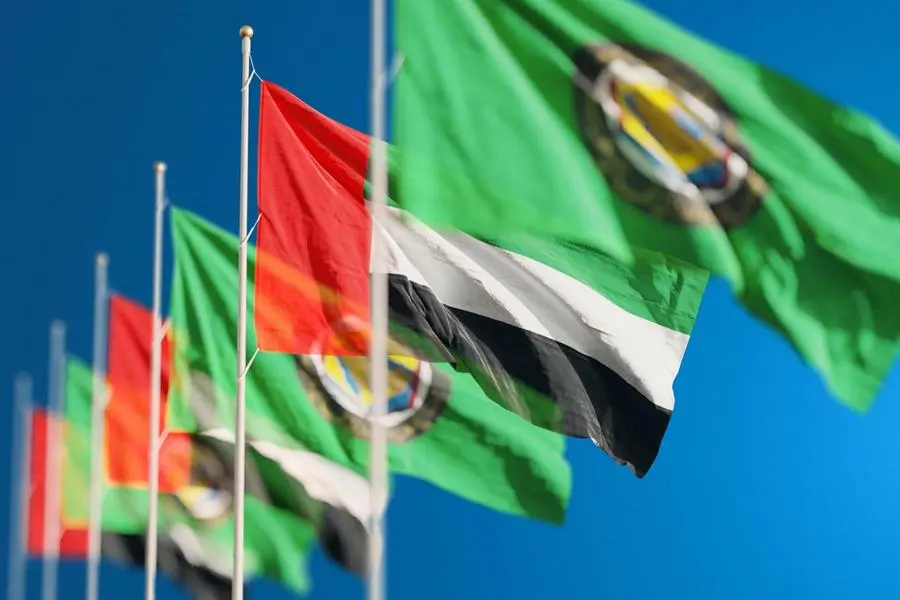
Deepening EU-GCC relations will be one of Cyprus’ key priorities during its presidency of the European Union Council, the country’s ambassador noted during a media roundtable held yesterday at its embassy.
According to Dr Andreas Eliades, the three primary priorities in EU-GCC ties will include furthering strategic political and economic collaboration, preparing for the second EU-GCC Summit and a focus on digital economy, infrastructure and connectivity between the two regions.
“The collaboration with the GCC will be prominent in our presidency, guiding engagement across a wide range of topics,” the ambassador added.
“We aim to involve the GCC in all relevant meetings, especially those involving the digital economy, innovation, and other fields where they can have a substantive impact.”
While Dr Eliades acknowledged the challenges in negotiating a region-wide EU-GCC Free Trade Agreement, which has been stalled for more than 30 years, he highlighted alternative agreements with individual agreements proposed by the EU.
“As an alternative, the EU has put forward Strategic Partnership Agreements (SPAs) for all GCC countries, including Bahrain, the UAE and Saudi Arabia,” he explained, noting that negotiations with UAE and Saudi Arabia have already begun, with plans to begin negotiating an SPA with Bahrain in the works.
“While these SPAs are not full FTAs, they include practical elements to strengthen bilateral relations between the EU and each GCC country.”
Schengen visas for GCC nationals will also be on the Cypriot EU presidency’s agenda, although Cyprus itself is yet to be integrated into the free movement zone.
Dr Eliades noted that the country is hoping to complete this process before the end of this year.
Currently, GCC nationals can obtain multi-entry Schengen visas with extended validity, under the EU-GCC visa cascade.
Introduced in 2024, the visa cascade is a harmonised system that grants Saudi, Omani and Bahraini nationals long-term, multi-entry Schengen visas with extended validity, even for first-time travellers, simplifying access to Europe and aligning travel rights with visa-exempt nationals, signalling closer ties and potential future visa-free travel.
“In the context of our presidency, we are working with stakeholders to address visa arrangements for GCC nationals,” Dr Eliades added.
“While these processes require co-ordination across the European Commission and European Parliament, we want to keep these key agenda items moving forward in meetings that shape EU-GCC relations.”
Cyprus will also work on developing the agenda for the second EU-GCC Summit, which is expected to take place this year, after the inaugural one in 2024.
“In preparing for the summit and beyond, we are focused on areas like education exchanges, access to universities through programmes such as Erasmus, and research and innovation partnerships,” Dr Eliades added.
“These fields were highlighted as deliverables from the first EU-GCC summit, and we are committed to advancing them.”For its EU Council presidency, Cyprus has set five pillars – security, defence readiness and preparedness; competitiveness; staying open to the world; a union of values that leaves no one behind; and a long-term budget.
Copyright 2026 Al Hilal Publishing and Marketing Group Provided by SyndiGate Media Inc. (Syndigate.info).