PHOTO
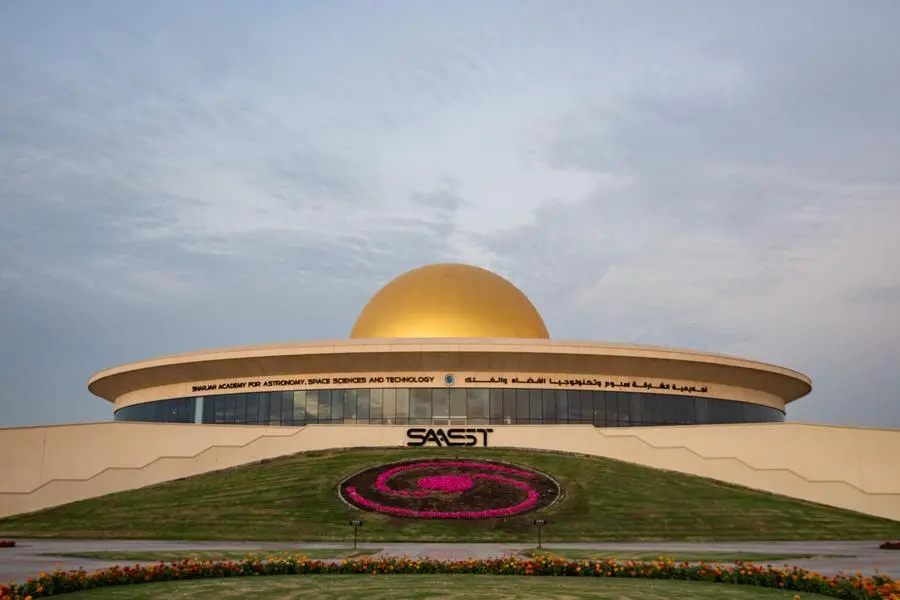
SHARJAH: Sharjah Academy for Astronomy, Space Sciences and Technology (SAASST) at the University of Sharjah has issued a precise forecast for sighting the Ramadan crescent for the A.H. 1447, drawing on meticulous astronomical calculations conducted by its specialists.
The concerned SAASST team explained that the moon reaches central conjunction with the sun on Tuesday, February 17, 2026, at 12:01 PM GMT (4:01 PM UAE time). For Sharjah specifically, surface conjunction occurs at 1:52 PM GMT (5:52 PM local time). At sunset that evening, the moon's age by central conjunction stands at just two hours and 14 minutes. The moon's center sets mere seconds before the sun's full disk vanishes. By surface calculations for Sharjah, the age improves slightly to 22 minutes.
Based on these astronomical calculations, the team concluded that the Ramadan crescent will be impossible to sight on Tuesday evening -whether by naked eye or even sophisticated telescopes- not just in Sharjah and the UAE, but across most of the Islamic world. However, on Wednesday evening, February 18, the central conjunction calculations give the moon an age exceeding 26 hours and an elevation nearing 12 degrees 21 arcminutes which are prime conditions for naked-eye sighting if skies stay clear. For Sharjah's surface conjunction, it hits 24 hours 23 minutes at 12.5 degrees.
The academy predicts Ramadan will therefore most likely dawn on Thursday, February 19, 2026, for countries relying on visual sightings. Some Islamic nations, however, may opt for Wednesday, February 18, leaning on astronomical data alone rather than waiting for eye sighting.