PHOTO
Human encroachment, illicit land sales, military occupation and climate change are crippling Uganda’s ports, undermining productivity and stalling redevelopment that could threaten trade competitiveness.
Uganda has eight ports scattered across Lake Victoria and other water bodies. They are currently managed by Uganda Railways Corporation (URC), a state-owned enterprise. They are Port Bell, Jinja Pier, Lambu Port, Pakwach West Pier, Pakwach East Pier, Port Alice, Butiaba Port and Namasagali Port, URC records show.
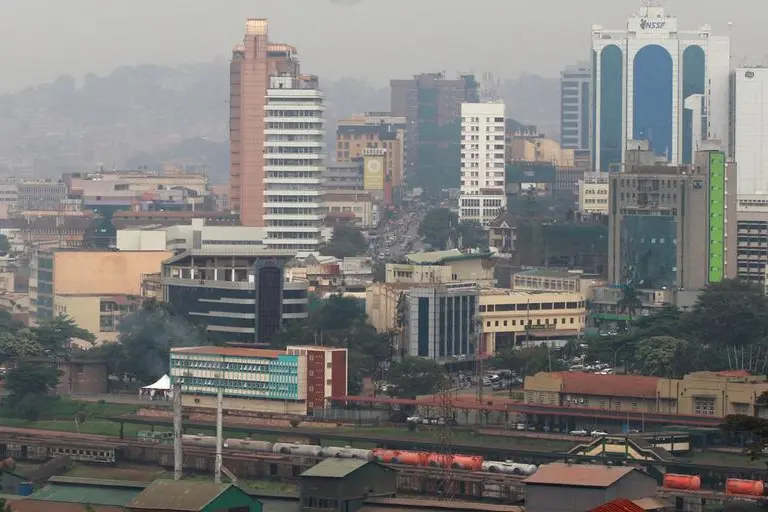
Port Bell, one of the country’s oldest port facilities, located along the shores of Lake Victoria in Kampala City, is currently plagued by illegal land leases acquired by yet-to-be-named individuals and human encroachment. A mortgage deed secured by the National Housing and Construction Corporation (NHCC) against a portion of its land through Housing Finance Bank of Uganda Limited, has also added to the uncertainties, according to a recent URC management report seen by The East African.
Lambu Port, located along the shores of Lake Victoria in Masaka District, is confronted by surging water levels—a major obstacle to ship docking—illegal human settlements, and revenue collection challenges cited by the port management company. This port is currently managed by Mpongo Limited. Though its commercial lease expired last year, URC has yet to renew its management contract.“…Currently, Mpongo Limited, a tenant of URC, manages Lambu Landing Site. They submitted a formal request dated 2nd December 2025, seeking a waiver of ground rent due to high water levels disrupting economic activities.“Local community settlement issues have also been reported, with residents refusing to pay rent on land they occupy…” reads the URC management report published last month. The firm is obliged to pay a monthly lease fee of Ush1 million ($280), according to its contractual terms.
Jinja Pier, an old port located along the River Nile in Eastern Uganda, is faced with human encroachment by multiple parties, while Pakwach West Pier in Northern Uganda is similarly grappling with illegal encroachment and the presence of a Uganda People’s Defence Forces (UPDF) military barracks on its land, the URC report revealed. Port Alice, located in Entebbe Municipality, is currently occupied by UPDF soldiers, while part of its land has been sold to unidentified parties.
Butiaba Port, in Western Uganda, faces challenges associated with the partial sale of its land during the privatisation process and illegal human encroachment. Namasagali Port, in Eastern Uganda, is partly occupied by Namasagali Secondary School and illegal human encroachment covering roughly 30 villages.
In contrast, Pakwach East Pier in Northern Uganda is partly leased to Total Energies Limited, one of the international oil and gas firms involved in Uganda’s $7 billion commercial oil production project based in the Albertine Graben. The latter area accommodates roughly 400 oil wells holding 3.5 billion barrels of recoverable oil reserves, according to government data.
Funding problemJohn Sengendo, URC’s Communications Manager said Port Bell is facing a funding problem, not the mortgage, that is holding us back on the redevelopment of Port Bell. He said the African Development Bank has committed funding for the rehabilitation of Port Bell and Jinja Pier, while other ports will have to wait.“An illegality cannot frustrate implementation of any government project in Uganda,” Sengendo said.“We have also received $298 million from the African Development Bank that has been invested in the procurement of 20 train locomotives, new wagons, refurbishment of railway tracks and railway stations.“Our investments in water transport are specifically targeted at cargo services and not passenger services. We plan to invest in a new cargo ship with a capacity of 1,500 tonnes that will be deployed on Lake Victoria.”The entity’s overall water transport cargo capacity is estimated at 880 tonnes—a figure derived from cargo absorption levels attached to vessels MV Kaahwa and MV Pamba, URC findings show.“They are not up to the mark. Our ports are lacking in terms of structural lengths, handling capacity for certain ships and specific goods,” observed Julius Nkwasire, Assistant Commissioner for Intelligence Services at Uganda Revenue Authority (URA).
“Climate change is sometimes used as an excuse for shortcomings that result from a failure to plan ahead,” Prof Shinyekwa said.“There is a lot of impunity in the land market, which partly explains the problem of illegal land sales and leases within gazetted port areas.”
© Copyright 2026 Nation Media Group. All Rights Reserved. Provided by SyndiGate Media Inc. (Syndigate.info).