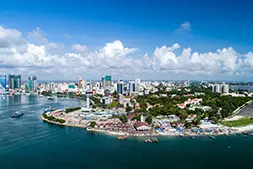
PHOTO
President Samia Suluhu Hassan on Thursday sacked the head of Tanzania’s fuel price regulator, a day after it announced sharp increases in pump prices despite government assurances that fuel reserves were sufficient until at least mid-May, regardless of developments in the Middle East conflict.
In a late-night statement announcing wider administrative changes, State House did not give reasons for the abrupt removal of James Mwainyekule, director-general of the Energy and Water Utilities Regulatory Authority (Ewura).
The Presidential Communications Unit also announced that veteran cabinet member Prof Palamagamba Kabudi had been moved from the President’s Office, where he served as Minister of State for special duties, to the Prime Minister’s Office as Minister of State responsible for policy, parliamentary affairs, coordination and people with disabilities.
Angela Kizigha, a former East African Legislative Assembly member, and Eveline Munisi were nominated as members of parliament under a constitutional provision allowing the President to appoint up to 10 MPs.
Ms Munisi was the running mate to NCCR-Mageuzi candidate Haji Ambari Khamis in last October’s presidential election.
But it was Mr Mwainyekule’s dismissal that stood out. An experienced figure in Tanzania’s petroleum and energy sector, he had led Ewura since February 2023.
He previously served as acting commissioner for energy and petroleum affairs at the Ministry of Energy, acting director-general of the Petroleum Upstream Regulatory Authority (Pura), and acting managing director of the Tanzania Petroleum Development Corporation (TPDC).
Mr Mwainyekule signed an Ewura notice on April 1 announcing a steep rise in fuel cap prices, triggering questions over the justification given that existing stocks were procured before the escalation of Middle East hostilities on February 28.
Concerns are mounting over the knock-on effects on food prices, basic commodities and public transport fares.
Ewura said the increases were “largely influenced” by supply disruptions linked to the indefinite closure of the Iran-controlled Strait of Hormuz, a key passageway for about one-fifth of global oil shipments.
The agency said shipping and insurance costs had risen sharply, alongside Free on Board (FOB) prices in the Gulf market, which increased by 69.98 percent for petrol, 114.46 percent for diesel and 120.81 percent for kerosene in April.“(Consequently) the premiums of products received through the port of Dar es Salaam increased by an average of 15.3 percent for petrol and 10.8 percent for diesel, with no changes for kerosene. The premiums for products received through the port of Tanga increased by 6.9 percent for petrol, with no changes for diesel. There are no changes for premiums for products received through the port of Mtwara,” Ewura said.
However, in a March 23 briefing to Energy minister Deo Ndejembi, petroleum agencies including Ewura, TPDC and the Petroleum Bulk Procurement Agency said Tanzania held 230 million litres of petrol sufficient for 38 days, 180 million litres of diesel (47 days) and 31 million litres of aviation fuel (91 days).
TPDC also said it had secured additional shipments for 245 million litres of petrol, 208 million litres of diesel and 23 million litres of jet fuel, which were scheduled for delivery between May and July.
© Copyright 2026 Nation Media Group. All Rights Reserved. Provided by SyndiGate Media Inc. (Syndigate.info).