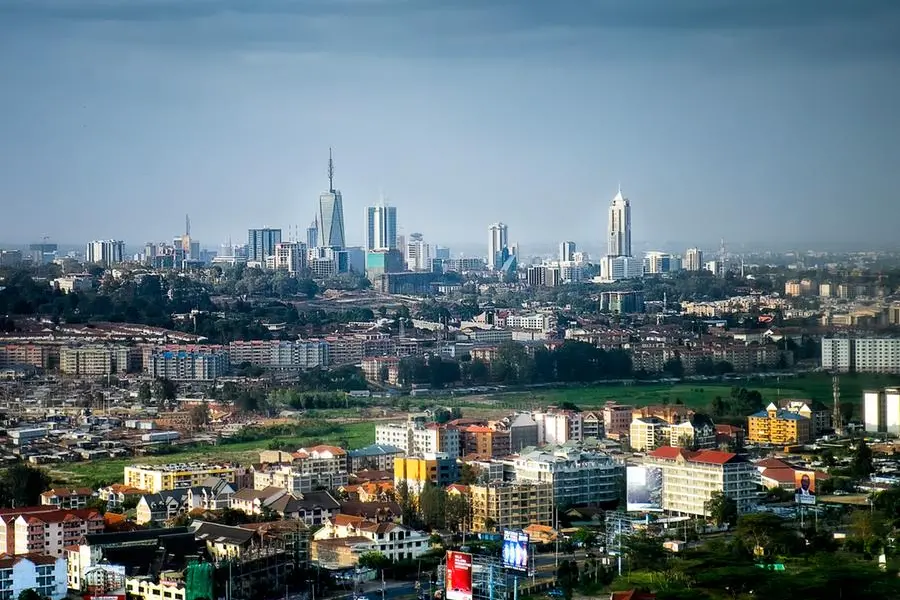
PHOTO
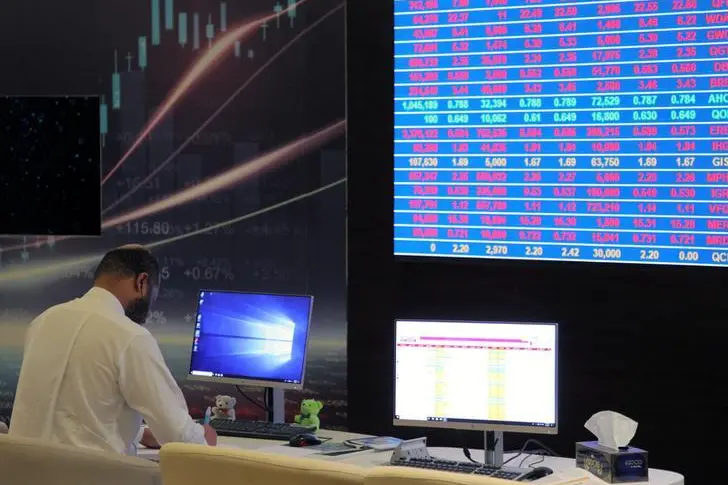
The volume of daily equity trades on the Nairobi Securities Ex- change (NSE) soared two or three times compared to previous levels after Safaricom launched its retail-focused Ziidi Trader platform in early February.
The new platform opens buying and selling shares to nearly 38m active subscribers of the M-Pesa mobile money platform and strips away lay- ers of form-filling and mini- mum transaction amounts.
The daily volume of deals started to climb when Zi- idi began pilot trading on 5 February. There were 25,773 trades in equities on 11 Febru- ary, the highest recorded on the Nairobi bourse; this fol- lowed on from 14,300 deals on 9 February and 8,713 deals on 5 February. Between October 2025 and January 2026, the range had been 4,000–7,800 daily trades.
The NSE recorded 2.4bn Kenyan shillings ($18.9m) in value of equities traded on 10 February, $13.9m on 11 Febru- ary and $10.0m on 12 Febru- ary. The most actively traded shares included Kenya Power, Safaricom, KenGen, Absa, Co- op Bank, Equity, KCB, CIC, Kenya Airways and Britam.
Kenya’s President William Ruto launched the Ziidi plat- form at the Nairobi bourse on 10 February. He said it would transform and democratise capital markets, so Kenyans with low incomes could grow wealth using them:
“This platform represents a decisive turning point in how citizens engage with the stock exchange. It opens the doors of the market participa- tion wider than ever before, dismantling long-standing barriers that have locked out many willing investors and bringing opportunity closer to all citizens.”
The national Bottom-Up Economic Transformation Agenda in the government’s Fourth Medium Term Plan 2023- 2027 prioritises inclusiv- ity for the poorest Kenyans. The President said the capital markets are key for govern- ment to mobilise capital to deliver its Ksh5trn ($38.8bn) national transformation plan.
“We remain committed to working with all stakehold- ers to build markets that are deep, efficient and accessible, markets capable of financ- ing innovation, empowering enterprise and advancing na- tional priorities.”
Kiprono Kittony, NSE chairperson, said: “Today we are opening the doors of the Kenyan capital markets to millions of Kenyans, em- powering them to engage, invest and grow their wealth through a simple, secure and innovative means incorporat- ed on the M-Pesa platform.”
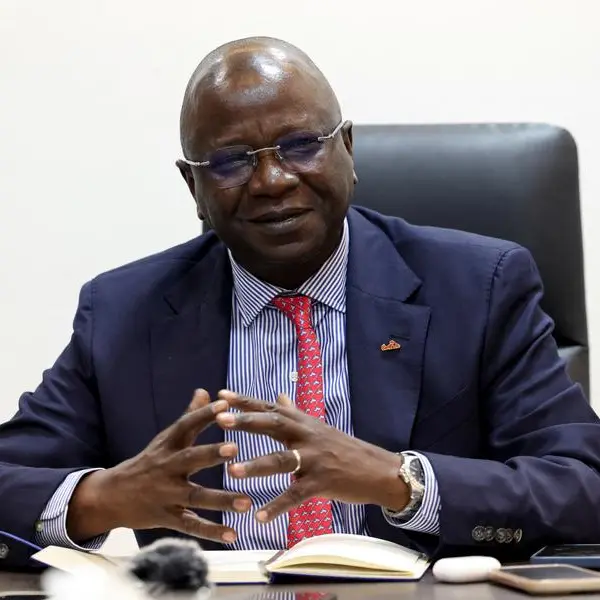
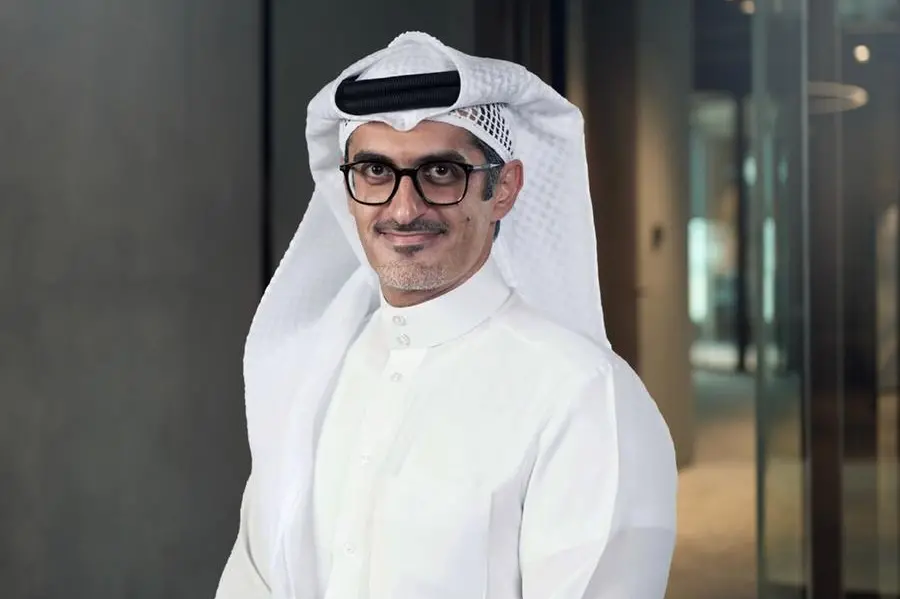
Dilip Pal, Safaricom’s Chief Finance Officer (below), said: “Ziidi Trader is a powerful step in democratising wealth for our customers. For 18 years, M-Pesa has trans- formed how Kenyans live, work and do business; we are extending that impact to how our customers build and grow their wealth.”
The NSE said it targets 9m active retail investors by the end of 2029. Previously pub- lished figures show 200,000 active participants among over 1.4m Kenyans who own shares (2.5% of the popula- tion).
Like many African mar- kets, the NSE provided out- standing returns in 2025 and the first months of 2026. The NSE All Share Index closed on 12 February at 213.02, up from 209.65 the day before, after a strong climb in prices from a low of below 86 in November 2023.
How does Ziidi work?
The platform makes share trading easily accessible to all M-Pesa account holders and features in the menus of the mobile app near money transfers and bill payments.
Users opt in, select the listed companies they want to invest into, and execute the trades using their M-Pesa balances. Within the app, they can access corporate actions, portfolio analytics and real time data on top movers.
Ziidi uses Kestrel Capital as its sole executing stockbro ker on the NSE. Kestrel holds the shares in an omnibus account at the Central Deposi tory System (CDS) operated by the Central Depository and Settlement Corporation.
This means that users do not need to go through the usual forms and Know Your Client (KYC) processes to open accounts with a stockbroker and the CDS. Kestrel, the NSE and CDS rely on Safaricom’s exist- ing M-Pesa KYC credentials to admit users and facilitate trades.
Trades settle within the M- Pesa app and settlement af- ter a trade is reportedly faster than the standard for equity trades on the NSE. Ziidi has indicated that it will charge fees of approximately 1.5% per trade, lower than the usual broker commissions and other charges, which total 1.8%– 2.5% for each trade for both buyer and seller.
Previously Safaricom of- fered payments, savings and borrowing. In January 2025, it launched Ziidi Money Market Fund in partnership with two fund managers, Standard In- vestment Bank and ALA Capi- tal. Savers can deposit as little as Ksh100 ($0.77) and inter-est accrues to the Ziidi wallet and compounds daily. By Sep- tember 2025 the assets under management (AUM) surged to $11.6m and the number of active customers rose to 1.15m.
The company has also in- troduced Ziidi Shariah, offer- ing inclusive, Shariah-com- pliant options. The Capital Markets Authority regulates the funds and the Ziidi Trader app.
Share offers, including the initial public offering (IPO) of Kenya Pipeline Company (due to close on 24 February), have also been featured on Ziidi.
KENYA LAUNCHES INFRASTRUCTURE FUND
Kenya is launching a national infrastructure fund and a sov-ereign wealth fund, which will be capitalised using proceeds from sales of some of the gov- ernment’s shareholdings in giant Kenyan companies such as Safaricom, Kenya Pipeline Company and East Africa Portland Cement Company (EAPCC).
They will finance projects such as roads and power plants, and ease pressure on public borrowing. The Cabi- net approved the two funds on 15 December and the Cabinet memorandum notes they are part of the Ksh5trn ($38.8bn) roadmap to transform the economy.
It said: “Through innova- tive mobilisation of domestic resources, strategic monetisa- tion of mature public assets, democratisation of ownership through capital markets and the deployment of national savings, the government will unlock large-scale private- sector capital to finance pri- ority investments while re- ducing reliance on borrowing and taxation.
“Under the new frame- work, all privatisation pro- ceeds will be ring-fenced and invested strictly in public infrastructure projects that generate and preserve long- term value.
“Every shilling invested through the fund is expected to crowd in up to 10 additional shillings from long-term in- vestors, including pension funds, sovereign partners, private equity funds and de- velopment finance institu- tions.
“Both funds will be pro- fessionally and indepen-dently managed under clear governance, transparency and accountability frame- works.”
The government aims to raise $2.7bn for the funds from share sales. In Octo- ber President Ruto signed the Privatisation Act 2025, which took effect that month, and in November he signed the Government-Owned En- terprises Act 2025 to reform state-owned entities to im- prove efficiency and commer- cial viability.
The government has of- fered for sale a 65% stake in the state-owned Kenya Pipeline Company (KPC) in a huge Ksh106.3bn ($825m) initial public offering (IPO). The offer had been due to close on 19 February but, as we went to press, this was ex- tended to 24 February. Local media reported a slow uptake.
The share price was set at Ksh9 each, with over 11.8bn shares on sale. KPC aims to list the shares and start trad- ing on the NSE on 9 March. There has been significant debate in the Kenyan media on the valuation. Faida In- vestment Bank is the lead transaction adviser, the lead sponsoring broker is Dyer & Blair Investment Bank and the co-sponsoring broker is Fran- cis Drummond & Co.
The government allocat- ed 45% of the IPO shares to Kenyan investors including 5% to KPC employees, 20% to East African Community In- vestors, 15% to oil marketing companies and 20% to foreign investors.
KPC is a strategic monopo- ly. Its extensive network links Mombasa port to major cen- tres across Kenya, including Nairobi and western Kenya. It also transports to five East African countries, with Ugan- da accounting for 65% of the oil, followed by eastern DRC, South Sudan, Burundi and Rwanda.
VODACOM BUYS 15% OF SAFARICOM AS PRI- VATISATION ROLLS ON
In early December, UK-based Vodafone announced that its South Africa-headquartered subsidiary Vodacom had agreed to buy a 15% stake in telecom operator Safaricom from the Kenyan government for €1.36bn ($1.6bn) and 5% from Vodafone for €450m ($533m).
After the sale, the govern- ment will own 20% but still have influence on the strategic direction, Vodacom will own a controlling 55% and public investors on the NSE will own 25%.
Vodacom will pay Ksh34 per share, an increase of nearly 24% on the weighted average Safaricom share price on the NSE during the previous six months. Reuters quoted Eric Musau, head of research at Standard Investment Bank as saying: “Vodacom is paying a control premium”, meaning a higher price to take control of the high-performing telecom and mobile money leader. The acquisition is due to close be- fore the end of March.
The National Treasury is also reportedly considering selling shares in the Kenya Electricity Generating Com- pany (KenGen), where it holds 70%, and the sole electricity distributor Kenya Power, in which it owns 50.1%, though it has not yet made a decision.
Kenya’s National Social Security Fund (NSSF) reportedly sold 27% of the ownership in listed cement maker EAPCC for $124m to Kalahari Cement, a subsidiary of Tan- zania’s Amsons Group, giving Amsons a 68.7% controlling stake in EAPCC in addition to full ownership of Bamburi Cement. NSSF will invest some of the funds into the Nairobi-Mau Summit high- way, in a public-private partnership structure.
NIGERIA PASSES N100TRN MILESTONE – AND KEEPS SOARING
After 5 January, when the Ni- gerian Exchange (NGX) passed a milestone market capitalisa- tion (the total market value of all listed shares) of N100trn to close at N101.8trn ($71.5bn), Nigeria’s President Tinubu praised the NGX, businesses, market operators and inves- tors, saying it was a power- ful signal of renewed inves- tor confidence and economic rejuvenation.
He urged Nigerians to deepen their investments in the local economy, saying that 2026 will yield even greater returns as his administration’s economic reforms continue to deliver stronger outcomes.
“Nigeria is no longer a frontier market to be ignored – it is now a compelling des- tination where value is being discovered. As the stock mar- ket reflects the entire econo- my, its stellar performance is a significant indicator of the country’s economic health and the confidence investors have in our country,” he said.
Temi Popoola (below), Group MD/CEO of the NGX, said: “The capital market has responded positively to improved macroeconomic coordination and clear reform direction, creating an enabl- ing environment for sustain- able investment.”
NGX market capitalisation continued to soar, reaching N122.1trn ($90.3bn) by 13 Feb- ruary.
RETURNS ON AFRICAN EXCHANGES CONTIN- UE TO RISE
The strong performance of Af- rican exchanges during 2025, including for investors who calculate their returns in US dollars, has continued over the first weeks of 2026.
Many African exchange indices were up remarkably over 2025, encouraging par- ticipation by local investors and leading to renewed in- terest by domestic companies to come to the market for initial public offerings and other capital-raising. In ad- dition, many African curren- cies climbed in value against the US dollar and this meant that stock market gains were even higher for investors who measure in USD.
The top 10 market indices in 2025, ranked by perfor- mance for domestic investors, were:
• Malawi Stock Exchange All Share Index (MSE ASI). This climbed nearly 247.6% for local and 248.0% for USD inves- tors as the index soared to 598,602.8 by 31 December.
• The Ghana Stock Exchange Composite Index (GSE-CI) gave a 79.4% return to local currency investors, but the strong gain in the cedi boosted the return to 154.4% for USD investors.
• Zambia’s Lusaka Securities Exchange Al Share Index (LuSE ASI) returned 67.9% for kwacha investors, and 111.7% for USD investors.
• The Nigerian Exchange All Share Index (NGX ASI) gave a stellar 51.2% return to local investors, rising to a 60.6% return to USD investors.
• Kenya’s Nairobi Securities Exchange All Share Index (NSE ASI) also returned 51.1% for local investors, with a similar perfor- mance for USD investors (up 51.4%).
• The Egyptian Exchange 30 index (EGX 30 – compris- ing 30 leading companies) climbed 40.7% for local investors, and 49.9% for USD-based investors
• South Africa’s Johannesburg Stock Exchange All Share (JSE ASI) soared 37.7% for local investors and an attractive 56.7% for USD investors.
• The Uganda Securities Exchange All Share (USE ASI) was up 36.6%, giving a 39.7% return to USD investors.
• The Bourse de Tunis main index (TUNINDEX) climbed 35.1% for investors using the Tunisian dinar, 49.2% for investors in USD.
• Tanzania’s Dar es Salaam Stock Exchange had a strong return on the DSE ASI index, up 29.1% for local investors and up 27.5% in USD.
By comparison, the MSCI All Country World Index, which tracks the share prices of securities of issuers with large market capitalisations across developed and emerg- ing markets, rose 21% in the year. Developed markets eq- uities rose 21.6%, and were roundly beaten by emerging markets equities which rose 34.4%.
GOURMET FOODS LISTS ON EGYPT’S EGX
Premium grocer Gourmet Egypt.Com Foods listed on the Egyptian Exchange (EGX) on 10 February, following an initial IPO of shares combined with a private placement to qualifified investors. Gourmet produces and distributes high- quality food products in Egypt. EFG Hermes, which was the sole global coordinator and bookrunner, reported: “The IPO has been heavily over- subscribed with the private tranche covered 12.2x and the public tranche covered more than 55x. The IPO has seen strong participation from quality regional and interna- tional institutional investors and regional family offices, in addition to strong local insti- tutional and retail investors’ participation.”
The EGX has seen renewed interest in listings as the main index has risen, gaining 68% over the past 12 months. In December, the bourse’s chair- man Islam Azzam said he anticipates eight listings in 2026, mainly from the medi- cal and tourism sectors. He also said the number of regis- tered investors had climbed to 276,000, up 20% compared to the previous year. He thought the expansion of mobile trad- ing had a key role in drawing in younger participants.
The EGX has transitioned into a joint-stock company and this is expected to lead to more advanced trading tools, including derivatives, mar- ket makers and short selling, which are scheduled for the first quarter (Q1) of 2026.
Gourmet Foods’ IPO raised nearly E£1.3bn ($28m). The previous controlling share-holder, B Investments Holding S.A.E. (a private equity firm and growth capital inves- tor) and four individuals sold 190.5m shares, nearly 47.6% of the share capital.
The shares were offered at E£6.90 each after a book build established the price. The company has a total of 400m shares outstanding and the offer valued Gourmet Egypt at around E£2.8bn. B Invest- ments retains 40% ownership.
The shares climbed to E£9.50 each in trading on the first day, up 38%, before par- ing some gains. They closed at E£9.22 each on 16 February.
Michael Wright (below), Chairman of Gourmet Egypt, said that listing supports the company’s capacity to achieve sustainable growth within a framework of instituting best governance and transparency practices.
CASABLANCA IPOS FIND FAVOUR WITH INVESTORS
Companies listing on Mo- rocco’s Bourse de Casablanca have seen huge oversubscrip- tions and very successful share offers.
Construction and strate- gic infrastructure company Société Générale des Travaux du Maroc (SGTM) listed as the 80th company on the Bourse de Casablanca on 16 Decem- ber. Its giant D5.04bn ($548m) initial public offering (IPO) of shares was 34 times oversub scribed.
The SGTM share off erat tracted more than 171,000 subscribers and total demand was D171bn ($18.6bn). The offer more than succeeded in its aim to sell 12m shares, repre senting 20% of the company’s capital, at a unit price of D420 each, with a slightly lower price for some cate gories of investors such as employees. By 16 February the share price had more than doubled to D848.
A joint press release by SGTM and the exchange read: “This operation thus becomes the largest ever carried out by a private company, consoli- dating the Casablanca Stock Exchange’s position as an es- sential financing platform for major Moroccan companies.”
SGTM was founded in 1972 and has completed over 1,000 flagship projects including bridges, roads, ports, airports, hospitals, stadiums and in- dustrial facilities.
It also operates in six other African countries: Senegal, Côte d’Ivoire, Burkina Faso, Cameroon, Benin, Tanzania and Guinea.
Fintech firm Cash Plus closed its IPO on 25 Novem- ber and listed on 8 December. It achieved a near 65 times oversubscription on its of- fer, which raised the target D750m ($82m). It had offered 3.8m shares for sale at D200 each, made up of 2m new shares to raise capital and the sale of 1.8m existing shares.
The company was founded in 2004, and had become a key player in financial ser- vices accessibility in Morocco, claiming 2m daily users in the country and net profits of $23.5m.
Healthcare company Vi- cenne listed on the Principal F segment of the main mar- ket on 15 July after an IPO that was oversubscribed 64 times, with D32bn ($3.5bn) bid by 37,674 investors, in- cluding 36,777 individuals and 402 institutions. The company raised its target D500m ($54.8m) by selling 2.1m shares at a subscrip- tion price of D236 each. The shares closed at D446 each on 16 February.
Vicenne was created in 2004. It works to modernise medical infrastructure and improve the quality of care in several African countries by offering equipment and services.
© Copyright IC Publications 2026 Provided by SyndiGate Media Inc. (Syndigate.info).