PHOTO
The Central Bank of Nigeria (CBN) has disclosed that Nigeria’s balance of payments is increasing rapidly, recording a surplus of US$4.59 billion in Q3 2025, compared with a deficit of US$2.77 billion earlier in the year.
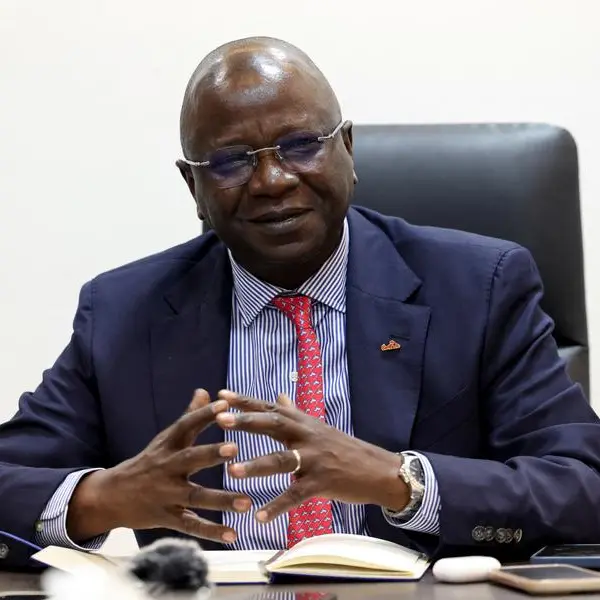
Speaking at the 2026 Monetary Policy Forum in Abuja, the Governor of CBN, Olayemi Cardoso revealed that the reforms under the policy have given rise to many positive economic outcomes.
“Gross external reserves increased from US$38.34 billion in February 2025 to US$50.12 billion in February 2026, representing a 30.73 percent year‑on‑year increase, the highest level recorded in 13 years.
“Similarly, Net External Reserves have surged from US$3.99 billion at end of 2023 to US$34.80 billion at the end of 2025, representing 772.2 per cent increase and higher than total gross reserves in 2023.
“This improvement was reinforced by enhanced reserve‑management practices, integration of London Bullion Market Association (LBMA)‑certified gold into the national reserves, restructuring of the external asset management framework, and the initiation of a second global custodian to improve risk diversification.
ALSO READ: US: How to claim your share of $1.2bn in unclaimed tax refunds — IRS
“When our administration assumed office in September 2023, the macroeconomic environment was marked by pronounced distortions and significant imbalances, with the economy facing heightened vulnerability and elevated stability risks.”
He noted that headline inflation rose to 29.9 per cent in January 2024, reflecting sustained food price pressures, exchange‑rate pass‑through, and structural supply constraints.
“Excessive monetary financing had compromised policy integrity; Ways and Means advances had climbed to ₦26.95 trillion by May 2023, far beyond statutory thresholds, weakening the monetary‑fiscal interface and eroding credibility.
“The foreign exchange market was severely impaired, with over US$7.0 billion in verified FX backlogs, constraining private‑sector operations and damaging external confidence.
“Parallel market premium widened sharply to over 60%, and the exchange-rate architecture became increasingly fragmented.
“External reserves were under severe pressure, with net foreign reserves dropping to as low as US$3.99 billion at end of 2023, while Nigeria’s balance of payments position oscillated between deficits and instability.
“These conditions collectively undermined the transmission of monetary policy, weakened investor sentiment, and strained the credibility of the Central Bank at home and abroad.
“With a clear understanding of the gravity of these challenges, we moved swiftly to implement far‑reaching, bold but necessary reforms aimed at restoring credibility, normalising policy conduct, rebuilding confidence, and stabilizing the macroeconomic environment.
“The first critical step was the restoration of monetary–fiscal discipline. Ways and Means financing was reined-in decisively, declining from ₦26.95 trillion to ₦3.51 trillion in December 2024 and further to ₦2.84 trillion by January 2026, marking one of the sharpest fiscal consolidations in recent history,” he added.
Cardoso explained that the reforms action restored compliance with the law, strengthened central bank independence, signalled to markets about the bank’s commitment to orthodoxy and transparency, and sent a clear message that the era of fiscal dominance had come to an end.
He stated further that “we complemented these actions with a firm but data-driven tightening cycle.
“Throughout 2024, the Monetary Policy Committee (MPC) maintained a restrictive stance to rein in inflation expectations by raising the policy rate cumulatively by 875 basis points from 18.75% in January 2024 to 27.50% in November 2024.
“While the Monetary Policy Rate (MPR) was kept at elevated levels for most of the year, improved inflation dynamics enabled the first policy rate cut in five years.
“A modest easing was carefully calibrated, with the policy rate reduced from 27.5 percent to 27.0 percent in September 2025, followed by a further cut to 26.5 percent in February 2026”.
The Governor reiterated that the reforms have produced clear and encouraging outcomes, with the exchange rate experiencing more orderly conditions.
He said, “FX liquidity has improved, and Nigerians are once again able to use their cards freely for international transactions as FX settlement systems stabilised.
“Reserves are stronger than they have been in over a decade; the balance of payments has improved, and investor confidence has risen markedly, reflected in renewed portfolio inflows, greater market participation, and improved sovereign‑risk indicators.
“The banking sector recapitalisation programme has recorded commendable progress, with 32 banks having already met the revised capital requirements.
“This achievement has significantly strengthened the resilience and capacity of the Nigerian banking system, positioning it to effectively mobilise long‑term capital, support productive investment, and play its critical role in enabling the transition towards a US$1.0 trillion economy; and the payments system is safer and more interoperable, and financial inclusion gains continue to consolidate.”
He said, “Despite these gains, we recognise that the journey is far from complete.
“Our next phase is focused on consolidation: anchoring inflation firmly on a downward trajectory toward a single‑digit level, sustaining exchange‑rate stability, strengthening reserve buffers through organic inflows, deepening interbank market development, and enhancing the robustness of our monetary‑policy transmission.
“Achieving these goals requires continued collaboration with the fiscal authority, disciplined policy execution, and strong stakeholder engagement, which is the very essence of today’s Forum.
“Looking ahead, the macroeconomic prospect remains cautiously optimistic as we are mindful of the ongoing global and domestic risks.
“Global growth, though projected at 3.3 per cent for 2026, may be tempered by tight financial conditions, lingering effects of monetary tightening, and geopolitical tensions.
“The Middle East crisis through its impact on oil price volatility, constitutes a major source of risk to the Nigerian economy.
“Domestically, growth is projected at 4.49 per cent, supported by stronger policy consistency, a market‑driven FX regime, recovering oil production, and sustained reform implementation.
“However, pressures from food supply constraints, infrastructure deficits, and election‑cycle spending will require vigilance.
“Notwithstanding these challenges, our strengthened macroeconomic fundamentals, improved fiscal‑monetary coordination, credible policy frameworks, and sound early warning systems position Nigeria to mitigate these risks more effectively than in the past.
“The reforms we have undertaken were not easy, but they were necessary and designed to secure the long‑term stability and prosperity of our nation. The most challenging phase of macroeconomic adjustment is now behind us, with solid foundations laid for sustained stability.
“As we gather here today, I reaffirm the Central Bank’s unwavering commitment to openness, transparency, discipline, and engagement.
“This Forum represents exactly that spirit: We will continue to listen, learn, and refine our approaches in the collective interest of macroeconomic stability and national prosperity,” Cardoso noted.
CBN monetary policy reforms focus on shifting to market-based indirect tools to manage liquidity, curb inflation, and stabilise the Naira. Key reforms involve eliminating credit ceilings, implementing bank recapitalisation (e.g., 2026 requirements), and using tools like MPR (Monetary Policy Rate) adjustments, cash reserves, and forex intervention to drive price stability and economic growth.
Copyright © 2026 Nigerian Tribune Provided by SyndiGate Media Inc. (Syndigate.info).