PHOTO
Nigeria’s economy has held up re- markably well in recent months despite the drop in crude oil prices. The country’s crude ex- ports contribute over 90% of its forex earnings.
Yemi Cardoso, the Central Bank Gover-nor, says that when he assumed office as governor in 2023, “Inflation was spiralling, external reserves were strained, investor confidence was shaken, and nearly every macroeconomic indicator was under pressure. It was a moment that demanded not just technical skill, but leadership rooted in courage, cred- ibility, and accountability. We had to act decisively,” he said.
“We restored orthodoxy by halting central bank financing of govern- ment beyond statutory limits and re- anchoring monetary policy on its core mandate. On foreign exchange, we introduced a willing-buyer, willing- seller framework, unified exchange rate windows, and cleared the backlog of verifiable FX commitments, restor- ing market confidence,” he continued.
The Central Bank of Nigeria, he added, further strengthened reserves, now stand- ing above $42bn, and created new chan- nels for diaspora remittances and invest- ments, including the Non-Resident BVN platform, which allows Nigerians abroad to open accounts seamlessly from anywhere in the world. Inflation, which only recently peaked at almost 35%, has moderated, and continues on a disinflationary path. Real GDP expanded by 4.2% in the second quarter, signalling the reemergence of growth momentum.
“Capital flows are rebounding, sover- eign credit ratings have improved, as seen in the Credit Default Swap curve, and the naira is beginning to stabilise. Together, these shifts suggest more than a cyclical adjustment: they mark the outlines of a developmental inflection point, where investor confidence is gradually restored and Nigeria positions itself, two years on, at the threshold of structural renewal and long-term transformation,” he said. “But this is only the start. The real task is to ensure that these hard-won gains trans- late into durable prosperity, especially for the next generation. And this is where leadership becomes critical,” he added.
Monetary policy easing era begins
The monetary policy easing started in September with the CBN-led Monetary Policy Committee cutting the benchmark interest rate by 50 basis points from 27.5% to 27%, marking the first rate cut since the tightening cycle began in five years.
The rate cut follows five consecutive months of slowing inflation, with projec- tions indicating continued disinflation through the rest of 2025.
Adeyemi Adeniran, Statistician-General of Nigeria and CEO of the National Bureau of Statistics (NBS), said “headline infla- tion (year-on-year) moderated further to 20.12% in August 2025, from 21.88% in July, driven by the decline in both food and core inflation. Besides, the second quarter GDP report solidly puts growth within the quarter at 4.23%, represent-ing a 4-year high of 4.23% in the second quarter of the year, up from 3.13% in the first quarter,” he said.
According to the GDP breakdown, the oil sector grew by 20.46% in Q2 2025 as against 1.87% recorded in the first quarter, riding on the back of double-digit growth in crude oil production.
Bukola Bankole, Partner & Corporate Finance Expert at TNP, said that by low- ering the benchmark rate by 50 basis points to 27%, the monetary policy committee made a modest but sym- bolic move as it marks the first break from months of aggressive tightening. “For businesses already borrowing at rates above 30% however, this ad- justment will not ease financing costs immediately, but it signals recognition that growth cannot be perpetually sti-fled in the name of inflation control. “For investors, Nigeria’s yield story remains unchanged because even af- ter the cut, local instruments remain among the most attractive across fron- tier and emerging markets. So, a half point change does little to alter that. The real test is whether inflation starts to ease and whether the naira can achieve mean-ingful stability.
“I will say this MPC decision reflects an effort to balance vigilance on inflation with the need to create space for credit expansion and investment. The real chal- lenge however remains consistency, as without predictable policy, stronger fis- cal alignment, and structural reforms that address the root causes of inflation, this cut will remain symbolic, as with a lot of other actions previously taken,” he concluded.
In its Global Economic Prospects, the World Bank said that Nigeria will have three-year unbroken growth records – expanding at 3.6% in 2025, 3.7% in 2026 and 3.8% in 2027.
All finance operators must have GPS
The Central Bank of Nigeria (CBN) has directed banks, fintechs and other licensed payment operators to install Global Posi- tioning System (GPS) tracking equipment on all Point of Sale (PoS) terminals.
This followed the CBN’s renewed com- mitment to enhance oversight on e-pay- ment services across Nigeria and raise card-holders’ confidence in the financial sector.
Nigeria Interbank Settlement Sys- tem (NIBSS) data showed that N10.51trn ($7.2bn) transactions were carried out in the first quarter of this year, representing a 301.67% increase from N2.62trn ($1.78bn) in the first quarter of last year.
With the rising use of PoS machines across the country, came risks of fraud and malpractice among agents, which the CBN believes the new policy measures would curb.
Rakiya Yusuf, head of the Payments System Supervision Department, directed that all PoS devices will henceforth be equipped with native geo-location services enabled, with double-frequency GPS re- ceivers for a reliable geo-location service.
The new rule requires that every ac- tivity outside a 10-metre radius of the registered business or service point will be flagged, while terminals that are not geo-tagged will be barred from process- ing payments.
Concerns over the CBN’s fixed income control
The rise in yields in fixed income markets to over 22% has triggered the CBN to look for reforms. Okey Umeano, acting director of the Financial Markets Department at the CBN, said the reforms would enable the Bank to take full control of both the settlement process and trading platform for fixed income transactions, starting from November this year.
The CBN emphasised that the objective of this phase is to “strengthen market integrity, streamline operations, and es- tablish a unified regulatory framework that ensures end-to-end visibility and supervisory oversight of fixed income transactions.”
To ensure minimal disruption and a smooth transition, the implementation will be executed in stages, with active collaboration from key stakeholders, in- cluding the Financial Markets Dealers Association (FMDA).
Rasaq Adeboye, Abuja-based financial analysts, said: “It is a known fact that investors prize independence and clarity. Once the CBN starts looking like an ex- change and a settlement house, confidence will definitely take a hit. Moreover, the timing of this policy is also concerning because migrating an entire market in a matter of weeks is operationally risky at any rate. One system bug, one failed rec-onciliation, and the market could freeze, liquidity could vanish and yields could spike, leading to an avoidable confidence crisis,” he said.
Allowing the CBN to operate both the trading and the post-trade functions in our financial system undermines the statutory authority of the capital market regulator, he added.
Foreign holding in Nigerian bourse doubles
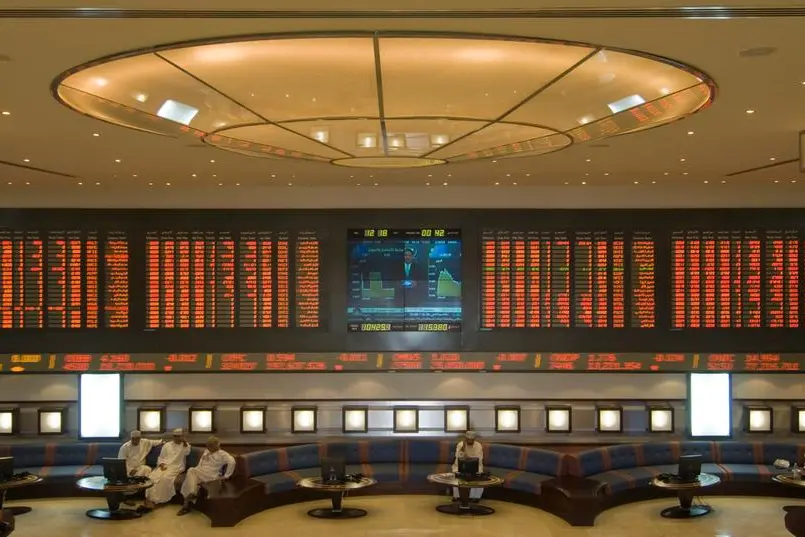
Foreign investor transactions at the Ni- gerian stock market (NGX) hit N1.3trn ($883bn) in seven months, according to the exchange.
The latest report on foreign participa- tion in Nigeria showed that foreign port- folios had more than doubled this year, higher than last year’s by 114.2%.
Total foreign portfolios stood at $883m compared with the N598bn ($402m) re- corded in the comparable period of 2024. Within the same period in 2023, foreign portfolios had recorded N186bn ($126m).
The report used two key indicators – inflow and outflow – to gauge foreign investors’ mood and participation in the equities market and the economy. While inflows and outflows indicate the direction of portfolio transactions, total FPI (foreign portfolio investors) measures the momen- tum and level of participation.
Experts have credited rising foreign in- flows with creating the stability in the Ni- gerian foreign exchange market, which has supported the domestic currency. Experts said investors were reacting positively to stability in the overall macroeconomic environment.
Naira debit card use abroad resumes
The United Bank for Africa (UBA) Plc, GT- Bank and Wema Bank Plc, among others, recently announced the resumption of in- ternational transactions on their naira debit cards. Olayemi Cardoso, the CBN’s Governor, said the new policy, which many banks are now implementing, has followed increased forex liquidity, which has sup- ported naira stability.
He said many banks now find it easier to approve use of their naira debit cards abroad. “The use of naira debit cards out of the country is definitely a step in the right direction. It’s transformative. It is here to stay, and you can be sure that go- ing forward, you will continue to see this kind of initiative in Nigeria.”
He added that the surge in dollar in- flows was largely because of his decision to clear over $7bn of unsettled FX back- logs, which had raised investors’ confi- dence in the economy. n
The use of naira debit cards abroad is definitely a step in the right direction. It’s transformative.
© Copyright IC Publications 2022 Provided by SyndiGate Media Inc. (Syndigate.info).