PHOTO
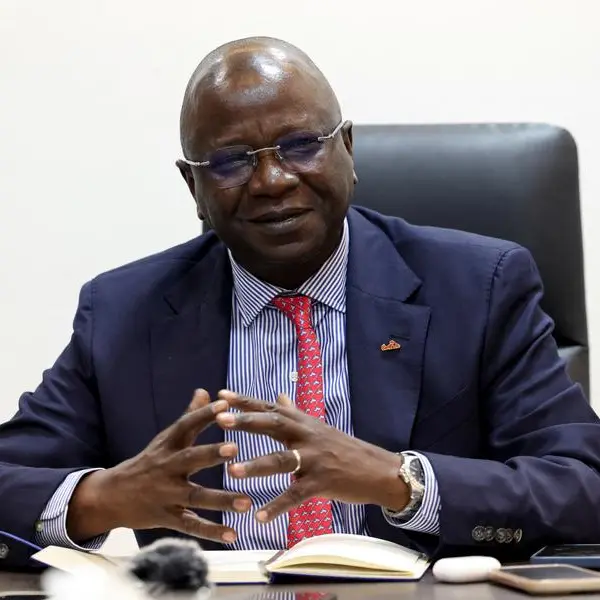
The Governor of the Central Bank of Nigeria (CBN), Mr. Olayemi Cardoso, has revealed how the apex bank’s monetary policy reforms have enabled the growth of the country’s monthly inflow from $200 million to $600 million, targeting an inflow of $1.0 billion by the end of 2026.
While reviewing the reforms of the Monetary Policy Committee (MPC) in Abuja, the governor reaffirmed that the reforms of the apex bank have now repositioned diaspora remittances among Nigeria’s most stable FX sources, often outperforming oil receipts during periods of market stress.
“Monthly inflows through formal channels have tripled since the reforms, from about US$200 million to US$600 million, with a policy target of US$1.0 billion per month by end-2026, representing a structural shift rather than mere cyclical growth.
“In addition, improved settlement architecture and tighter prudential controls have supported FX liquidity. Collectively, these measures narrowed the parallel market premium to under 2.0%, restored correspondent banking confidence, and improved overall market functioning.”
He also disclosed that Nigeria’s balance of payments has strengthened, recording a surplus of US$4.59 billion in Q3 2025, compared with a deficit of US$2.77 billion earlier in the year.
“Gross external reserves increased from US$38.34 billion in February 2025 to US$50.12 billion in February 2026, representing a 30.73% year-on-year increase, the highest level recorded in 13 years.
“Similarly, net external reserves have surged from US$3.99 billion at the end of 2023 to US$34.80 billion at the end of 2025, representing a 772.2% increase and higher than total gross reserves in 2023.
“This improvement was reinforced by enhanced reserve-management practices, integration of London Bullion Market Association (LBMA)-certified gold into the national reserves, restructuring of the external asset-management framework, and the initiation of a second global custodian to improve risk diversification.
“A major anchor of our reform programme was the comprehensive restructuring of the foreign exchange market. Through decisive actions, including the clearance of over US$7.0 billion in verified FX backlogs, implementation of a rule-based willing-buyer, willing-seller system, strengthened reporting requirements, enhanced market surveillance, and reforms to interbank trading, the FX market regained transparency and credibility.
“These reforms have laid the groundwork for the bank to implement a carefully sequenced transitional roadmap to inflation targeting, thereby strengthening the primacy and effectiveness of the price stability mandate,” he stated.
The governor reiterated that the reforms have produced clear and encouraging outcomes, including inflation reduction from 34.8% in December 2024 to 15.06% in February 2026, driven by tighter monetary conditions, improved FX market stability, strengthened policy coordination, and enhanced supply-side interventions.
“Exchange rate conditions have become more orderly, FX liquidity has improved, and Nigerians are once again able to use their cards freely for international transactions as FX settlement systems stabilised.
“Reserves are stronger than they have been in over a decade, the balance of payments has improved, and investor confidence has risen markedly, reflected in renewed portfolio inflows, greater market participation, and improved sovereign risk indicators.
“The banking sector recapitalisation programme has recorded commendable progress, with 32 banks having already met the revised capital requirements.
“This achievement has significantly strengthened the resilience and capacity of the Nigerian banking system, positioning it to effectively mobilise long-term capital, support productive investment, and play its critical role in enabling the transition towards a US$1.0 trillion economy.
“The payments system is safer and more interoperable, and financial inclusion gains continue to consolidate.”
He said, “Despite these gains, we recognise that the journey is far from complete. Our next phase is focused on consolidation: anchoring inflation firmly on a downward trajectory toward a single-digit level, sustaining exchange-rate stability, strengthening reserve buffers through organic inflows, deepening interbank market development, and enhancing the robustness of our monetary policy transmission.
“Achieving these goals requires continued collaboration with the fiscal authority, disciplined policy execution, and strong stakeholder engagement, which is the very essence of today’s forum.
“Looking ahead, the macroeconomic prospect remains cautiously optimistic as we are mindful of the ongoing global and domestic risks.
“Global growth, though projected at 3.3% for 2026, may be tempered by tight financial conditions, lingering effects of monetary tightening, and geopolitical tensions.
“The Middle East crisis, through its impact on oil price volatility, constitutes a major source of risk to the Nigerian economy.
“Domestically, growth is projected at 4.49%, supported by stronger policy consistency, a market-driven FX regime, recovering oil production, and sustained reform implementation.
“However, pressures from food supply constraints, infrastructure deficits, and election-cycle spending will require vigilance.
“Notwithstanding these challenges, our strengthened macroeconomic fundamentals, improved fiscal-monetary coordination, credible policy frameworks, and sound early warning systems position Nigeria to mitigate these risks more effectively than in the past.
“The reforms we have undertaken were not easy, but they were necessary and designed to secure the long-term stability and prosperity of our nation. The most challenging phase of macroeconomic adjustment is now behind us, with solid foundations laid for sustained stability.
“As we gather here today, I reaffirm the Central Bank’s unwavering commitment to openness, transparency, discipline, and engagement. This forum represents exactly that spirit.
“We will continue to listen, learn, and refine our approaches in the collective interest of macroeconomic stability and national prosperity.”
On his part, the Deputy Governor, Economic Policy Directorate at CBN, Dr. Muhammad Sani Abdullahi (Ph.D.), said the Monetary Policy Forum has evolved into an indispensable platform for open dialogue between the Central Bank and critical stakeholders across the Nigerian economy.
“In an era where monetary policy outcomes depend increasingly on credibility, communication, and expectations, it is essential that we meet periodically to ensure that policy directions are well understood and that stakeholders’ perspectives are incorporated into the broader policy framework.
“This engagement enhances transparency, strengthens trust, and helps improve the alignment between policy intentions and real-sector outcomes, thereby enriching our collective understanding of the dynamics shaping Nigeria’s monetary and financial stability.
“Distinguished ladies and gentlemen, the value of this forum lies not only in the perspectives shared by policymakers but also in the feedback received from stakeholders across the economy.
We therefore encourage all participants to engage in robust and constructive dialogue in the course of our deliberations.
“We are particularly interested in understanding how adjustments to monetary policy impact your respective sectors. Beyond the macroeconomic statistics that we analyse at the Central Bank, it is important for us to hear directly from you, discuss your experiences, how policy changes influence your investment decisions, credit conditions, production costs, pricing behaviour, and expectations.
“As we begin today’s deliberations, I would like to once again express the Central Bank of Nigeria’s sincere appreciation to all stakeholders present here for your continued engagement and commitment to constructive policy dialogue.
Your participation reflects a shared dedication to building a more stable, resilient, and prosperous Nigerian economy,” he stated.
The CBN’s monetary policy reforms have led to a significant reduction in headline inflation from 34.80% in December 2024 to 15.15% by December 2025, stabilising the exchange rate, raising external reserves above $40 billion, clearing the $7 billion FX backlog, and improving banking sector liquidity, thereby enhancing policy credibility and boosting investor confidence.
Copyright © 2026 Nigerian Tribune Provided by SyndiGate Media Inc. (Syndigate.info).