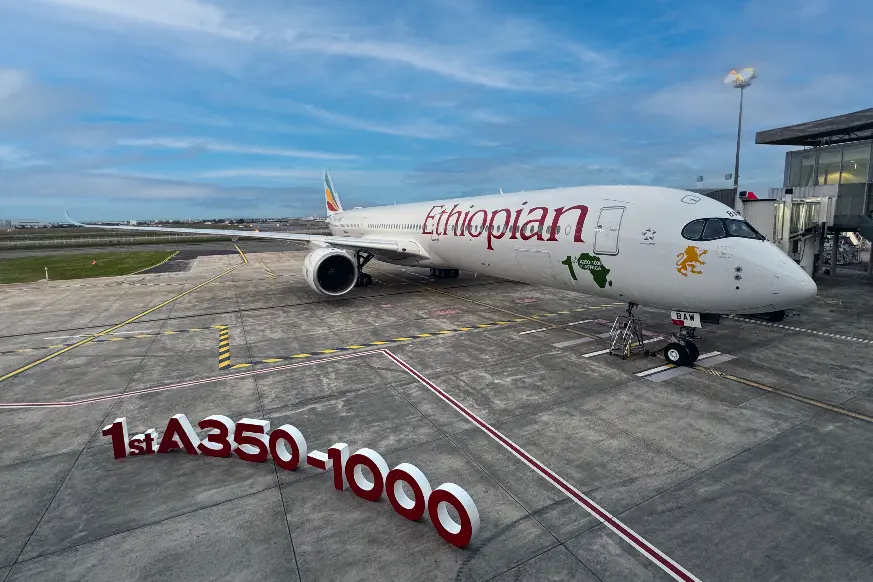
PHOTO
The continent’s largest carrier has deployed stopovers to conserve its fuel as the Middle East conflict disruptions redirect global traffic through East African hubsAfrica’s largest carrier, Ethiopian Airlines, is adjusting its operations to navigate tightening aviation fuel supplies, even as East African airlines benefit from a surge in rerouted global traffic.
At the centre of the airline’s response is the expanded use of technical stops on long-haul routes—a strategy that allows it to conserve fuel at its Addis Ababa hub while maintaining full passenger and cargo loads.
The approach serves a dual purpose. By breaking long-haul journeys into segments, Ethiopian can depart from its high-altitude base at Bole with maximum payload, sidestepping the performance constraints typical of “hot and high” airports. Most fuel consumption is then shifted to lower-altitude intermediate stops, preserving limited reserves at the hub.
Ethiopian’s use of tactical stops—such as Muscat for Asia-bound flights and Entebbe for São Paulo services—is not new, but its expanded application reflects growing pressure on fuel supply chains following disruptions linked to the Middle East crisis.
With flights out of Gulf hubs constrained, Ethiopian—Africa’s airline with the widest network to Asia—is increasingly assuming a super-connector role, linking traffic between Asia, Europe and North America.
While fuel stock data for Addis Ababa remains unclear, neighbouring markets appear relatively stable. In Uganda, the Uganda National Oil Company (UNOC) says current reserves—about 81 million litres of petrol, 80 million litres of diesel and 18.5 million litres of Jet A-1 as of March 27—are sufficient to meet short-term demand, equivalent to roughly 22 to 30 days of cover. Additional deliveries expected in April are likely to extend this buffer.
Even so, airlines are more concerned about the physical availability of fuel than price volatility as supply chains come under strain.
Against this backdrop, Ethiopian is making calculated trade-offs: either reduce payload and fly direct, or carry full passenger and cargo loads while relying on en-route refuelling. The airline has opted for the latter, maximising revenue opportunities amid strong demand.
That demand is being driven in part by disruptions affecting major Gulf hubs, which have redirected passenger flows towards East African gateways, including Addis Ababa, Nairobi and Entebbe.
Kenya Airways is reporting increased traffic on routes linking Asia to Europe and North America via Nairobi, while Uganda Airlines is recording near-full load factors on its Mumbai–London service via Entebbe.
According to Behramjee Ghadially, most of the traffic gains have been directional, with northbound routes dominating—an indication of the temporary nature of the shift. As Gulf carriers recover, these gains are likely to come under increasing pressure.
© Copyright 2026 Nation Media Group. All Rights Reserved. Provided by SyndiGate Media Inc. (Syndigate.info).