PHOTO
Africa’s richest man was in Nairobi this week and made a big announcement that caught may off-guard and left officials scrambling for answers.
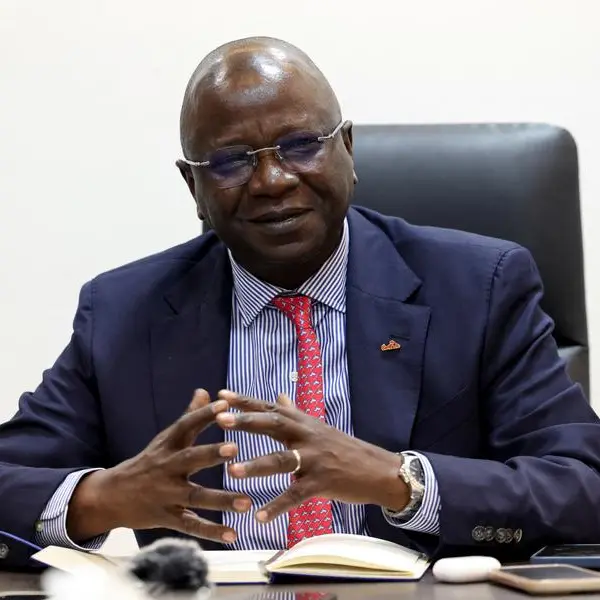
Aliko Dangote, appearing on a panel with the heads of state from Uganda and Kenya, as well as the Africa Finance Corporation chief, declared his plans to construct a refinery capable of producing 650,000 barrels-per-day in East Africa within five years or less.
As The Africa We Build Summit 2026, concluded on Thursday, and Mr Dangote’s promise of $40 billion to invest in various fields, indulging a signature refinery, sank in, the question commentators asked was, where does this leave Uganda’s refinery, whose final investment decision is scheduled for July this year?“My commitment is, if we agree here, with the three or four governments, we will lead and make sure that the refinery is built within the next four to five years,” Mr Dangote said, referring to Kenya and Uganda, whose leaders sat next to him, endorsing his project, as well as Tanzania, South Sudan and the Democratic Republic of Congo, the other countries that would supply crude.“Even now I can give commitment to the two presidents who are here, if they will support the refinery, we will build the identical one to what we have in Nigeria,” the industrialist said.
Moments earlier, Kenya’s President Willian Ruto said his country would reciprocate Uganda’s decision to invest in Kenya Pipeline, by also investing in Uganda’s $4 billion refinery and in the future of the two countries resources.
However, President Ruto then appeared to pivot to an unheralded joint regional refinery in Tanga, Tanzania, as critical item of energy security infrastructure being discussed between Dangote and other governments, to benefit East Africa.“By the way, we are discussing a refinery in Tanzania…we are not discussing a refinery in Kenya or Uganda. We are going to have a joint refinery in Tanga, to benefit all of us,” Dr Ruto said.“That refinery is going to take on board the oil from DRC, the oil from Kenya, the oil from South Sudan and the oil from Uganda, and we will just need to build a short pipeline from Tanga to Mombasa, and the finished product will use the pipeline that we already jointly own with Uganda,” he added.
President Yoweri Museveni has spent years quarrelling with executives of upstream operators in Uganda’s oilfields, French supermajor TotalEnergies and China National Offshore Oil Corporation, to invest in his pet project, which will produce refined products for East Africa and wean the region from imported fuel.
On this occasion, Mr Museveni had to recalibrate his answer when asked by the moderator, to comment on Dangote’s pitch.“We shall build a small refinery which we had already planned, of 60,000 barrels per day, because this was for the internal market of Uganda, parts of Tanzania, and parts of Kenya which are near Uganda. But the surplus crude we shall contribute to the East African refinery, the one of Tanga.
The EastAfrican sought comment from Dangote Group, about the project’s plan for crude supply as only South Sudan and DRC are an oil producer and exporter, while Uganda is getting ready for the first crude exports in the 2026/27 financial year, with Kenya yet to embark drilling and upstream development of its oilfields in the South Lokichar basin.
Even with all producing oil, the four countries can only meet less than half the daily demand, with a total of 170,000 barrels from Uganda, 94,000 from South Sudan, 17,000 from the DRC while Kenya’s production from its 585 million barrels that are recoverable, remains unknown. Dangote’s refinery in East Africa also pushes the region into new investments in crude and refined products infrastructure.
According to Gabriel Obiang Mbaga Lima, former Equatorial Guinea minister for hydrocarbons, pipeline networks are crucial for Africa to build internal fossil fuels-based energy markets that will reverse some of the continent’s crises.“We export crude at $60 and import fuel at $100. That’s already a deficit,” he said, alluding to the Central Africa Pipelines System (CAPS), a $30 billion project he heads, planned to link 11 countries with a network that connects oil producing and refining countries to those that lack oil, to end high import bills for petroleum products.
The immediate reading of Mr Dangote’s push into East Africa’s downstream is that it will change the dynamics of the oil industry, with Uganda potentially losing a good chunk of the market that it targeted with its own refinery.
The announcement that Kenya intends investment in Uganda’s Kabaale refinery also took officials at the Uganda National Oil Company (Unoc) by surprise, and it remains unclear what stake Nairobi intends to take in the project.“I am not aware of this, unfortunately,” said Tony Otoa, Chief Corporate Affairs Officer at Unoc.
These developments come just weeks after a delegation of parastatals from Uganda’s oil and gas sector undertook a visit to the multibillion-dollar Dangote Refinery in Lagos, to mirror their implementation of Uganda’s own refining with the Dangote outfit, including the project’s delivery model, financing structure, operational readiness and workforce development strategy.“The engagement provided valuable lessons to support Uganda’s refinery development, particularly in strengthening governance, technical capability and large-scale project execution,” Unoc posted on X.
From inception, President Museveni sold the Kabaale refinery as an East African project, with Kenya, Tanzania and Rwanda invited to take up shareholding in the facility, but lukewarm interest saw Kampala abandon this model.
At the Africa We Build Summit in Nairobi, President Ruto highlighted plans for the shared project, saying it would integrate crude supplies from producers in East Africa.“We’re going to have a joint refinery to benefit all of us,” he said.
He said the East African Community partners have been discussing a joint regional refinery in Tanga, to process crude from the DRC, Kenya, South Sudan and Uganda.
The plan, he added, includes a Tanga-Mombasa pipeline feeding into the existing shared Kenya Pipeline to distribute refined products, improving asset utilisation across the region.
The entry of the African business magnate provides the requisite financial muscle as the Dangote Refinery plans a continental public offer of shares in a bid raise about $5 billion. Mr Dangote also outlined a $40 billion investment plan through 2030 featuring petrochemicals and fertilisers.
The talk of the new project comes amid shocks occasioned by the war on Iran by US and Israel, which has resulted in a major disruption of global trade, especially in oil, 20 percent of which passes through the now blockaded Strait of Hormuz.
President Ruto, during his opening speech at the continental infrastructure meeting, highlighted this.“We meet against the backdrop of global economic shocks and disruptions arising from the war in the Gulf. Africa today produces approximately 10 million barrels of oil per day, which is about 10 percent of global output. Yet, paradoxically, we remain net importers of petroleum products to the tune of 120 million tonnes annually at a cost of about $90 billion. At an average export price of $75 per barrel, Africa’s crude production is valued at roughly $270 billion each year.“However, if this same production were refined domestically and exported as finished products at an average price of $800 per tonne, it would generate over $500 billion. This represents forgone income of about $230 billion, which is nearly 7.5percent of our GDP from just one resource.”The summit brought together policymakers, investors and industry leaders to explore sustainable financing solutions for infrastructure, amid growing consensus that Africa must increasingly rely on its own resources to drive long-term growth and economic transformation.
But the proposed Tanzanian project shines the spotlight on Uganda’s Hoima Refinery, which has been in the works for over a decade now, but which is expected to reach final investment decision by July this year, after getting a financier and partner, Alpha MPM of United Arab Emirates late last year.
President Ruto expressed Kenya’s interest in putting money in the Ugandan refinery, more as a gesture of goodwill after President Museveni “saved” his Kenya Pipeline initial public offer, after Kenyans showed muted appetite for the state corporation when it went public in February.
Uganda “saved” the Ksh106 billion ($820 million) offer from collapse by acquiring a 20.15 percent stake, worth Ksh32.95 billion ($255.42 million), after the sale struggled with low investor demand particularly from retail and foreign investors and oil marketing companies.“President Museveni called me and said ‘I want to buy 50 percent of Kenyan Pipeline’…and he told me ‘I don’t care the price’… that’s how serious he as President Museveni could see beyond the price. He could see the opportunity…I want to assure you Kenya is going to invest in your refinery,” Dr Ruto said.
Today, Kenya and Uganda are actively discussing shared transport and energy infrastructure projects, and have both expressed interest in Tanzania’s Tanga refinery which, incidentally, is where the East African Crude Oil Pipeline (Eacop) terminates.
In the changing geopolitical environment, Uganda would make a pile in petrodollars selling fuel to its regional peers, a great boost to its economy.
Mr Dangote’s intervention, backing resource nationalism policies, promoting refinery expansion and opening up his business to investors, underscores a growing convergence between political leadership and private capital in driving Africa’s industrial transformation.
While timelines for the proposed East African refinery remain uncertain, the announcements in Nairobi suggest increasing momentum behind efforts to build a more self-sufficient and industrialised regional economy.
Mr Dangote’s “Midas touch” is expected to give Tanga more gravitas, on top of its strategic location, which puts pressure on Ugandan to expedite theirs ahead of it. On Friday, Ugandan officials were confident that the Hoima facility would go online by 2030, earlier than the “4-5 years” envisaged by Dangote to complete the Tanga plant.
© Copyright 2026 Nation Media Group. All Rights Reserved. Provided by SyndiGate Media Inc. (Syndigate.info).