PHOTO
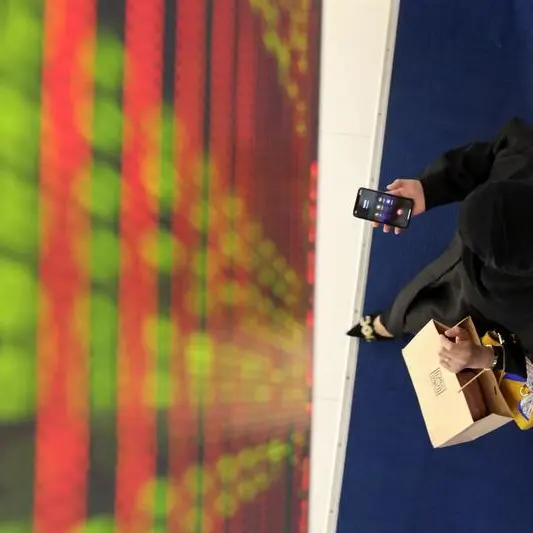
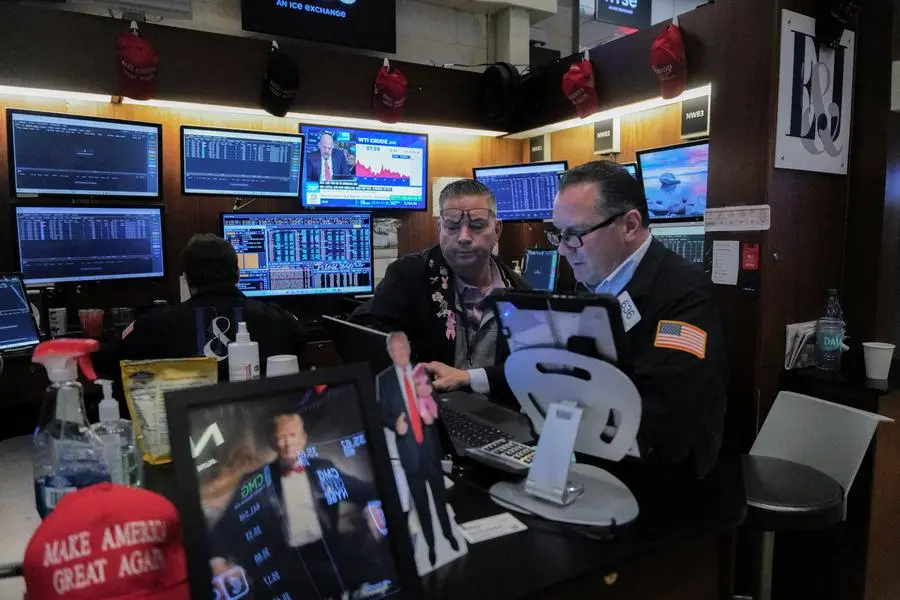
World shares sat around record highs on Tuesday as investors hoped for the best from this week's barrage of U.S. large-cap earnings, and while President Donald Trump's latest tariff moves left stocks largely unmoved it did boost gold and silver still further.
Accusing South Korea's legislature of "not living up" to its trade deal with Washington, Trump late on Monday said he would increase tariffs on imports from Asia's fourth-largest economy into the U.S. to 25%.
Stocks appeared to take the news in their stride, with Nasdaq futures up 0.5%, as investors geared up for a slew of earnings from the likes of Microsoft, Apple and Tesla starting on Wednesday.
Even South Korea's KOSPI quickly reversed earlier losses to surge by more than 2% to a new peak, and with European stocks nudging higher too, world stocks are back to record highs.
"The Greenland story is out of the way, that cleaned up positioning and now the market can focus back on fundamentals," said Mohit Kumar, chief Europe economist at Jefferies.
"When we think about risky assets (like stocks) even Japan is a positive because that adds to fiscal expansion," he added.
Trump's threat to impose tariffs on several European countries over Greenland jolted markets last week.
New Japanese Prime Minister Sanae Takaichi is basing her campaign for next month's elections on expanded stimulus measures, which have helped Japanese stocks but hurt Japanese government bond prices and until late last week, the yen.
The Japanese currency strengthened sharply on Friday as chatter about rate checks by the New York Fed as well as the Bank of Japan fuelled the risk of a joint U.S.-Japan intervention to halt the yen's slide.
Also to come this week is a Federal Reserve meeting. No change of policy is expected, but with a new Fed chair to be announced soon, and investors' worries about the central bank's independence, Fed meetings are even more of note for markets than usual.
Worries about another U.S. government shutdown are also brewing, with Republicans and Democrats at odds over funding for Trump's Department of Homeland Security after the fatal shooting of a second U.S. citizen by federal immigration officers in Minnesota.
And while geo-political tensions may be moving down stocks traders' list of priorities, they continue to bubble in the background, and have been a factor weighing on the U.S. dollar.
The dollar index, which tracks the unit against six peers, hit a four-month low on Monday, and while that was largely a function of the surge in the Japanese yen, the euro and Britain's pound are also trading around multi-month tops.
And it is in commodity markets that worries about the dollar have been most apparent.
Gold rose by another 1.5% to $5,088 an ounce, just shy of Monday's all-time high, while silver gained 8% to $112 an ounce, up a staggering 57% in January alone.
"The frenetic nature of uncertainty, coupled with a weaker dollar, have been the primary contributors to this latest leg higher (for gold)," said Christopher Louney, a commodity strategist at RBC Capital Markets.
Louney said history suggested the current gold rally could run into early September or mid-December this year, adding that prices could go as high as $7,100 per ounce at the end of the year based on its 2025 performance.
Oil prices fell on Tuesday as investors kept an eye on a resumption in supply from Kazakhstan. Brent crude futures dropped 0.15% to $65.49 a barrel.
(Reporting by Stella Qiu in Syndey and Alun John in London; Editing by Shri Navaratnam, Thomas Derpinghaus, William Maclean)